
 Deutsch
 English
 中文
中文
 Danish
 Eesti
Eesti
 Español
 Suomi
Suomi
 Français
 Italiano
 日本語
日本語
 한국
한국
 Nederlands
 Norge
Norge
 Polski
 Portugues
 Русский
 Svenska
 Türkçe
 العربية
 Română
 български
Sunrises and sunsets
Leibniz Temple
The imposing pavilion stands on a small peninsula connected by two narrow arched bridges over a picturesque pond. A green idyll and oasis of peace in the Georgengarten and perfect for a romantic rendezvous at sunset.
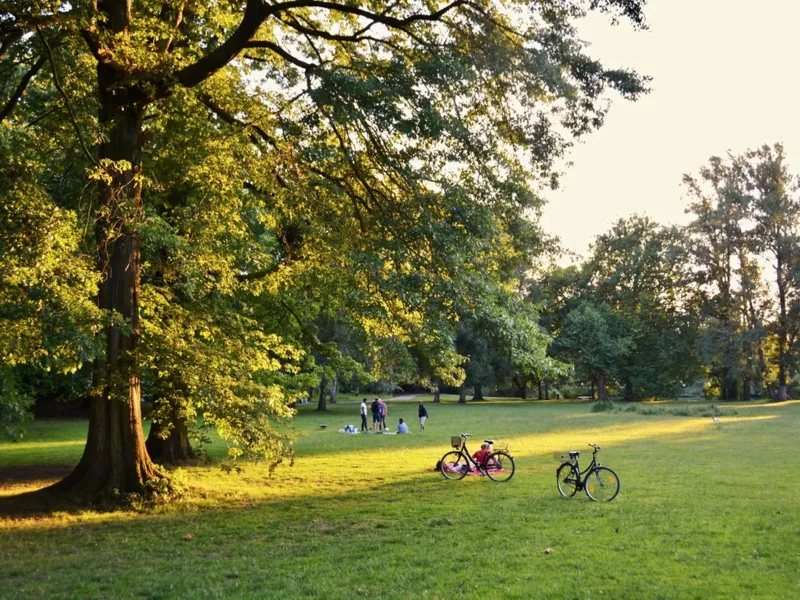
View from the Leibniz Temple
The "Leibniz Monument" (as the round temple in Hanover—visible from afar—is also known) on the hill is a popular gathering place, especially on nice days, for couples in love and day-trippers with picnic baskets.
A rendezvous with a genius
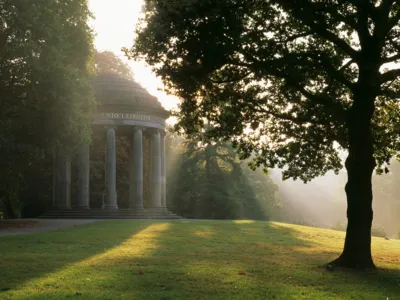
Leibniz Temple
The circular temple in the Georgengarten, which is open on all sides, commemorates the polymath Gottfried Wilhelm Leibniz (1646-1716). The first public monument in Germany to a non-nobleman was built between 1787 and 1790 according to the plans of the Hanoverian court councillor Johann Daniel Ramberg and at that time still stood on the parade and drill ground in front of the Leineschloss, today's Waterlooplatz. In 1935 and 1936, the massive sandstone temple with its twelve simple Ionic columns was moved to its current location in Georgengarten.
Playground and stage for summer theater in the sky
On the west side of the round temple, beneath the dome, the inscription “GENIO LEIBNITII” is displayed in large, gilded letters. People enjoy playing Frisbee on the large meadows in front of it, and dogs meet other dogs to romp around off-leash while, here and there, families or friends enjoy their barbecue picnics in the warm glow of the setting sun. Before the spectacle in the sky begins, it’s worth taking another look back at Gottfried Wilhelm Leibniz: four steps lead up to the stone pedestal in the center, which features a copy of the portrait bust of the brilliant scholar. The original, carved from Carrara marble by the Irish sculptor Christopher Hewetson in Rome in 1788, can now be viewed at the Herrenhausen Palace Museum—as indicated on the bronze plaque on the back of the pedestal. The copy of the bust, which faces the nearby Wilhelm Busch Museum, is inscribed (like the original) with “LEIBNITZ”; the use of “tz” instead of “z” in the name was quite common in Leibniz’s time. The honored scholar would likely have reacted with calm and equanimity to the summer bustle around him (or rather, around his temple), for the restless genius within him usually had other things on his mind: "When most people are allowed to indulge in general pleasures, I will be allowed to work for the advancement of science." Each to his own, but the sunset over the Georgengarten, which was already graceful in its day, would certainly have pleased Leibniz too and - who knows - perhaps even inspired him to new strokes of genius.