 Deutsch
 English
 中文
中文
 Danish
 Eesti
Eesti
 Español
 Suomi
Suomi
 Français
 Italiano
 日本語
日本語
 한국
한국
 Nederlands
 Norge
Norge
 Polski
 Portugues
 Русский
 Svenska
 Türkçe
 العربية
 Romanesc
 български
Exhibitions, events, guided tours
Goose feather, Pelikan, keyboard
Through June 12, 2026, the exhibition at Pelikan’s “Tintenturm” invites visitors to explore the evolution and significance of writing.
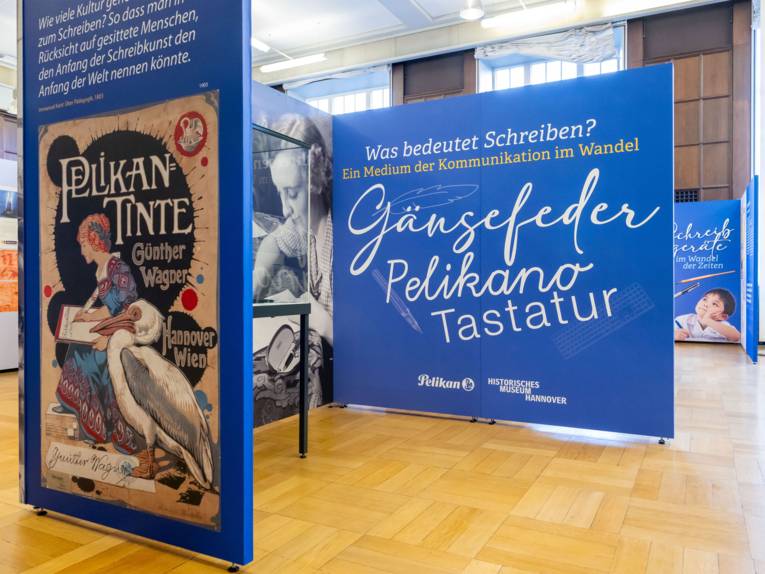
Exhibition: Goose Quill, Pelikano, Keyboard
What does writing mean? A medium of communication in transition
Writing has been a central medium of human communication for thousands of years. From the first symbols on clay and stone to modern digital messages, its form has changed continuously. What remains is its ability to convey and store thoughts, feelings and knowledge. In the digital age, this change is accelerating. But whether handwritten or digital, writing remains a fundamental tool for creating connections between people and capturing ideas.
Immanuel Kant
How much culture is not already part of writing? So much so that one could call the beginning of the art of writing the beginning of the world, in consideration of civilized people.
Immanuel Kant: On Pedagogy, 1803
The ability to write is not something that can be taken for granted. Writing cultures have developed over thousands of years, as have the associated tools and characters. But not all people could and can write. For a long time, writing was an expert skill. In our culture, learning to write has been systematically taught in schools since the Middle Ages. But it was not until compulsory education was introduced in 1919 that the broad mass of the population learned to write.
Learning to write is a crucial step in a child's development. It opens up access to knowledge, promotes creativity and strengthens the ability to express oneself. From the first scrawly letters to fluent handwriting, this process requires patience and practice.
Elke Heidenreich
I've been writing with Pelikan fountain pens my whole life!
Handwriting is as much a part of a person as their face.
Elke Heidenreich, 2024
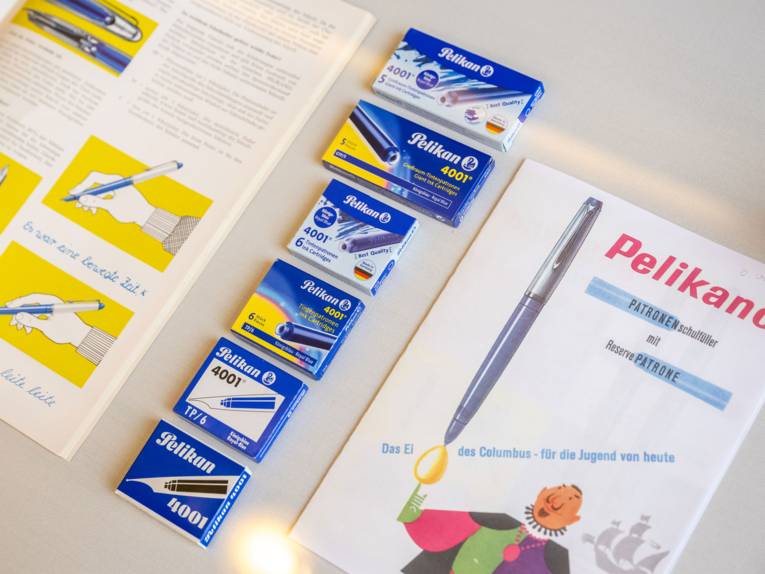
In 1960, the Pelikan—the first school fountain pen designed for use with ink cartridges—was introduced to the market.
To make learning to write easier, the “Simplified Basic Handwriting” system was developed for schoolchildren in the 1960s. The Pelikan company played a key role in this by exclusively sponsoring and supporting the Handwriting Education Working Group—composed of university professors and other handwriting experts—in the development and popularization of this writing system. In 1960, the Pelikan, the first school fountain pen with ink cartridges, was introduced to the market. This modern, practical writing instrument made writing easier and was significantly cleaner to use than the older steel nibs. The Pelikano left its mark on generations of students.
Through numerous exhibits from the collections of Pelikan and the Historical Museum of Hanover, the exhibition illustrates the history of writing culture—and invites visitors to participate and try things out for themselves.
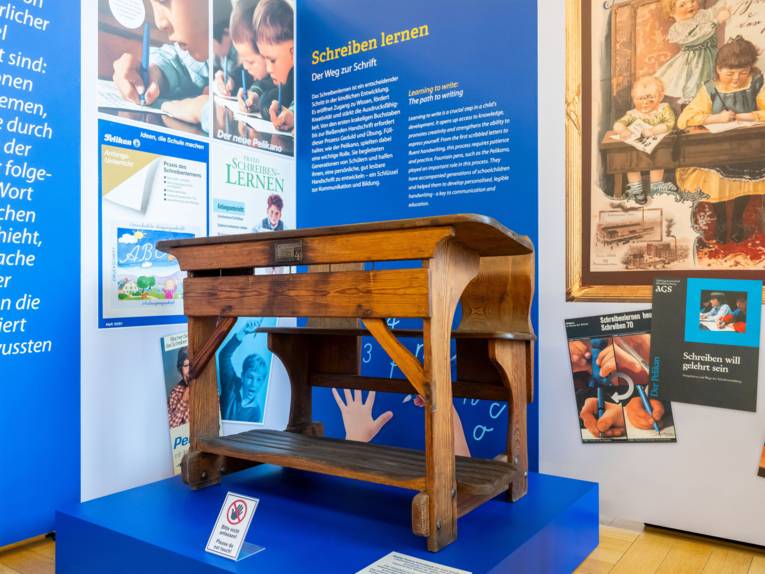
View of the exhibition
Curator tours Sundays at 11 a.m.
February 1, March 1, April 12, and May 10, 2026.
Night of the museums on 06.06.2026
Curator-led tours: 6:15 p.m., 7:15 p.m., 8:15 p.m., 9:15 p.m., and 10:15 p.m.
Note: Closed on all public holidays.