The Zinnober Children’s Museum has been a staple of Hannover’s cultural scene for many years. Families appreciate what it has to offer just as much as groups from daycare centers and schools. The accompanying program for the hands-on exhibitions includes workshops, readings, and field trips, among other activities. In addition, the Zinnober Museum Lab offers regular programs. The children’s museum is also available for children’s birthday parties
About the Children's Museum
The museum is operated by the nonprofit organization “Zinnober – a Museum for Children and Youth in Hannover e.V.” In its early years, interactive exhibitions were held at various locations. Since 2022, the museum has been housed in a permanent, spacious facility in Hannover-Linden. Activities, celebrations, and art events take place regularly in its large garden.
The Zinnober Children’s Museum has been certified by Kinderferienland Niedersachsen. It receives regular funding from the region and the city of Hannover, as well as from the Landesvereinigung Kulturelle Jugendbildung (LKJ) of Lower Saxony, the Karin and Rudolf Neugebauer Foundation, and children’s book author Ingo Siegner, who also serves as the museum’s patron. Project funding is secured for the rotating hands-on exhibitions. The dedication of many volunteers has been the foundation for the museum’s successful work over the past decades.
Exhibitions to take part in
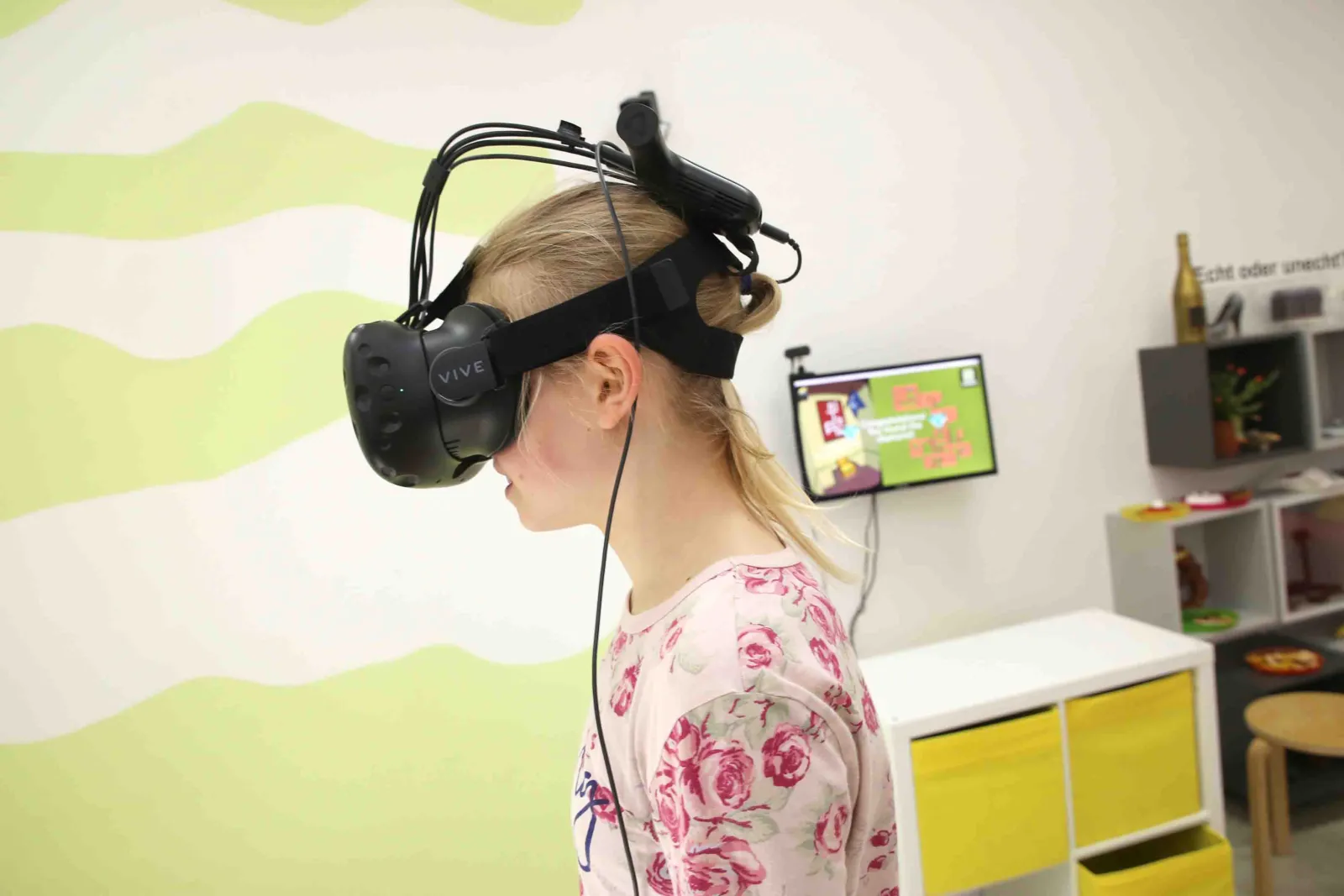
Holistic education is an integral part of the educational concept behind these interactive exhibitions: Children can engage with the content through their senses and through experimentation. Smelling, feeling, seeing, exploring, and trying things out are the main focus. Text-based or multimedia information is provided to complement the experience. In many cases, young visitors can get actively and creatively involved themselves—for example, by dressing up, taking on different roles, solving puzzles, or expressing their impressions through art.
On another level, factual information is provided that is particularly aimed at the accompanying adults. This allows them to talk with the children and teens—either right away or later—about their impressions and experiences and to explore the topics in greater depth. The adults, in turn, learn to understand the topics from a child’s perspective.
Most rooms are accessible to people with disabilities.
For more information, visit the website: www.kindermuseum-hannover.de/
 Deutsch
 English
 中文
中文
 Danish
 Eesti
Eesti
 Español
 Suomi
Suomi
 Français
 Italiano
 日本語
日本語
 한국
한국
 Nederlands
 Norge
Norge
 Polski
 Portugues
 Русский
 Svenska
 Türkçe
 العربية
 Română
 български