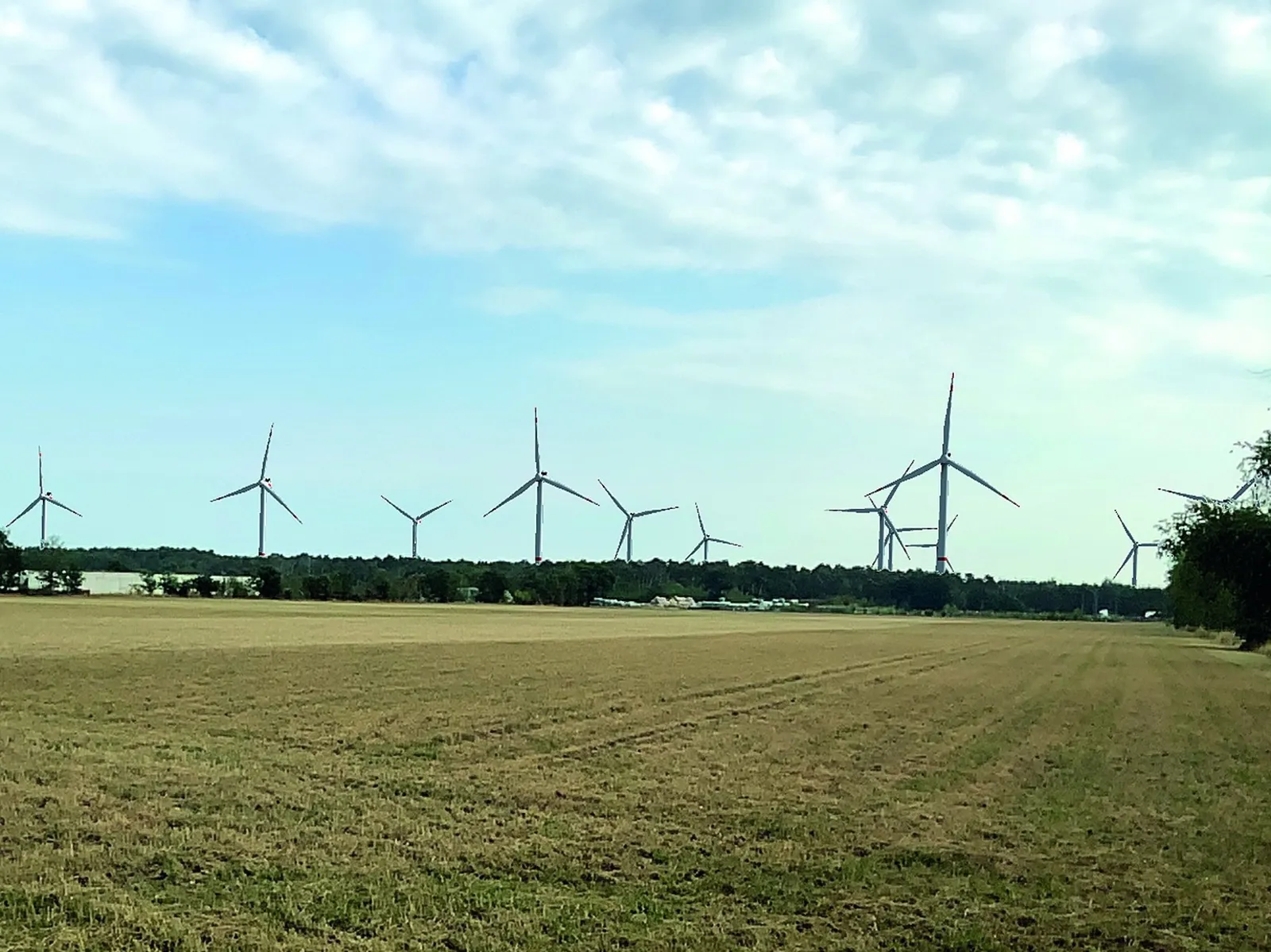
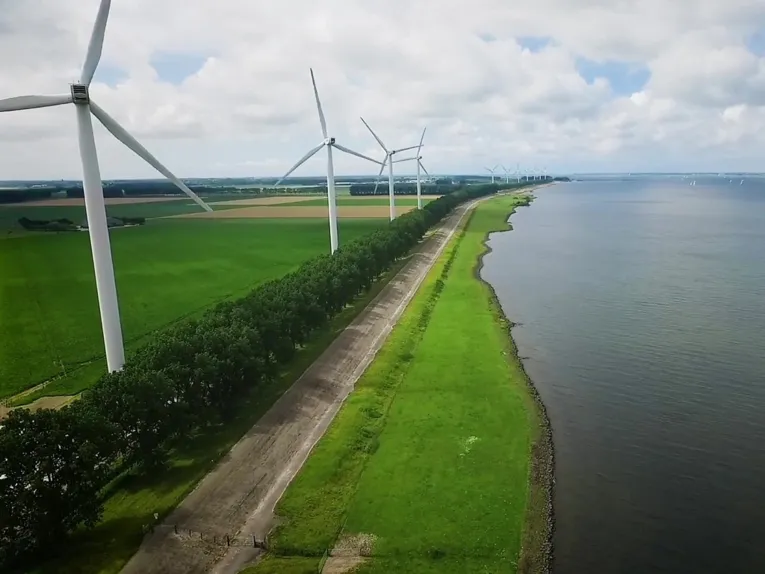
Enercity is supporting the municipality of Wedemark and the city of Burgwedel in the energy transition and the implementation of their municipal climate goals. The energy service provider presented its plans for a wind farm in the Fuhrberger Feld (municipality of Wedemark/city of Burgwedel) to the Wedemark municipal council on February 28, 2023, during a special informational meeting. An informational session organized by the city of Burgwedel is also already scheduled for March 16.
Up to 42 wind turbines
Up to 43 wind turbines could be built in the future in three project areas located to the northeast—about 20 of them in the forest. The energy provider plans to invest approximately 340 million euros in the wind power project in the northern region of Hanover. The permit applications for the project are scheduled to be submitted next year. The goal is to have the project operational by 2026. The project will directly contribute to achieving the climate goals of both municipalities and will also be financially beneficial for them and their residents—meaning that those who contribute to the energy transition will benefit to a large extent.
Green electricity for 190,000 households
“The wind power project can make a decisive contribution to helping the municipality of Wedemark achieve its goal of becoming carbon-neutral by 2030,” says Helge Zychlinski, mayor of the municipality of Wedemark. Ortrud Wendt, mayor of Burgwedel, adds: “Every kilowatt-hour of renewable energy helps us in Burgwedel on our path to achieving the necessary climate neutrality. Thanks to the wind turbines, the city of Burgwedel could reduce its emissions of climate-damaging carbon dioxide by up to 13,200 metric tons annually.” If implemented as planned, the proposed intermunicipal wind farm could theoretically save approximately 190,000 metric tons of carbon dioxide per year compared to the German electricity mix. By way of comparison, this is roughly equivalent to the average annual CO2 emissions of 135,000 mid-size passenger cars. Forty of the planned turbines are located within the municipality of Wedemark, and three within the city of Burgwedel.
For the Hanover region as well, the wind power project marks a milestone in the expansion of renewable energy. Currently, approximately 637 million kilowatt-hours of electricity are generated annually across the region, which is enough to cover the residential electricity consumption of about 254,000 households. The planned green electricity production from the Enercity wind turbines is projected to total around 470 million kilowatt-hours per year—which corresponds to approximately 74 percent of the region’s total wind power generation. The amount of electricity the project aims to generate is equivalent to the average demand of 190,000 households. “The energy transition is decided at the local level in municipalities—whether in Lower Saxony, Germany, or Europe. Together with the municipalities, we are actively advancing the expansion of renewables, promoting independence from fossil fuels, and ensuring a sustainable energy supply,” says Enercity CEO Dr. Susanna Zapreva.
Forests as favorable wind sites
The large-scale project is focused on land owned by Enercity as well as additional plots owned by private landowners. More than 100 contracts have already been signed with landowners and interest groups. Residents of Wedemark, Burgwedel, and other nearby communities also benefit from a regional green electricity offering available in the immediate vicinity at very attractive rates. Enercity regularly offers the municipalities in its project areas a voluntary contribution of 0.2 cents per kilowatt-hour. Of this wind energy levy under the EEG, approximately 65 percent remains in Wedemark and approximately 9 percent in Burgwedel. The remaining shares are distributed among neighboring municipalities in the surrounding area, such as Schwarmstedt and Wietze. Enercity will also establish the project company directly in Wedemark, ensuring that 100 percent of the business tax revenue remains in the municipality.
The Compatibility of Wind Power, Forests, and Water
About half of the turbines planned for the project are located in forested areas. Sites within the forest allow for greater distances from residential areas. As a drinking water supplier, enercity is particularly mindful of the groundwater body. Individual wind turbines are planned for the outer drinking water protection zone III of the water extraction area. These will have no impact on the drinking water protection zone. The energy service provider has been operating sustainably in the region for decades, supplying the people of the city and region of Hannover with high-quality drinking water and working locally with the agricultural and forestry sectors to ensure comprehensive groundwater protection. This includes, among other things, the planting of approximately 17 million deciduous trees over the past 27 years, through which enercity is advancing the transformation of the Fuhrberger Feld into a climate-resilient mixed forest.
(Published on March 3, 2023)
 Deutsch
 English
 中文
中文
 Danish
 Eesti
Eesti
 Español
 Suomi
Suomi
 Français
 Italiano
 日本語
日本語
 한국
한국
 Nederlands
 Norge
Norge
 Polski
 Portugues
 Русский
 Svenska
 Türkçe
 العربية
 Română
 български