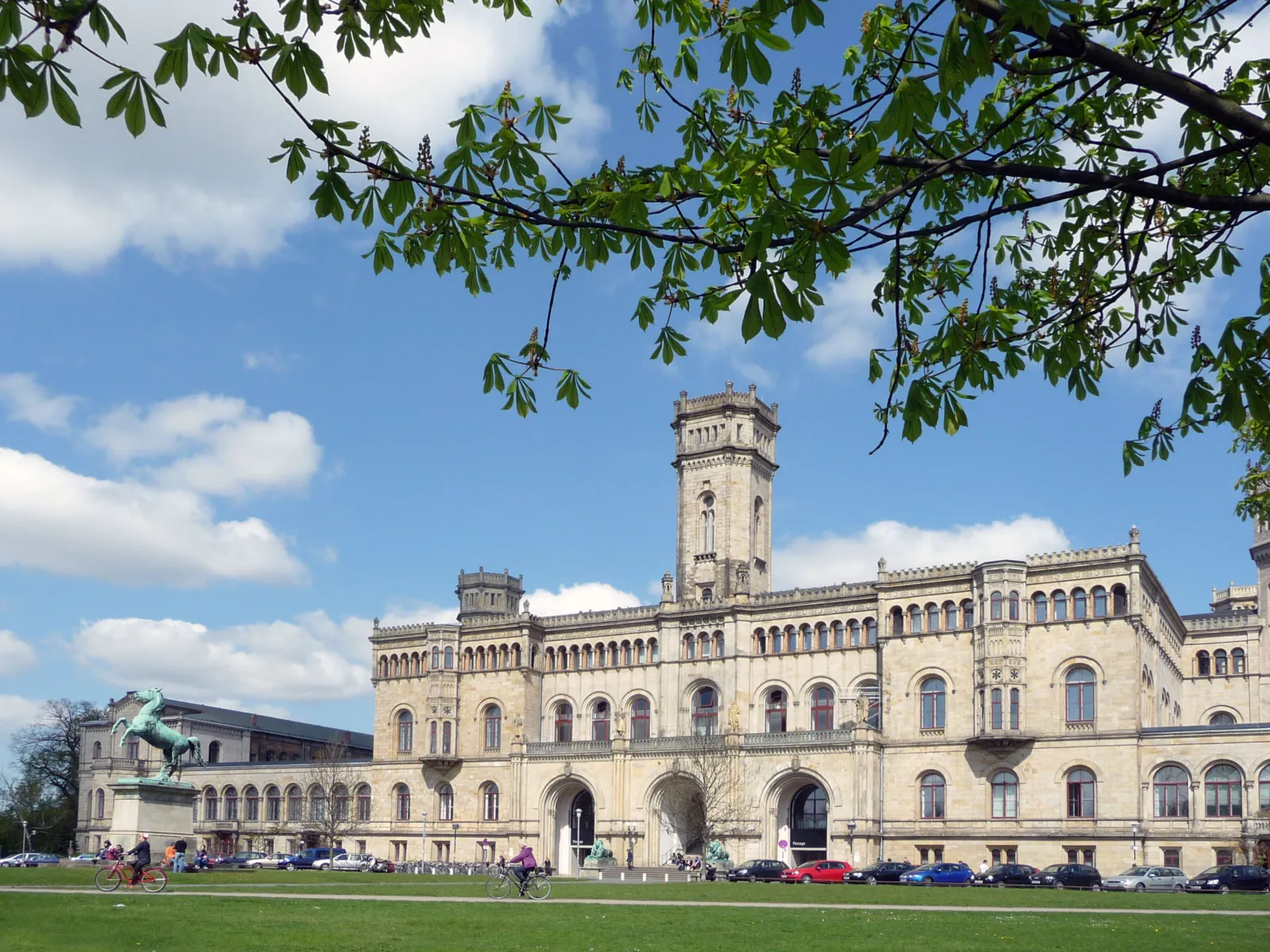
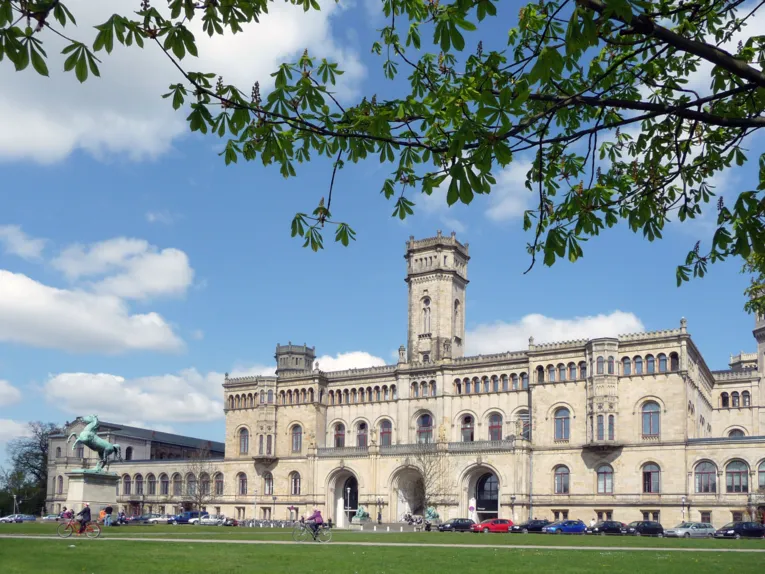
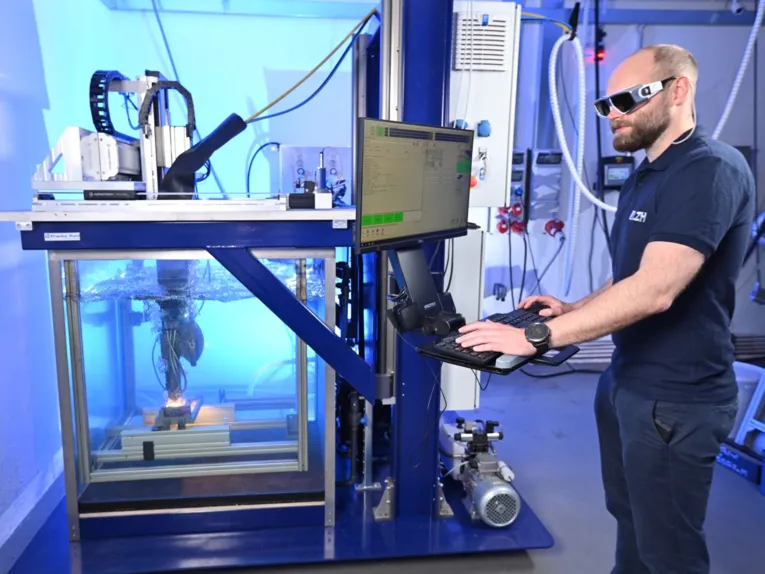
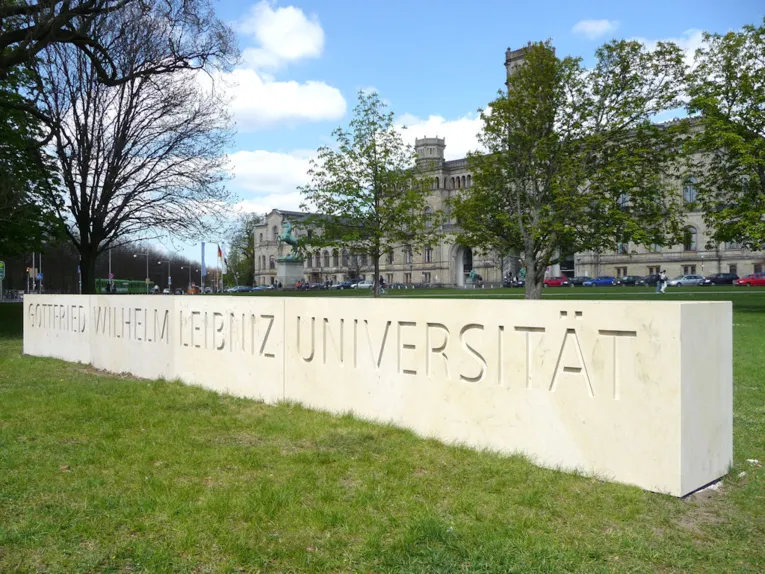
Plastic waste in oceans and rivers is a global problem, not least because of its slow decomposition and the microplastics that may be produced in the process. But how quickly do different types of plastics actually degrade in water? What degradation products are formed in the process? Which environmental parameters influence the degradation behavior? On the grounds of the Mechanical Engineering Campus of Leibniz University Hannover in Garbsen, a unique infrastructure is currently being developed under the leadership of the IKK—Institute for Plastics and Recycling Technology—with the goal of answering precisely these questions. The project name SkalAb stands for “Multiscale Analysis of Aquatic Degradation Mechanisms of Polymer Materials.” The European Regional Development Fund (ERDF) is providing more than two million euros in funding for the laboratory’s construction and technical equipment as part of the EU’s response to the COVID-19 pandemic.
The breakdown of plastic in the ocean and rivers
It can take many hundreds of years for plastic to fully decompose in the ocean and rivers. “We don’t know exactly what happens to the different types of plastic in detail,” explains project leader Dr. Florian Bittner of the IKK. The rate at which plastics degrade depends not only on their specific composition, but also on numerous other factors—such as light, temperature, and currents—as well as how these factors interact.
Analysis of the degradation behavior of plastics in water bodies
For this reason, the scientists aim to replicate the scenarios to be investigated in research projects on different scales, in what are known as microcosms and mesocosms. These will then reflect the natural environmental conditions of aquatic ecosystems. The research team aims to investigate the degradation behavior and the prevailing degradation mechanisms of different materials depending on the respective environment, such as salinity, oxygen availability, wave motion, or temperature. The degradation processes will be analyzed in detail at the chemical and morphological levels. Additionally, the degradation products in the aquatic system will be recorded.
Developing customized polymer materials
Using these analytical methods, the IKK is laying the groundwork for the first time for a comprehensive, systematic investigation of the relationships between degradation kinetics and material and environmental parameters, as well as the degradation mechanisms and the potential degradation products, within the framework of current and future IKK research projects. The results will be used, among other things, to develop modified or novel polymer materials that exhibit improved degradation properties and thus reduce the environmental impact.
(Published: March 11, 2022)

 Deutsch
 English
 中文
中文
 Danish
 Eesti
Eesti
 Español
 Suomi
Suomi
 Français
 Italiano
 日本語
日本語
 한국
한국
 Nederlands
 Norge
Norge
 Polski
 Portugues
 Русский
 Svenska
 Türkçe
 العربية
 Română
 български