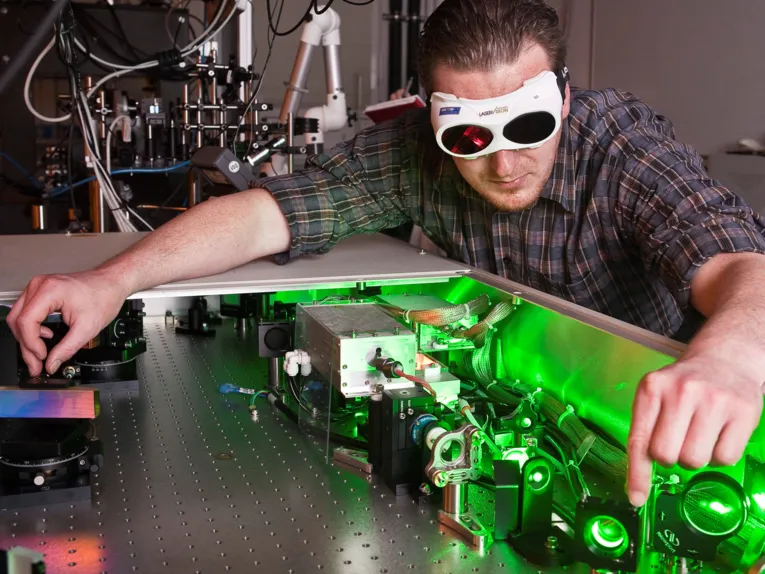
These systems behave similarly to older Christmas light strings when a single bulb fails: If one module fails because it isn’t receiving enough light, the rest no longer function properly either. The ASMokos project at the Institute for Drive Systems and Power Electronics (IAL) at Leibniz University Hannover aims to change this in cooperation with the Institute for Solar Energy Research (ISFH) in Hameln. The German Federal Environmental Foundation is funding the project with approximately 125,000 euros.
The goal is to develop a shading-tolerant AC solar module. AC stands for Alternating Current. The project aims to enable simple installation that is independent of location and orientation, so that photovoltaic systems can be integrated with minimal effort not only on roofs but also within buildings—for example, on garden fences or balconies. This technology is intended to further increase the socio-ecological potential of photovoltaics and its acceptance in society.
Typical residential PV systems each consist of a central power electronics unit with one or more connected PV strings. These PV strings are composed of individual PV modules connected in series. This system-specific series connection typically requires significant design and planning effort, as a suitable combination must be developed for each system. If the system design is not carried out carefully, this can lead to yield losses and even damage to components of the PV system. The ASMokos project aims to achieve full integration of the inverter and solar module.
About Energy Research at Leibniz University Hannover
Leibniz University Hannover brings together its scientific expertise at LiFE 2050, an interdisciplinary research center dedicated to the study of sustainable energy systems. LiFE 2050 is also one of five research sites of the Lower Saxony Energy Research Center (EFZN). For more information, visit www.energie.uni-hannover.de.
 Deutsch
 English
 中文
中文
 Danish
 Eesti
Eesti
 Español
 Suomi
Suomi
 Français
 Italiano
 日本語
日本語
 한국
한국
 Nederlands
 Norge
Norge
 Polski
 Portugues
 Русский
 Svenska
 Türkçe
 العربية
 Română
 български