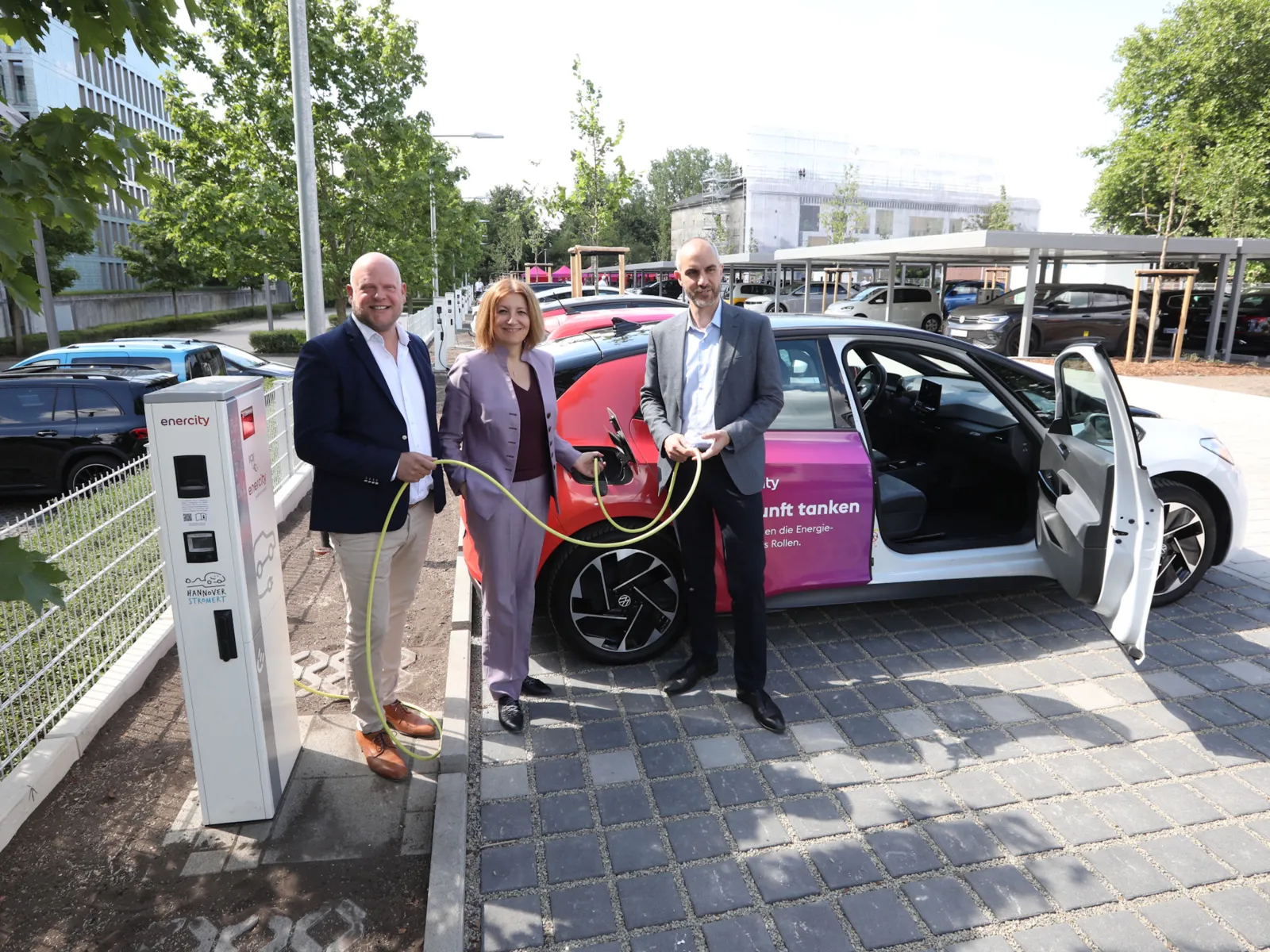
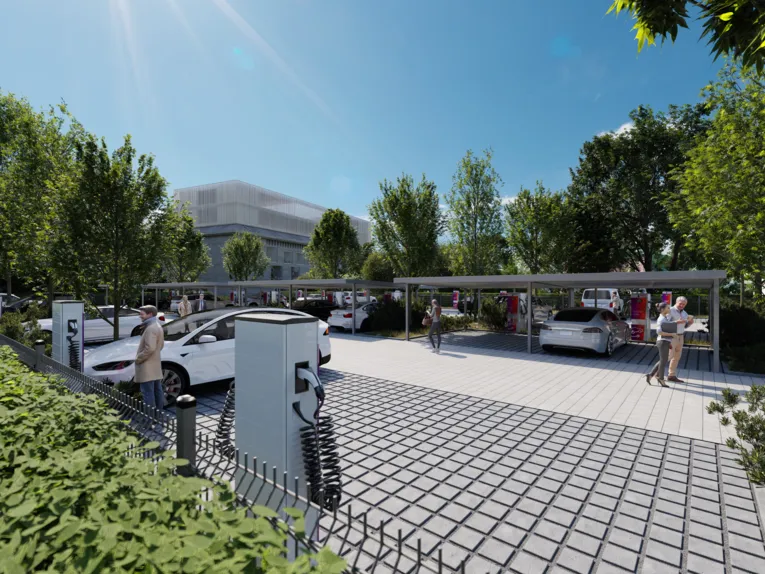
E-mobility is growing thanks to a robust infrastructure—in public spaces, at home, and at work. As a driving force behind the mobility transition, enercity is once again setting new standards and has opened what it claims is northern Germany’s largest charging network, featuring 90 charging points. As of now, 84 new parking spaces for standard charging (22 kW each) and six for fast charging (150 kW each) are available to residents of Hannover’s List district. enercity has invested approximately 1.8 million euros in this project. With this charging park, the company is further expanding its commitment to e-mobility. The goal is to increase the number of its own charging points from 3,500 to over 4,500 by the end of the year, including more than 500 public charging points in Hanover. “Expanding the charging infrastructure is important for the transportation transition and for a climate-neutral city. The new charging park in List is another significant step on this path,” says Hanover’s Mayor Belit Onay. “We have entered an era in which fuel costs for gasoline-powered cars are significantly higher than for electric cars—currently nearly twice as expensive. This will soon lead to even greater momentum in the adoption of electric vehicles. “With this new flagship location right in the heart of residential and commercial areas, we’re making Hannover’s charging network even more comprehensive so that we’re well prepared for this shift,” says enercity CEO Dr. Susanna Zapreva.
Collaborative Project Development
The charging station was created through a partnership between enercity and Bauforum Hannover GmbH, the project developer behind the “Bunker B58” construction project. For this sustainably designed office building—which features modern workspaces inside a former air-raid shelter—enercity is providing electric charging stations on the adjacent property for all tenants of the project, without exception. On the approximately 3,200-square-meter charging site, the project developer has leased 60 parking spaces for 30 years for the “Digital Campus” coworking space currently under construction there. An additional ten parking spaces have been allocated to the insurance company VHV for its neighboring office location. While at the office, employees can conveniently charge their electric vehicles at standard charging stations. A compact electric car requires just over 45 minutes to charge enough for a range of about 100 kilometers. Short-term visitors can charge their cars at fast-charging stations in about seven minutes for a range of 100 kilometers.
Charging Station as a Contracting Service
About 80 percent of charging takes place at work or at home. enercity therefore also offers its parking and charging spaces as a contracting model in office settings: Customers enjoy climate-friendly driving with their electric cars, while the energy service provider handles the financing, operation, maintenance, and billing of the charging electricity. With the charging park, the company is taking its operations to a new level. enercity has demonstrated its ability to design, build, and operate large-scale charging infrastructure projects—a lucrative business model for companies nationwide.
(Published on July 5, 2022)

 Deutsch
 English
 中文
中文
 Danish
 Eesti
Eesti
 Español
 Suomi
Suomi
 Français
 Italiano
 日本語
日本語
 한국
한국
 Nederlands
 Norge
Norge
 Polski
 Portugues
 Русский
 Svenska
 Türkçe
 العربية
 Română
 български