WELFEN, HALF-TIMBERED HOUSES, CHARM
Celle is one of Lower Saxony’s most important royal capitals. For nearly three centuries, it served as the residence of the Dukes of Brunswick-Lüneburg and as the seat of government for the most significant Guelph principality. With Europe’s largest contiguous collection of half-timbered buildings and a variety of museums—ranging from classical to very modern—Celle is certainly the highlight of any trip to the Lüneburg Heath. Celle surprises visitors with additional themes such as Bauhaus architecture and light art, and, with its diverse selection of shops, restaurants, and lodging options, it stands out as a city where everything is within easy reach for young and old alike.
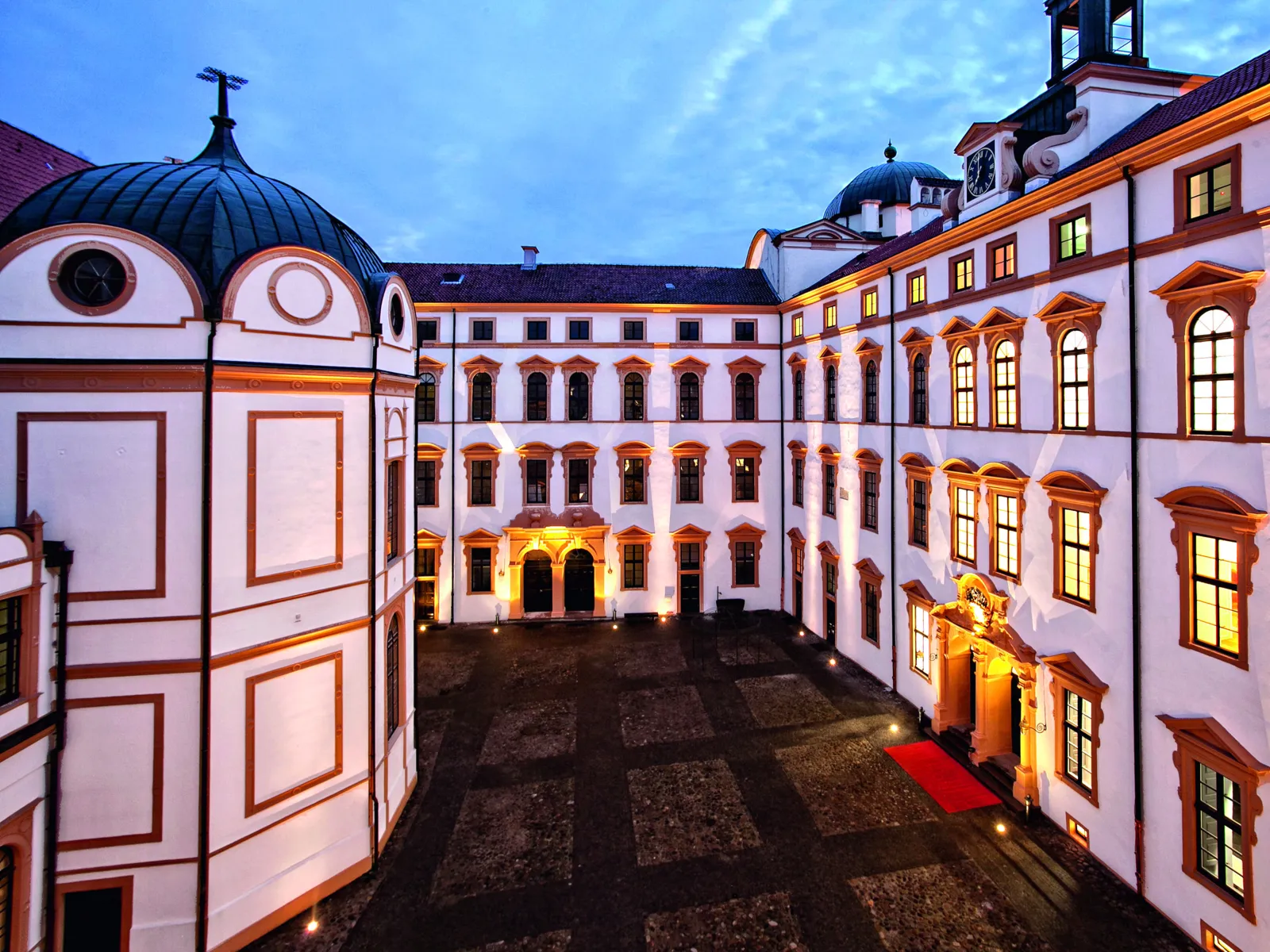
RESIDENCE MUSEUM AT CELLER CASTLE
The castle, nestled in the idyllic half-timbered town, still bears traces of its past as a medieval seat of power, as a Baroque RESIDENCE until 1705, and as a summer retreat for the kings of Hanover in the 19th century. Experience the castle’s history—brought to life in a modern setting—along with that of its
inhabitants. The Baroque suite of rooms belonging to Georg Wilhelm, the last Duke of Celle, with its magnificent stucco work, is an architectural highlight. The “King’s Hall” captivates visitors with its impressive paintings and a selection of royal treasures.
MOVING STORIES OF WOMEN
Thus, the last duchess, the Huguenot Eléonore d’Olbreuse, is the “progenitor” of several European royal houses. In the 17th century, she brought French esprit to northern Germany, thereby enriching court and city life in Celle. Her daughter Sophie Dorothea met a tragic fate: After her divorce from Elector Georg Ludwig, the future British King George I, she was forced to spend the rest of her life in exile. A similar fate befell the Danish Queen Caroline Mathilde, Sophie Dorothea’s great-granddaughter. The divorced sister of King George III spent the last three years of her life at Celle Palace following the Struensee Affair, where she died in 1775.

 Deutsch
 English
 中文
中文
 Danish
 Eesti
Eesti
 Español
 Suomi
Suomi
 Français
 Italiano
 日本語
日本語
 한국
한국
 Nederlands
 Norge
Norge
 Polski
 Portugues
 Русский
 Svenska
 Türkçe
 العربية
 Română
 български