
 Deutsch
 English
 中文
中文
 Danish
 Eesti
Eesti
 Español
 Suomi
Suomi
 Français
 Italiano
 日本語
日本語
 한국
한국
 Nederlands
 Norge
Norge
 Polski
 Portugues
 Русский
 Svenska
 Türkçe
 العربية
 Română
 български
Park
Hermann-Löns-Park
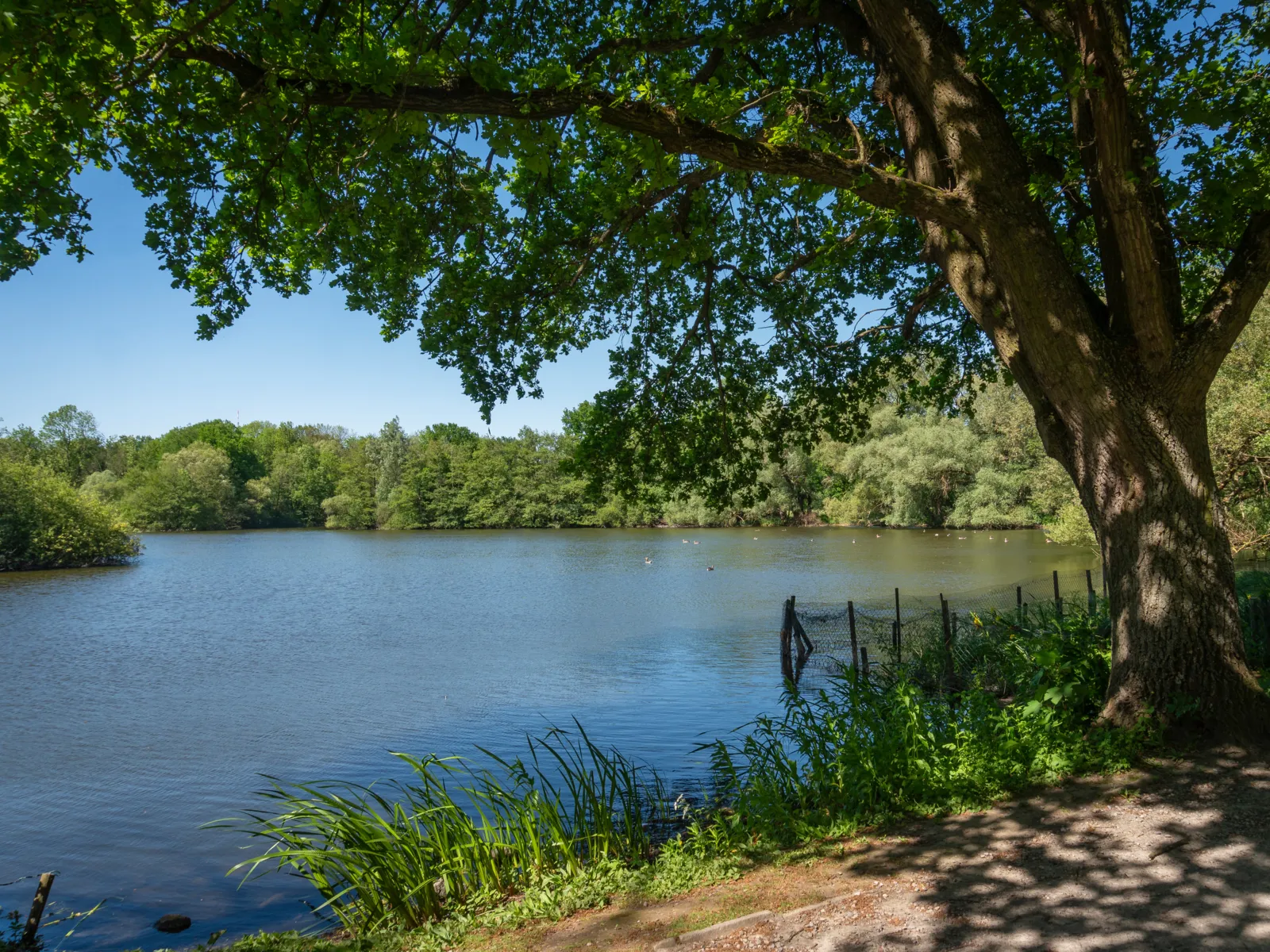
This park, which was created in the 1930s as a public park, preserves an idealized Lower Saxon meadow landscape with native plants, buildings and terrain.
Hermann-Löns-Park
Geological and biological diversity
Geologically, marl rocks characterize the subsoil, resulting in the development of a nutrient-rich fen. These conditions support a rich variety of flora and fauna, including 48 bird species and several bat species. One challenge, however, is the large population of greylag geese, which affects the riparian vegetation and other water birds.
Landscaping and historic buildings
The landscape of the Hermann-Löns-Park combines water areas, meadows and high forest and was designed according to the principles of the Heimatschutz movement. Historic buildings such as the Niedersachsenhaus, the Old Mill (now a restaurant) and the Bockwindmühle windmill reinforce the impression of an open-air museum. The Anna pond, a central water area in the park, was enlarged and divided into two halves to create a picturesque lake landscape. The adjoining allotment site "Annateich" also contributes to the charming surroundings of the park.
History and use
The site of today’s park was formerly a lowland bog and was used for clay extraction beginning in the 17th century. The park’s design began in the 1930s, based on plans by landscape architect Wilhelm Hübotter. Despite the destruction caused by World War II, the park has largely retained its original structure. Today, events such as the Hermann-Löns-Park Run and the Police Fun Run are held there.
Hermann-Löns Park offers a unique combination of natural beauty, historic architecture, and diverse flora and fauna. It serves as a valuable recreational space for the citizens of Hanover and as a living testament to the landscape architecture of the 1930s.
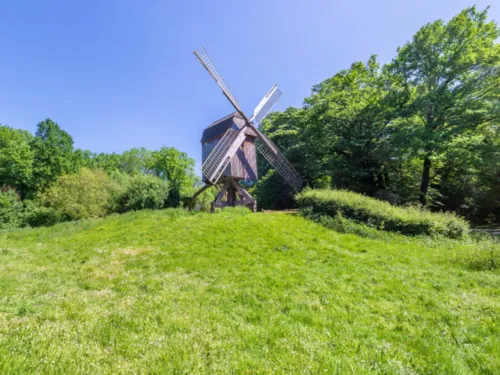
360° tour
Hermann-Löns-Park
Discover the beauty of Hermann-Löns-Park with this fascinating virtual tour
read