
 Deutsch
 English
 中文
中文
 Danish
 Eesti
Eesti
 Español
 Suomi
Suomi
 Français
 Italiano
 日本語
日本語
 한국
한국
 Nederlands
 Norge
Norge
 Polski
 Portugues
 Русский
 Svenska
 Türkçe
 العربية
 Română
 български
Park
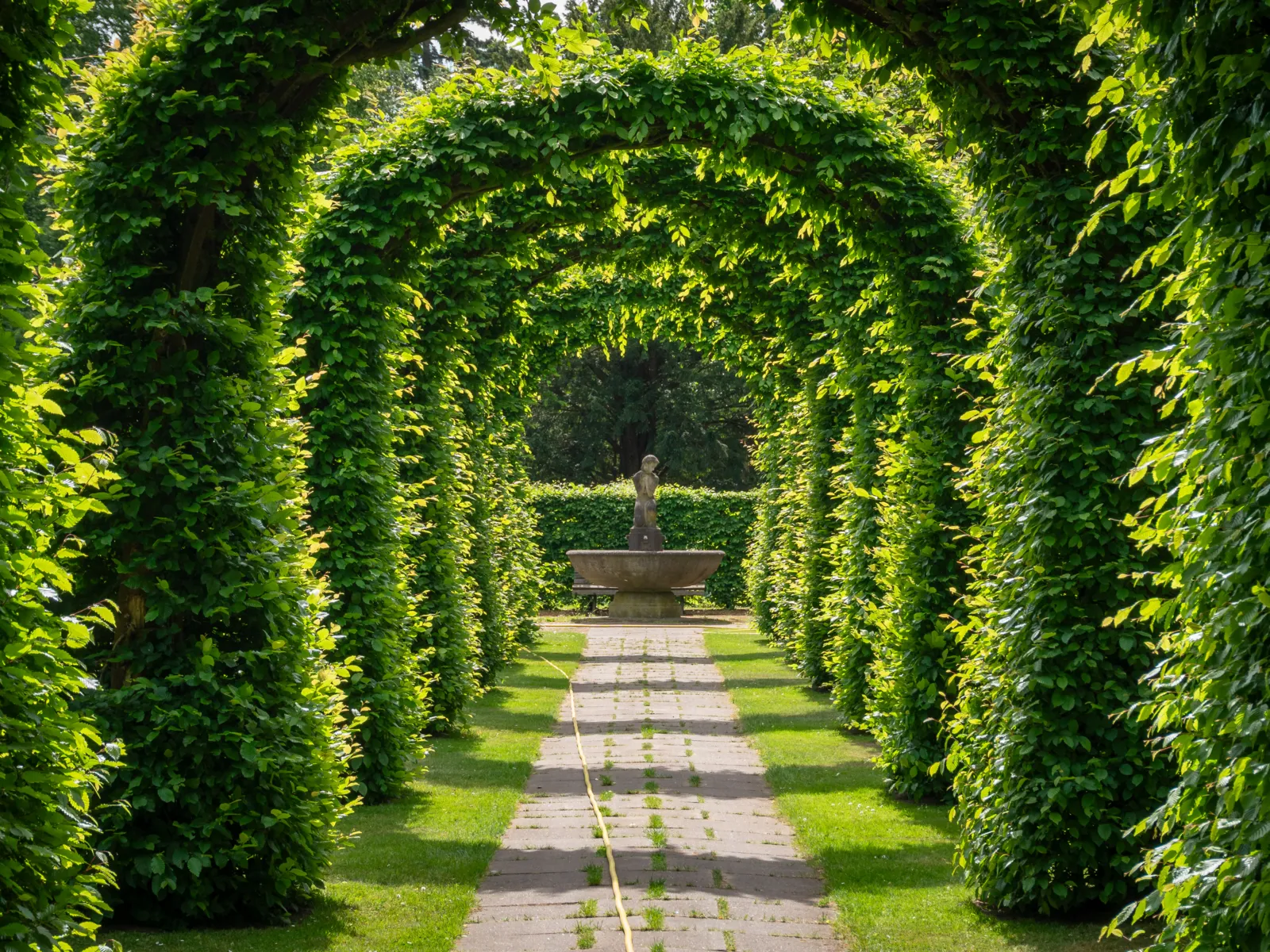
City cemetery Engesohde
The Engesohde municipal cemetery is one of the oldest and most important cemeteries in Hanover.
City cemetery Engesohde
It was established between 1861 and 1864 in the Südstadt district and covers an area of 21.7 hectares. The cemetery is distinguished by a multitude of artistically designed grave monuments and mausoleums, which were designed by prominent architects and artists. The main entrance, featuring a round arch, is the work of architect Ludwig Droste. One of the most striking structures is the chapel designed by Oskar Barnstorf in 1910.
Historical significance and prominent burial sites
The cemetery was created to replace the older Hanoverian municipal cemeteries of St. Nikolai, Neustädter and Gartenfriedhof. It contains the graves of numerous prominent personalities, including the dancer Yvonne Georgi, the Dadaist Kurt Schwitters, the architect Georg Laves and many other important figures from Hanover's history.
Architecture and monuments
In addition to the chapel and the main entrance, the remarkable buildings include a stone balustrade that originally stood on the Schiffgraben and was moved to the cemetery after the waterway was filled in in the 19th century. The artistically designed family graves and monuments are particularly impressive and reflect the history and cultural heritage of Hanover.
The Engesohde city cemetery is not only a resting place, but also a historical monument and a place of reflection and remembrance of the diverse history of Hanover and its inhabitants.
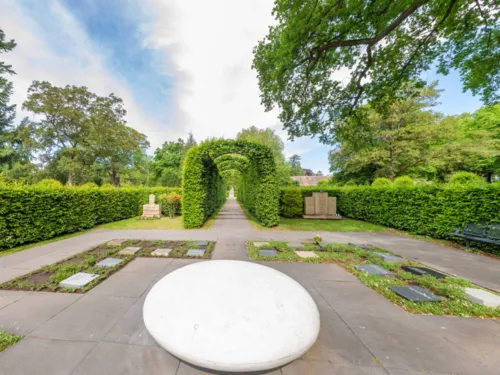
360° tour
City cemetery Engesohde
Discover the beauty of the Engesohde municipal cemetery with this fascinating virtual tour
read