
 Deutsch
 English
 中文
中文
 Danish
 Eesti
Eesti
 Español
 Suomi
Suomi
 Français
 Italiano
 日本語
日本語
 한국
한국
 Nederlands
 Norge
Norge
 Polski
 Portugues
 Русский
 Svenska
 Türkçe
 العربية
 Română
 български
Museum
Wilhelmstein Fortress
Wilhelmstein Fortress, located on the island of the same name in the Steinhuder Meer, now houses a museum.
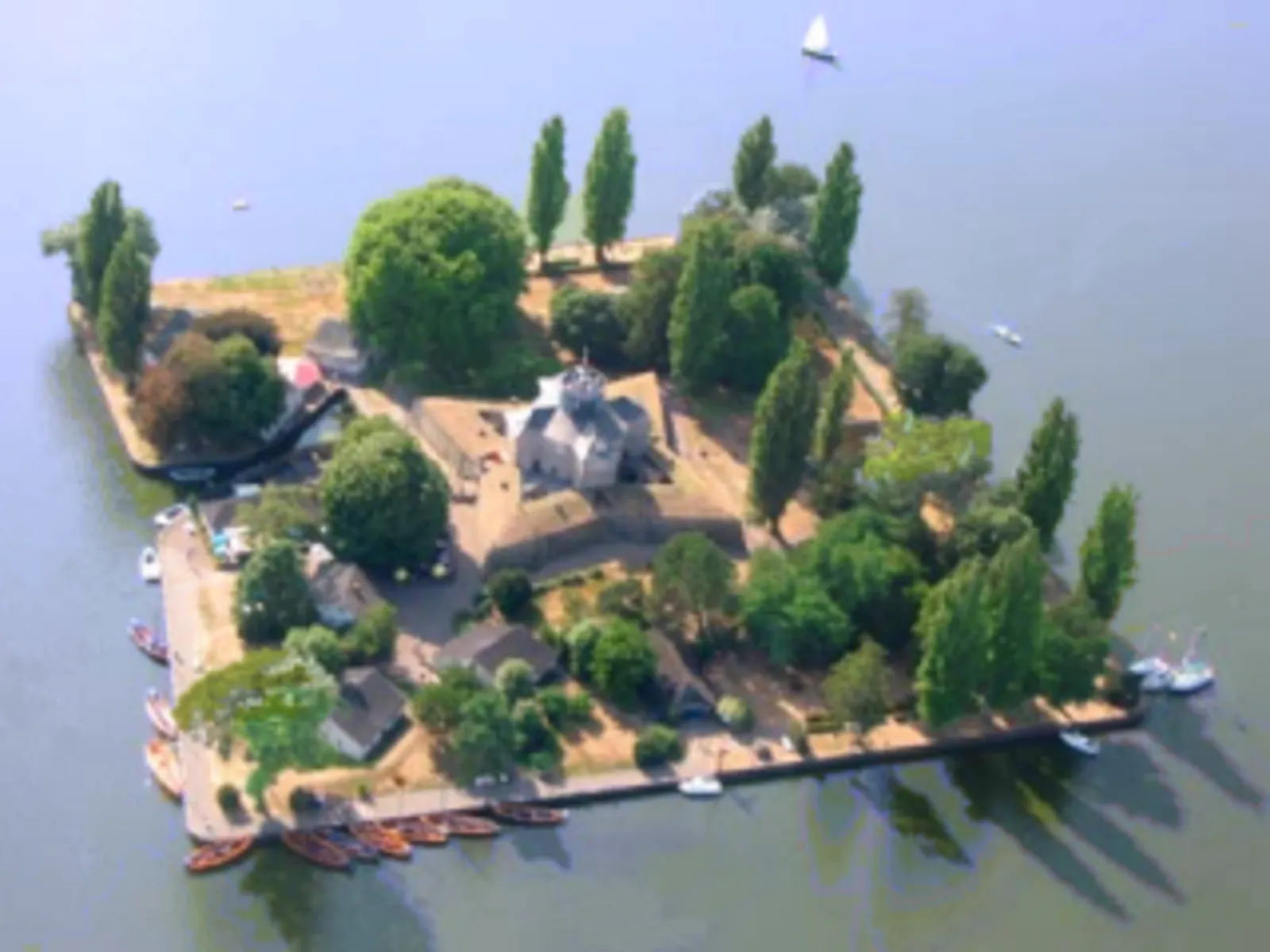
Visitors reach Wilhelmstein Fortress by boat, the so-called emigrants.
Wilhelmstein is an artificial island built of stone blocks in Lake Steinhude. Count Wilhelm zu Schaumburg-Lippe (1724–1777) had a fortress built here to serve as an “impregnable refuge.” In fact, Wilhelmstein was besieged only once, and that attempt was unsuccessful.
For a time, the fortress housed a military school, where Gerhard von Scharnhorst and others studied. And in the 19th century, Wilhelmstein served as a Schaumburg-Lippe state prison.
Today, the citadel of the fortress houses a museum displaying personal belongings and portraits of Count Wilhelm zu Schaumburg-Lippe and Gerhard von Scharnhorst. Visitors can also view items from the military academy, as well as weapons, cannons, and mortars.
Steinhuder Pike
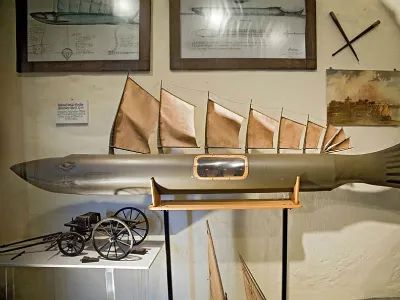
Steinhuder Pike
Count Wilhelm von Schaumburg-Lippe’s most famous invention was the Steinhuder Hecht, the first submarine built in Germany. It was designed by J.C. Praetorius, who served the count as an engineer, geographer, and officer. When Wilhelm was appointed commander-in-chief in Portugal in 1762, Praetorius proposed a submersible to him that would ensure a fast and safe connection to Schaumburg-Lippe. When traveling on the surface, it was to be propelled by sails. Underwater, the “Steinhuder Hecht” was to be propelled by the strokes of a fish tail pulled by the crew.
A small oak prototype shaped like a fish is said to have been submerged in Lake Steinhude in 1772. The boat reportedly had room for eight men and could remain submerged for about twelve minutes. However, it is not known how the diving experiment turned out, how it was evaluated, or whether it was ever repeated. The sketches and a model replica of the “Steinhuder Hecht” are on display at the Wilhelmstein Island Fortress.
31515 Wunstorf