
 Deutsch
 English
 中文
中文
 Danish
 Eesti
Eesti
 Español
 Suomi
Suomi
 Français
 Italiano
 日本語
日本語
 한국
한국
 Nederlands
 Norge
Norge
 Polski
 Portugues
 Русский
 Svenska
 Türkçe
 العربية
 Română
 български
Excursion destination
The Calenberg Fortress
A relic from the Middle Ages: the ruins of Calenberg Castle in Pattensen.
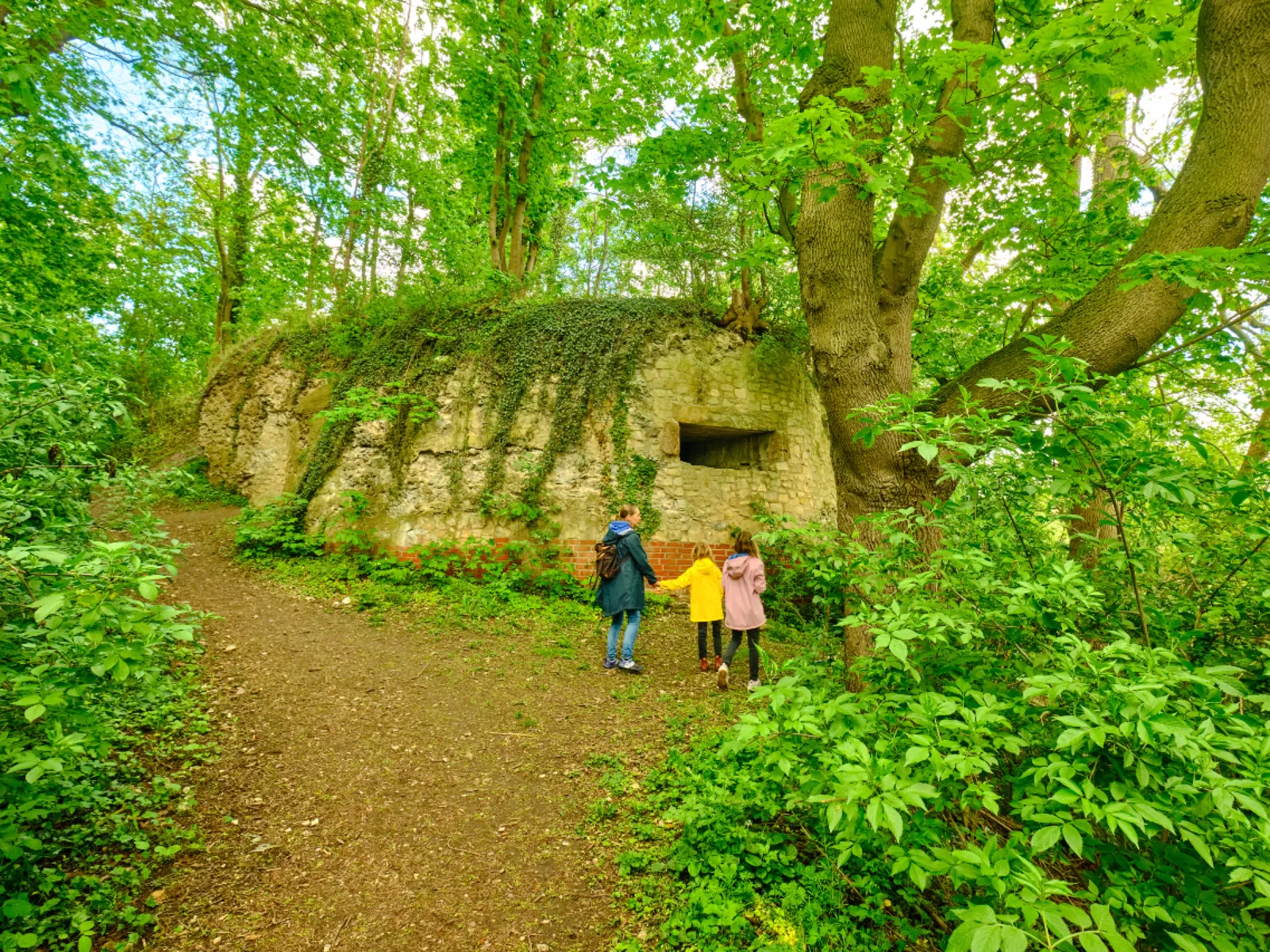
Historical excursion destination: the Calenberg fortress
Calenberg Castle (later known as Calenberg Palace and Calenberg Fortress; the ruins are now called Alt Calenberg) was a medieval lowland castle near Pattensen, in the Schulenburg district, 13 km west of Hildesheim. Construction began in 1292 under Duke Otto the Strict of the House of Welf; it was built as a moated castle in the Leine floodplain between two branches of the Leine River, on the southern part of the Calenberg limestone-marl bank.
In the early 16th century, it was converted into a fortress. This Calenberg Fortress gave its name to the Guelph Principality of Calenberg, which had been established in the 15th century. After the Thirty Years' War, it lost its military significance and was razed ("torn down"). Today, it is a ruin with underground vaults, surrounded by high ramparts. The nearby Calenberg estate takes its name from Calenberg Castle.
The Calenberg
The castle complex stands on the Calenberg, which rises 70 meters above sea level. It was formed nearly 100 million years ago at the beginning of the Upper Cretaceous, during the Cenomanian stage. Before the castle was built, it jutted out about 10 meters from the floodplain as a limestone-marl bank between what were then the branches of the Leine River. It encompasses not only the grounds of Calenberg Castle but extends another 500 meters to the north. For this reason, the castle’s moat had to be cut more than ten meters deep into the limestone-marl bank.
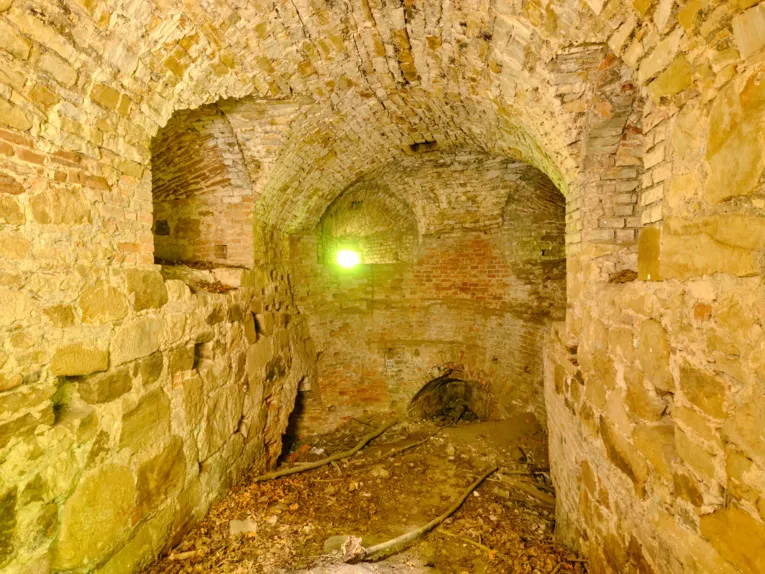
The vaulted cellars of Calenberg Fortress
The remains
The ruins of the fortress are located in the Alt Calenberg area, which has been part of the Calenberger Leinetal Landscape Conservation Area since 1997. Of the fortress and the castle hill, the ramparts, cellars, and foundations of the castle, the palace, and the Corvinus Cellar, as well as the remains of the battery tower, are still preserved today. The battery tower and the two cellar rooms have been closed since mid-2008. Bats roost in the vaulted cellars beneath the two wings of the palace. From October 1 through April 30, these hibernating animals should not be disturbed. One of the vaults contains a brick-lined well several meters deep. The underground cellars are so extensive that two children once got lost there and had to be rescued by emergency responders.
According to oral tradition, there are said to have been underground escape routes to Lauenstadt and the diocese of Hildesheim. The ramparts still exist in the north-west, north and north-east. The surrounding ditches no longer carry water. The entire area is covered with trees, shrubs and nettles, and there are also snowdrops and wild daffodils.
Calenberg Festivals
30982 Pattensen