
 Deutsch
 English
 中文
中文
 Danish
 Eesti
Eesti
 Español
 Suomi
Suomi
 Français
 Italiano
 日本語
日本語
 한국
한국
 Nederlands
 Norge
Norge
 Polski
 Portugues
 Русский
 Svenska
 Türkçe
 العربية
 Română
 български
Bathing lake
Silver Lake
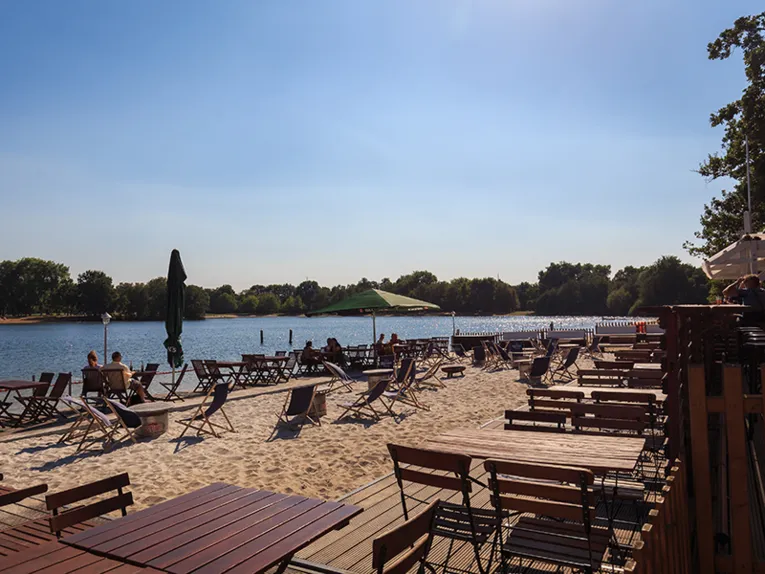
Silver Lake
The Silbersee was created between 1934 and 1935 during the construction of the highway. It is around ten meters deep. It is said to have been given its name by airplane pilots because it shone silvery in the sun when flying over it. The quarry pond was converted into a lake complex in the 1960s. In the 1980s, playground equipment, a mini-golf course, a restaurant and a kiosk with a beer garden as well as sanitary facilities were added. Bathers can go swimming without a care in the world. And many do. Especially at the weekend. But even when it gets really crowded, there is enough space for everyone on the site with its extensive meadows.

What does Silbersee have to offer?
Water area:
68,000 square meters, large demarcated shallow water zones
Equipment:
WC (disabled access), shower, changing room, large sunbathing lawns, three sandy beaches, old trees, dog beach
Activities:
Three playgrounds with exciting play equipment, mini golf
Gastronomy:
Kiosk with snack bar and beer garden
Interesting facts about lifeguards, watercraft and more
The DLRG is on duty on weekends from 10:00 a.m. to 6:00 p.m. and, weather permitting, during school breaks from 10:00 a.m. to 6:00 p.m. You can tell when lifeguards are on duty by the raised DLRG flag.
Please note: Never block the emergency access road! There is another parking lot a few hundred meters further down the road.
During the bathing season from May 15 to September 15, dogs are not allowed on the lake, with the exception of the signposted dog walkway and the dog beach
The Silbersee Info Profile—Other Things Worth Knowing
Silbersee is located east of the city of Langenhagen, north of the A2 highway and south of the L382. It is said to have gotten its name from airplane pilots because it glistened silvery in the sun as they flew over it. The lake’s facilities include a playground, mini-golf, and other sports activities, designated barbecue areas, long sandy beaches, and dock facilities. One of the beaches is designated as a dog beach. Some areas of the water are reserved for anglers. The large grounds offer many people a place to relax and unwind. The DLRG (German Life Saving Association) patrols the beach on weekends during the swimming season when the weather is nice. At other times, swimming is at your own risk. Parking is free in the designated areas.
The reed zones in the lake serve as valuable retreats for water birds and other animal species.
Waterfowl are host animals for larvae of sucking worms that parasitize in the intestines of waterfowl. During their development, the bird flukes change hosts. The eggs enter the water with the birds' excrement. They hatch into ciliated larvae, miracidia, which seek out an intermediate host, i.e. various freshwater snails. In the snails, the miracidia develop into infectious cercariae via multiplication phases. These are released into the water at water temperatures above 24° C, in the months of June to September. They mistakenly head for humans as a false host. The cercariae penetrate the human skin, where they die and cause skin infections similar to gelatinous stings. Cercariae infestations are harmless to humans, but are unpleasant due to the severe itching. The occurrence of cercariae is not related to the hygienic water quality of the lakes!
Cercariae - what you can do
You can prevent an encounter with cercariae by
- Do not feed ducks, this increases the parasite infestation!
- Avoid shore zones rich in aquatic plants!
- Use waterproof sunscreen!
- Rub yourself down vigorously with a washcloth after bathing to remove any cercariae that have not fully penetrated the skin.
- Do not scratch yourself - prevent secondary infection
The Department of Health, as the responsible authority, conducts regular tests of the bathing water at the swimming area. The first bathing water sample is taken before the start of the season. During the swimming season, from May 15 to September 15, samples are taken once a month. The water is tested for the indicator bacteria Escherichia coli and intestinal enterococci. These results are published here and on the Lower Saxony State Health Office’s bathing water portal, among other places.
If the authorities become aware of the occurrence of mass proliferation of blue-green algae, the water is tested for blue-green algae and, if necessary, an official warning of acute occurrence of blue-green algae is issued. If large quantities of toxic blue-green algae are detected, a bathing ban is issued and published on site and on the internet.
How do you get to Silbersee?
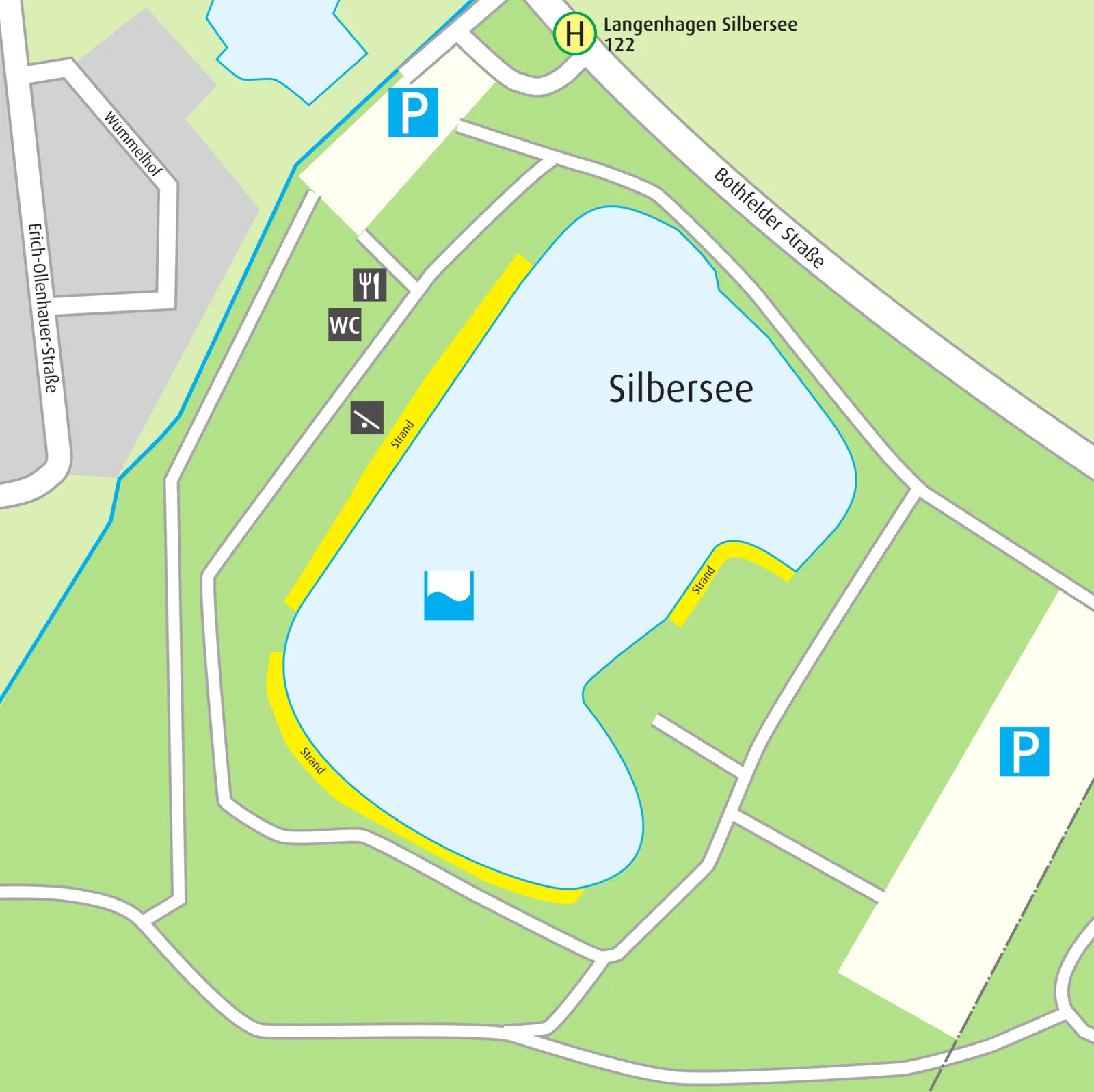
Directions to Silbersee
More information

Silver Lake
Silbersee: Water findings report (excerpt)
The water quality of the bathing waters is checked regularly. You can find the results of the tests here.
read
Bath dermatitis (cercaria dermatitis)
Bath dermatitis (cercaria dermatitis)
What is Badedermatis, what symptoms can occur and how can you protect yourself against it? Information from the Health Department of the Regio...
File type: pdf Size: 183,17 kB
Silbersee - Bathing water profile
Silbersee - Bathing water profile
Information from the Health Department of the Hanover Region in accordance with the Lower Saxony Bathing Water Ordinance. (As of March 2019)
File type: pdf Size: 388,22 kB