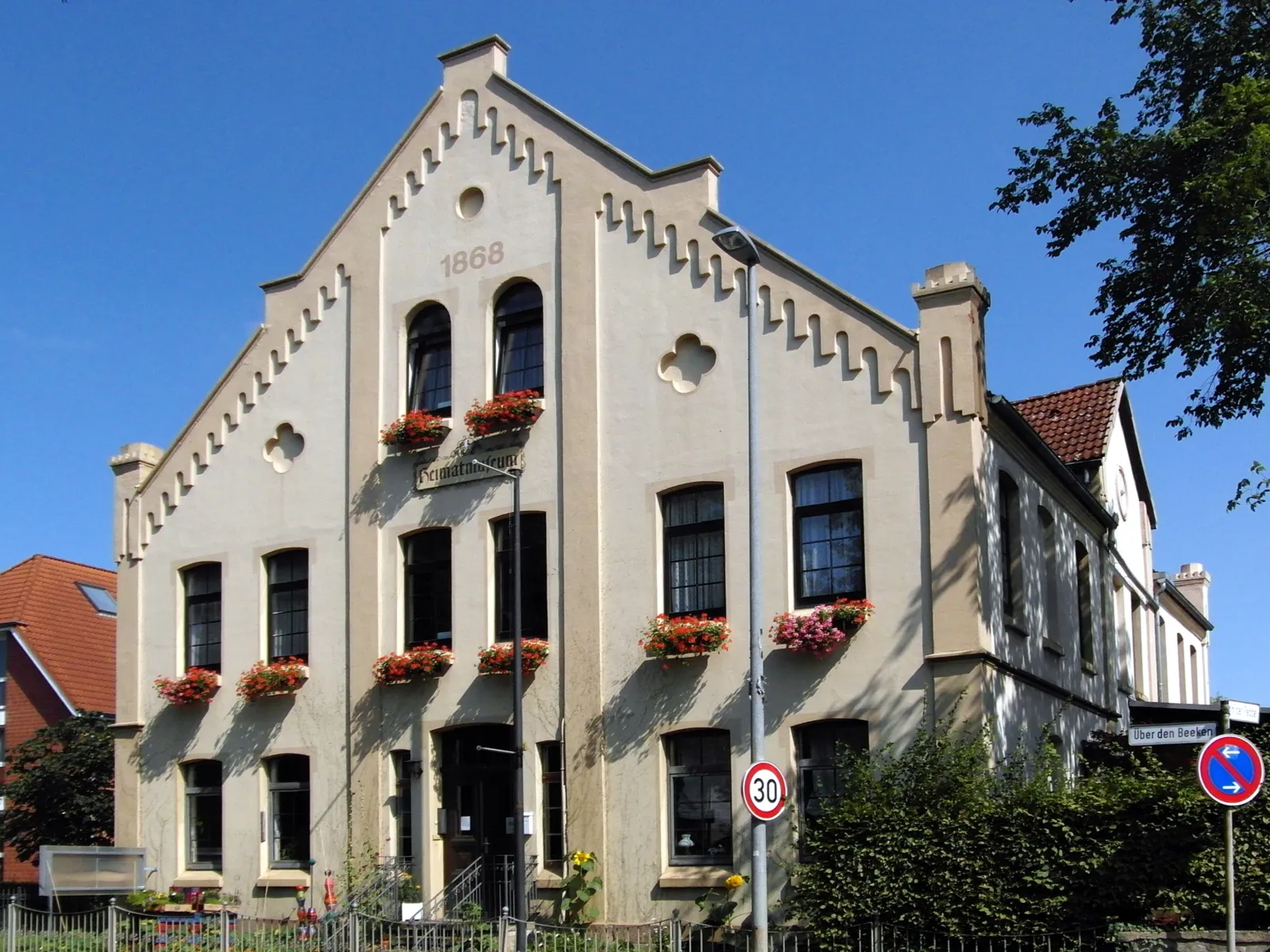
The museum was established in response to the potash mining industry in Ronnenberg. After the mine closed, Bruno Kaleschke and the Ronnenberg Heritage Association established a local history museum in the mid-1970s, initially in the former mine cafeteria. When the space became too small, the exhibition moved to an empty farmhouse in the center of Ronnenberg.
Since then, the first floor has also housed the Ratsstube, a "parlor" of a wealthy Calenberg farming family at the end of the 19th century that has been largely preserved in its original state.
On the second floor there is a complete kitchen from the 1950s, where you can admire old crockery, old coffee grinders, household scales and many other household items.
A classroom with wooden benches and a slate board gives younger visitors in particular an impression of lessons in earlier times.
A large section of this floor traces the role of potash mining in the history of the town of Ronnenberg.
Another exhibition uses photographs and documents to provide information about Jewish residents of Ronnenberg up until Kristallnacht in November 1938, as well as about the fate of forced laborers and refugees in the former camps in the districts of Empelde and Benthe.
With its tools and complete workshops, the exhibition on the top floor provides a comprehensive insight into the work of various trades and agriculture in Ronnenberg's recent past.
Source: Ronnenberg Local History Museum

 Deutsch
 English
 中文
中文
 Danish
 Eesti
Eesti
 Español
 Suomi
Suomi
 Français
 Italiano
 日本語
日本語
 한국
한국
 Nederlands
 Norge
Norge
 Polski
 Portugues
 Русский
 Svenska
 Türkçe
 العربية
 Română
 български