The museum
The Lower Saxony Museum of Potash and Salt Mining has made it its mission to document and preserve the history of potash mining in Lower Saxony.
In an exhibition space covering 250 m², visitors are given an overview of the formation of potash deposits and the extraction and processing of salts both above and below ground.
The History of Salt Production in Lower Saxony
Approximately 250 million years ago, vast salt deposits were formed in northern Germany.
More than 200 of these salt dome structures are located in Lower Saxony. Not all of them were mined.
Salt was already being extracted around Empelde as early as 1,100 years ago. The precious mineral salt was obtained from saline springs.
These mineral salts were extracted, with some interruptions, at the Badenstedt salt works until 1965. Thanks to the work of Justus von Liebig, who recognized the importance of potash for agriculture, mining operations began to exploit these salt deposits in Germany in the mid-19th century.
In the Hanover region, the mining of “white gold” began a good 100 years ago. The landscape was transformed by the construction of numerous potash plants and new industrial settlements. Cities and towns in the region grew to considerable size as a result of the influx of many thousands of new residents. The region flourished. Now, more than 100 years later, only one plant in the region remains in operation. All other plants were closed or shut down for economic reasons.
Salt Exhibition
The Museum of Potash and Salt Mining also features its own salt exhibition, where visitors can marvel at over 300 different types of salt from around the world.
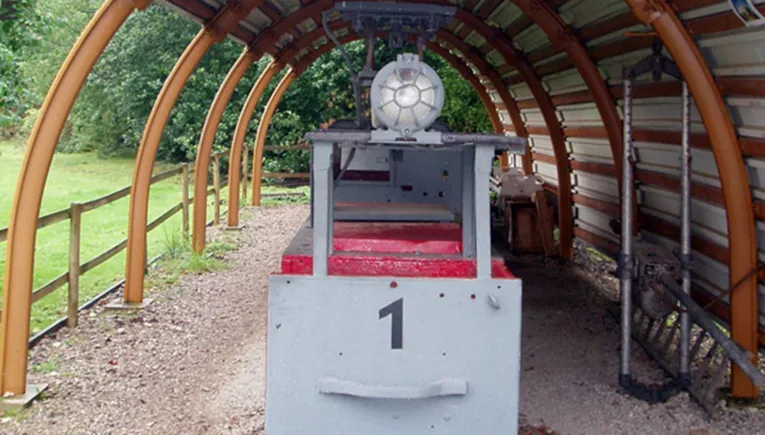
In a replica of a so-called "tunnel drive," museum guests can push their own mine car and even break up salt themselves.
An interesting outing for families!

 Deutsch
 English
 中文
中文
 Danish
 Eesti
Eesti
 Español
 Suomi
Suomi
 Français
 Italiano
 日本語
日本語
 한국
한국
 Nederlands
 Norge
Norge
 Polski
 Portugues
 Русский
 Svenska
 Türkçe
 العربية
 Română
 български