 Deutsch
 English
 中文
中文
 Danish
 Eesti
Eesti
 Español
 Suomi
Suomi
 Français
 Italiano
 日本語
日本語
 한국
한국
 Nederlands
 Norge
Norge
 Polski
 Portugues
 Русский
 Svenska
 Türkçe
 العربية
 Română
 български
Natural biotope
Misburg marl pit
A biotope recognized by the United Nations (UN).
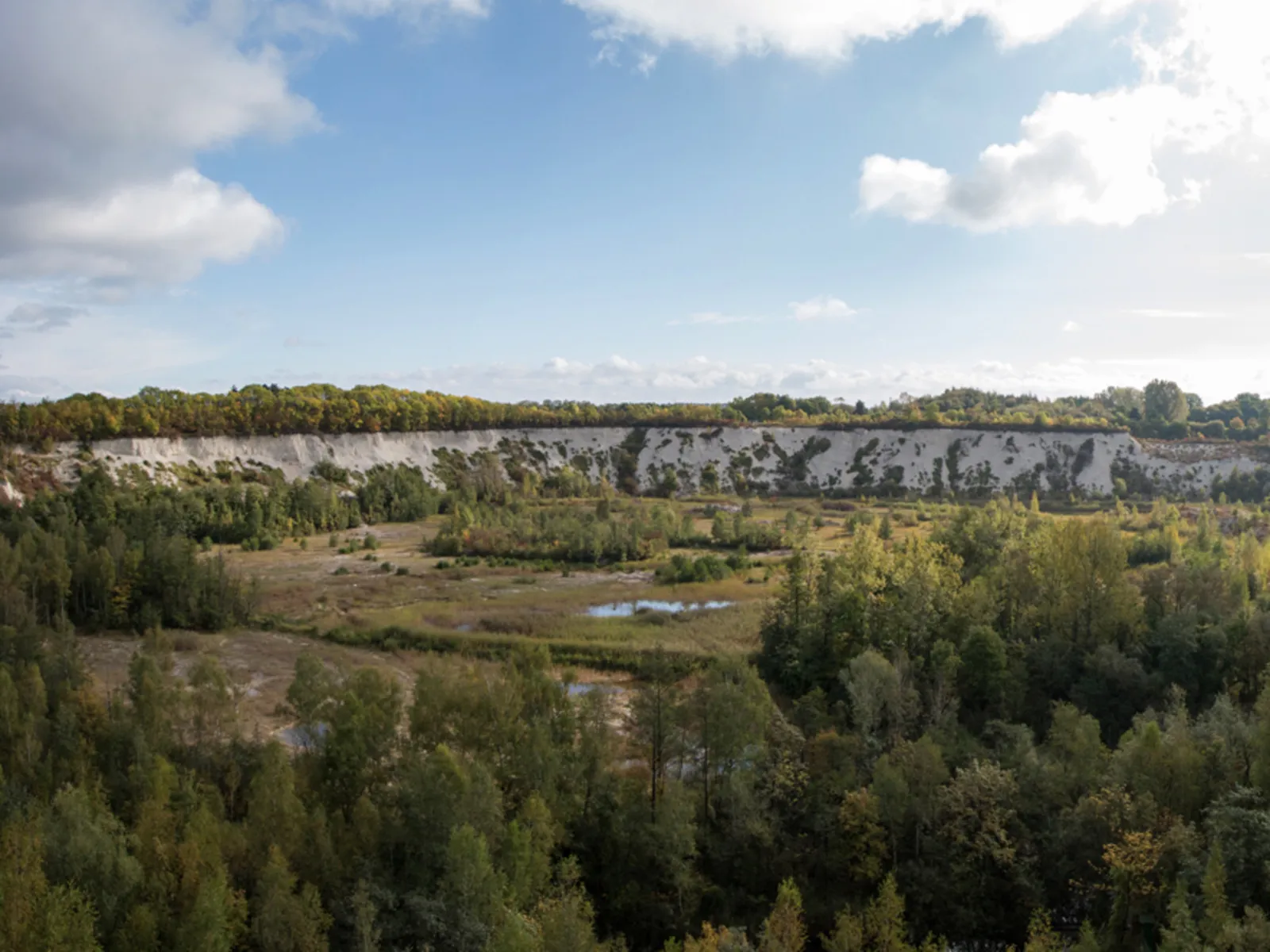
A unique biotope: the marl pit in Misburg.
Marl mining has not been carried out here since 1970. Since then, an important biotope has developed here. There are currently 180 plant species, some of which are very rare, including several orchid species such as the flesh-colored orchid and the marsh orchid. In addition, two species of the arm candle alga, which had been considered lost in Lower Saxony since 1897, have been documented again for the first time. Recently, two species of water hoses, a carnivorous plant, have also been found. Because the salt content of the soil increases with greater mining depth, even salt-tolerant plants such as beach aster and salt tongue, which are usually only found on the seashore, find a habitat on the pit floor. The marl pit also offers attractive habitats for wildlife. Amphibians, for example, include the great crested newt. Among the birds, the perennial breeding success of the eagle owl is particularly noteworthy in addition to the water and reedbed inhabitants. At the south-eastern edge of the marl pit, the kingfisher has also found a suitable habitat. Dragonflies can also be admired in great diversity. Furthermore, the marl pit provides a refuge for a number of animals and plants that were still to be found in the entire "Seckbruch" area before marl extraction began. On April 18, 2018, the marl pit was recognized by the United Nations (UN) as a "Project of the UN Decade on Biodiversity".
From the viewing platform at Erika-Pfingsten-Straße 7, you can observe the marl pit around the clock every day.
Guided tours are also offered on select dates. You can find the dates here.
Tourist highlights
Sights
Discover Hannover’s sights, rich in history and full of things to do.
read