
 Deutsch
 English
 中文
中文
 Danish
 Eesti
Eesti
 Español
 Suomi
Suomi
 Français
 Italiano
 日本語
日本語
 한국
한국
 Nederlands
 Norge
Norge
 Polski
 Portugues
 Русский
 Svenska
 Türkçe
 العربية
 Română
 български
Lakes
Ricklinger gravel ponds
Local recreation in the south of Hanover
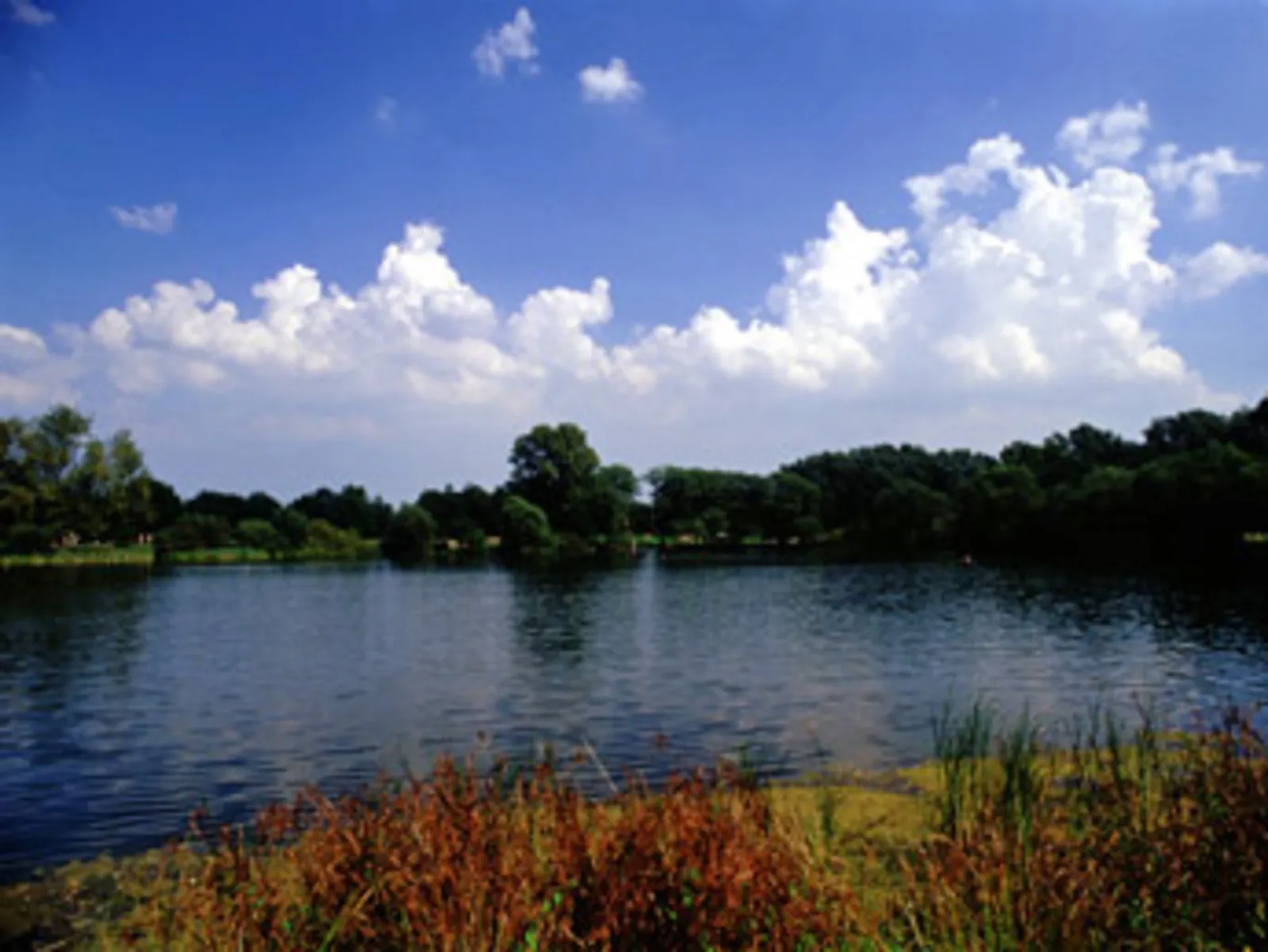
Ricklinger gravel ponds
The Ricklingen Gravel Ponds are part of the southern Leine floodplain, which stretches in a broad band from the Maschsee southward, extending well beyond the city limits of Hanover into the surrounding countryside. Shaped by gravel mining in the second half of the last century, this landscape—featuring lakes, meadows, and willow groves between the Ricklingen and Döhren/Wülfel neighborhoods—is now one of the most important large recreational areas in the city of Hanover and the surrounding region. It is a protected landscape area and is accessible via a well-developed network of hiking and biking trails.
Three bodies of water that are officially approved for bathing and registered as EU bathing waters are known as "Ricklinger Kiesteiche".
These include the "Dreiecksteich" (4.5 hectares of water), the southern part of the Ricklinger Teich (5.5 hectares of water) and the "Sieben-Meter-Teich" (6 hectares of water), the northern shore of which is a nudist area. There are large sunbathing lawns along the ponds that blend into the surrounding landscape. The only source of disturbance in this inner-city idyll is the Südschnellweg, which crosses the area. It is visually concealed by dense tree cover.
The remaining waters of the southern Leine floodplain in the urban area of Hanover are reserved for quiet recreation and serve as a refuge for many animal and plant species, especially water birds. Bathing should not take place here.
Bathing lake
Ricklinger gravel ponds
Three huge bathing ponds offer local recreation in the heart of Hanover.
read