
 Deutsch
 English
 中文
中文
 Danish
 Eesti
Eesti
 Español
 Suomi
Suomi
 Français
 Italiano
 日本語
日本語
 한국
한국
 Nederlands
 Norge
Norge
 Polski
 Portugues
 Русский
 Svenska
 Türkçe
 العربية
 Română
 български
Art Icons on the Banks of the Leine
Nanas Hannover: History of the Colorful Landmarks
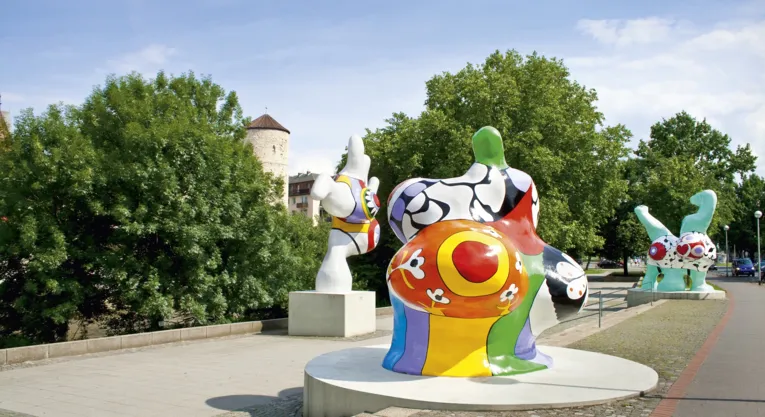
The Nanas on the Hohe Ufer
Niki de Saint Phalle's famous Nanas are enthroned on the banks of the Leine. Once controversial, the three "buxom ladies" have long been one of the most sought-after photo motifs in the city.
Three luminous female figures, a heated art controversy, and a special connection between Hanover and Niki de Saint Phalle: Discover the story of the Nanas on the banks of the Leine and learn how controversial art became one of the city’s most famous landmarks.
How did the Nanas end up in Hanover?
Since January 14, 1974, Sophie, Charlotte, and Caroline have graced the Leibnizufer in Hanover. The three monumental female figures were created by the artist Niki de Saint Phalle and are among her best-known works.
The installation took place at a time when Hanover was breaking new ground with art in public spaces. As part of the street art program, works of art were deliberately brought out of museums and galleries and placed on streets and in public squares. The “Nanas” made this approach particularly visible—and sparked a discussion that went far beyond their shapes and colors.
Today, the figures seem perfectly natural on the leash. In the early 1970s, however, their voluptuous bodies, intense colors, and confident poses came across as decidedly provocative.
Why are the three Nanas named Sophie, Charlotte, and Caroline?
The three Nanas are named after notable women with ties to Hanover:
Sophie commemorates Electress Sophie of the Palatinate, who is closely linked to the history of the Herrenhausen Gardens and Hanover.
Charlotte is named after Charlotte Buff, who became known as the inspiration for the character Lotte in Goethe's *The Sorrows of Young Werther*.
Caroline It is a tribute to Caroline Herschel, who made history as an astronomer.
Why were the Nanas so controversial in Hanover?
Today, the Nanas are among Hanover's most popular photo subjects. In 1974, things looked completely different.
Many residents reacted with outrage to the huge, colorful female figures on the banks of the Leine. The unusual shapes and their prominent placement in public spaces sparked heated debates. A citizens’ initiative even called for the removal of the sculptures and collected thousands of signatures.
As a result, the question “Do we like these sculptures?” quickly turned into a broader debate: What kind of art belongs in public spaces? Who decides that? And is art allowed to be provocative?
It is precisely this debate that makes the story of the Nanas so significant for Hanover. The sculptures changed the way people viewed art in the urban landscape and became an important starting point for the further development of art in public spaces.
From Protest to a Hannover Landmark
What initially sparked resistance evolved over the decades into an integral part of Hannover's identity.
Today, it’s hard to imagine the Leine riverbank without Sophie, Charlotte, and Caroline. Visitors take photos of the colorful figures, guided tours tell their story, and right around the sculptures, the traditional flea market bustles on Saturdays.
What do Niki de Saint Phalle's "Nanas" mean?
Niki de Saint Phalle created her first Nanas as early as the mid-1960s. The French word “Nana” is colloquial slang for a woman, but the artist gave it a new, self-assured meaning.
Her sculptures depict women with powerful bodies, generous curves, vibrant colors, and dynamic poses. Rather than conforming to a reserved or idealized image of women, the Nanas visibly take up space.
They symbolize a zest for life, feminine strength, self-determination, and freedom. At the same time, they carry a social and feminist dimension. With these depictions of the female form, Niki de Saint Phalle challenged traditional notions of femininity and developed a visual language that remains immediately accessible to this day.
The Nanas Kick Off the Sculpture Mile
Sophie, Charlotte, and Caroline kick off the Hanover Sculpture Mile today. Along the route to Königsworther Platz, you’ll encounter additional large-scale works in public spaces.
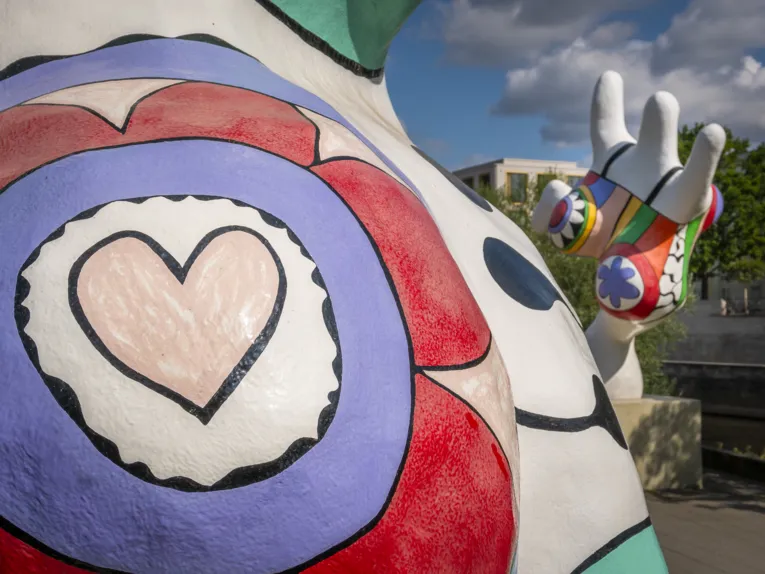
"I have a very special connection to Hannover"
Niki de Saint Phalle
She is the creator of the world-famous Nanas and Hanover's first and so far only honorary citizen.

Tour on your own
Art in public space
Explore Hanover’s public art on your own and for free.
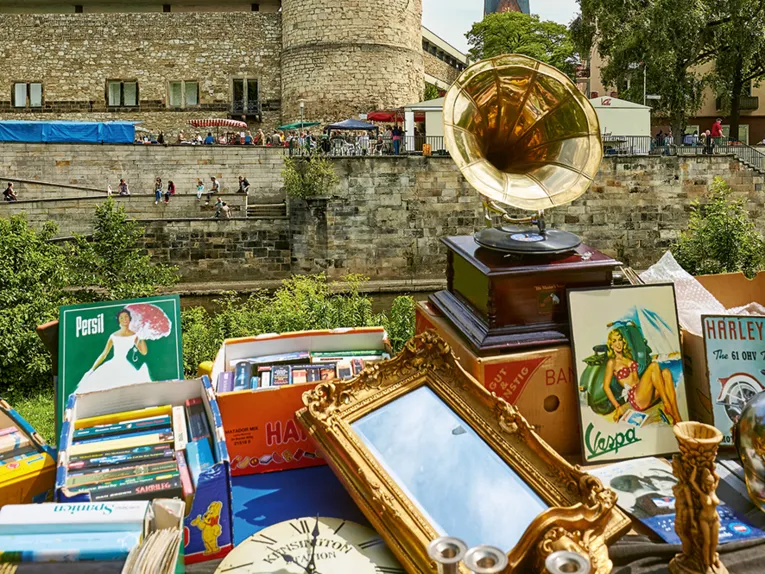
Flea Market on the Leine
Old town flea market Hanover
Every Saturday in the idyllic old town: stroll, browse, bargain.
Manual Teaser List
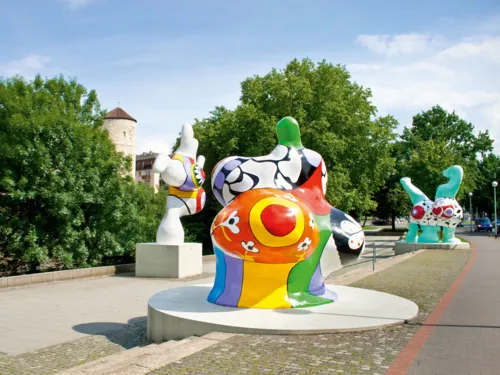
Place of interest
Nanas
Colorful Nanas by Niki de Saint Phalle – Art Icons on the Banks of the Leine in Hanover.
read