
 Deutsch
 English
 中文
中文
 Danish
 Eesti
Eesti
 Español
 Suomi
Suomi
 Français
 Italiano
 日本語
日本語
 한국
한국
 Nederlands
 Norge
Norge
 Polski
 Portugues
 Русский
 Svenska
 Türkçe
 العربية
 Română
 български
Döhren-Wülfel
The 8th district is made up of a total of six fundamentally different neighborhoods.
Döhren and Wülfel together form the 8th district. The southern district includes the districts of Döhren, Wülfel, Mittelfeld, Seelhorst, Waldhausen and Waldheim. A total of over 34,300 people (as of 2020) live here on 16.56 km².
Döhren
Where there were still farms and a smithy in Döhren until the 1960s, there are now a variety of stores, restaurants and Wilhelminian-style residential buildings.
Döhrener Wolle & Döhrener Jammer
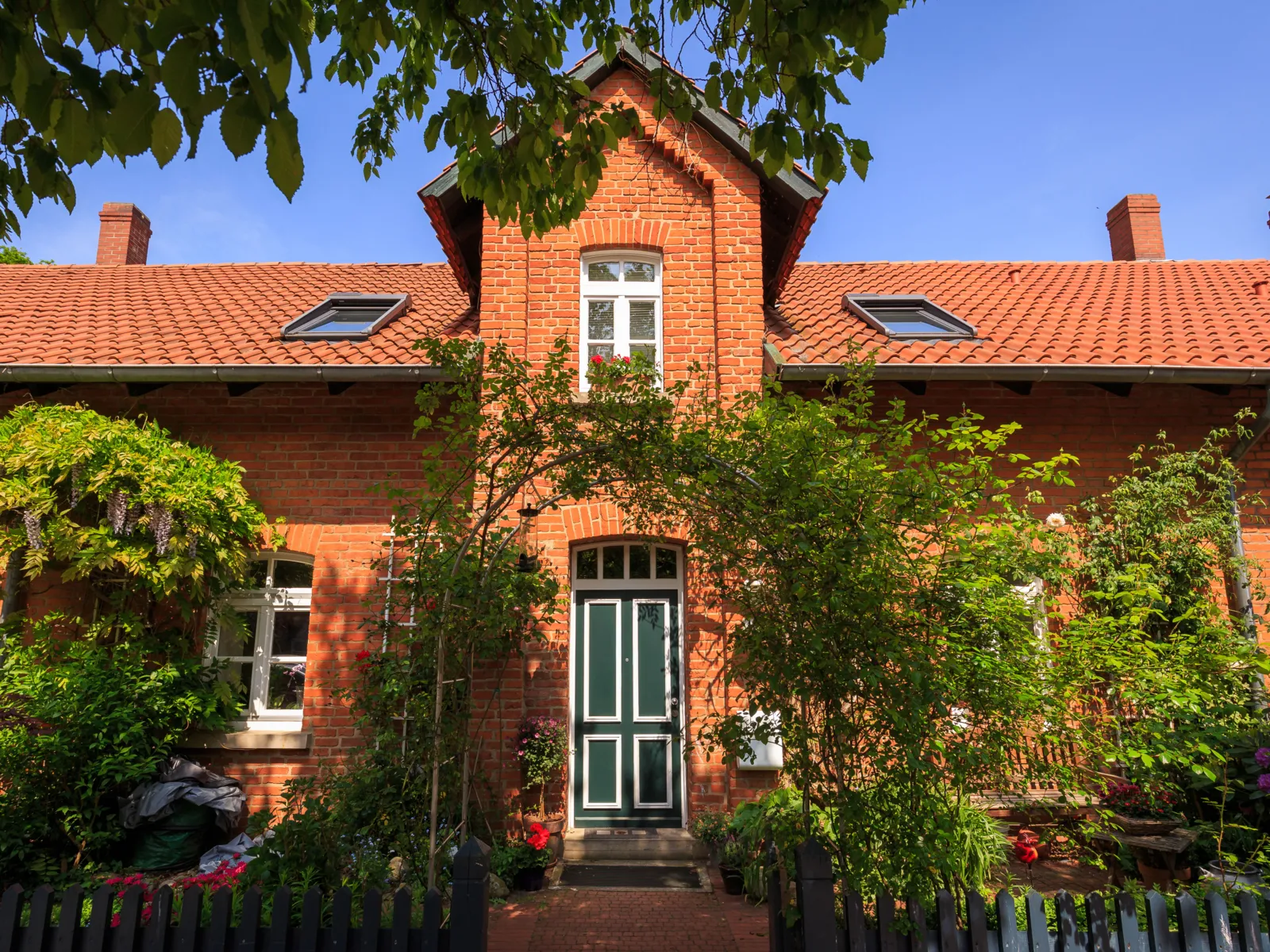
The former Arbiter settlement "Döhrener Jammer" was built on a cul-de-sac in 1872. At the time, two families lived in the small, red-brick terraced houses and 14 girls lived under the roof. Later, houses for factory officials were added in the side streets, and foremen's houses were built on Rheinstraße. After the demolition of the "Döhrener Wolle" (Döhren Wool Laundry and Combery) in 1971, the houses were restored and converted into owner-occupied homes.
775 Years - Discover Your Hannover
St. Petri Church Döhren-Wülfel
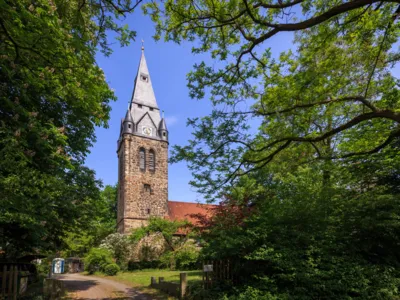
St. Peter's Church
The core of the old village is marked by St. Peter's Church at Lindenhof, of which only the tower was preserved after the Second World War. With the so-called emergency church programme, 43 churches were built across Germany to be recognized as World Heritage Sites - including this one.
Wülfel
Wülfel, on the other hand, impresses with a huge recreational area that takes up more than half of the district.
Southern Leine floodplain
With its ponds, allotments and sports clubs, the Südliche Leineaue offers a varied landscape. Due to its natural beauty and high value for plants and animals, the southern Leine floodplain is particularly protected. It is a natural area with features of glacial and post-glacial character.
Midfield
Mittelfeld was established in the early 1950s as a housing development for those who had been displaced by the war. Today, the neighborhood’s landscape is primarily characterized by 2- to 5-story residential buildings. Mittelfeld borders Hannover’s trade fair grounds to the south.
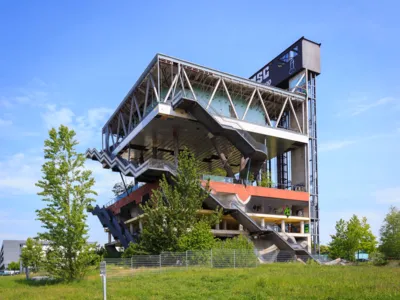
Dutch pavilion
775 Years - Discover Your Hannover
The landmark of the EXPO 2000 world exhibition is undoubtedly the 40 m high Dutch Pavilion (1997 - 2000). It bears spectacular witness to the immodest motto "Holland creates spaces for new ideas", which was implemented in an original way by the MVRDV architecture firm from Rotterdam. The six stacked platforms symbolized different landscapes such as wind and water - sea - agriculture - forest - earth - dune landscape.
Seelhorst
Seelhorst is divided into two separate residential areas by the expressways and railroad lines: to the west, the area consists of single-family homes, and to the east, the new development area, which is also home to Madsack.
Seelhorst municipal cemetery
Hanover's largest cemetery is located to the south of Seelhorst: the 70-hectare Seelhorst municipal cemetery contains around 35,000 graves, including a Dutch war victims' memorial, a memorial for Hanover's bombing victims and some concentration camp victims, a Buddhist urn burial section and a ground-row burial section for premature and stillborn babies.
Waldheim & Waldhausen
Waldheim and Waldhausen are the smallest neighborhoods in the district and are located right next to each other. The neighborhoods are bounded by the Maschsee and the Eilenriede. With its distinctive historic buildings and Art Nouveau villas, Waldhausen is one of Hanover’s most popular and expensive neighborhoods. Waldheim features not only upscale historic buildings but also, above all, single-family homes from the 1950s through the 1970s.