
 Deutsch
 English
 中文
中文
 Danish
 Eesti
Eesti
 Español
 Suomi
Suomi
 Français
 Italiano
 日本語
日本語
 한국
한국
 Nederlands
 Norge
Norge
 Polski
 Portugues
 Русский
 Svenska
 Türkçe
 العربية
 Română
 български
Tour on your own
Discover Your Hannover—A Tour Through 13 City Districts
A View of the Entire City: This tour through the city’s districts, featuring their distinctive landmarks and neighborhoods, invites you to discover Hannover on your own!
A Journey of Discovery Through Hanover's 13 City Districts
This varied tour showcases the unique features of Hannover’s thirteen city districts, highlighting their most distinctive and historically significant sites and neighborhoods. It includes iconic landmarks such as the New City Hall, the Great Garden, and the Anzeiger skyscraper, as well as hidden and lesser-known spots like the Edelhof Chapel, the Teutonia II cement plant, and the Brüggemannhof. Discover the diversity of our city on your own!

The fold-out map for the tour is available for download here (PDF) and in print at the Hannover Tourist Information Office at Ernst-August-Platz 8, across from the main train station.
About the History of Hanover
Although Hanover’s city charter dates back to 1241, the city is in fact much older. Early traces of settlement have been found on Burgstraße, at the market, and near St. Aegidius Church: pottery shards and Roman coins attest to settlement as early as the 1st through 3rd centuries A.D. Evidence exists of a manor house dating from shortly after the year 1000, which served to secure the crossing over the Leine River and the market. These settlement centers were expanded across a wider area in the 12th century under the rule of Henry the Lion and fortified with palisades and ditches.
In a charter dated 1241, Duke Otto I of Brunswick-Lüneburg of the House of Welf confirmed the city’s long-standing municipal rights and privileges. This oldest document in the city archives attests to the self-confidence of the citizenry, who began constructing their city fortifications in stone shortly thereafter (1297). A city council and the office of mayor have existed since that time. During the Lüneburg War of Succession, the city was granted the “Great Privilege” in 1371, which conferred extensive rights upon it, such as customs and milling rights, as well as the authority to further fortify the city. Starting in 1392, Hanover’s city fortifications also included a local militia that secured the surrounding countryside. Structures such as the Döhrener Tower still survive from the former Hanoverian local militia, which featured ramparts, hedges, watchhouses, and watchtowers. The city experienced an economic boom during this period and joined the Hanseatic League. The population rose to 4,000.
In 1873, Hanover became a major city when its population exceeded 100,000. The city of Hanover’s territory has grown from 80 hectares to 20,415 hectares today, with a population that now exceeds 500,000. It encompasses former villages and towns, each with its own history of development.
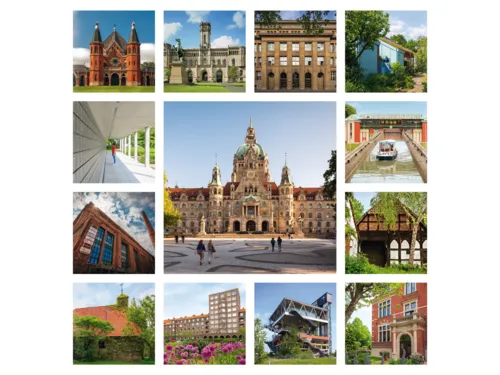
775 Years - Discover Your Hannover
To the overview of the city districts
Click here for an overview of the 13 city districts with their particularly characteristic locations and neighborhoods.
read
City anniversary
775 Years of Hanover
Hanover is turning 775—and is celebrating the city’s anniversary with a variety of activities. Click here for an overview.
read
Tourist Info Icon
30159 Hannover