 Deutsch
 English
 中文
中文
 Danish
 Eesti
Eesti
 Español
 Suomi
Suomi
 Français
 Italiano
 日本語
日本語
 한국
한국
 Nederlands
 Norge
Norge
 Polski
 Portugues
 Русский
 Svenska
 Türkçe
 العربية
 Română
 български
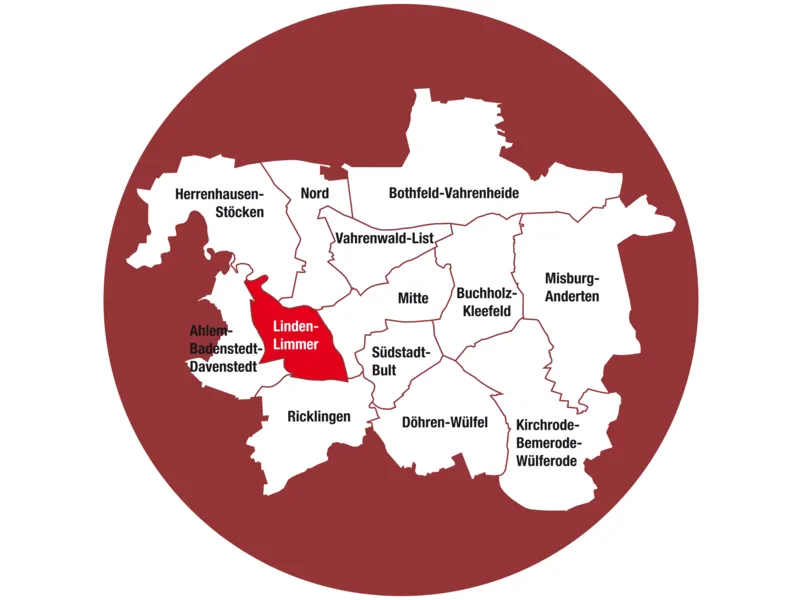
Linden-Limmer
The old village by St. Martin's Church was literally overrun by industrialization.
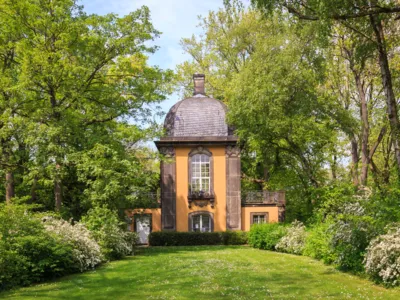
Surviving from the courtly era are the weavers’ houses at Weberstraße 20/21 and the kitchen garden pavilion from 1749, which was moved to Lindener Berg in 1913. The establishment of factories began with (Kalk-) Johann Egestorff. With the rise of the machinery and textile industries, Linden transformed from the “most beautiful village in the Kingdom of Hanover” into a working-class neighborhood. It was not until the annexation by Prussia in 1866 that the site of the Royal Kitchen Garden became available; a freight yard was built there, and a middle-class residential neighborhood sprang up around Lichtenbergplatz.
Kitchen garden pavilion
775 Years - Discover Your Hannover
The baroque kitchen garden pavilion originally stood on the main axis of the royal kitchen garden (now Fössestraße). It was designed in 1749 by Johann Paul Heumann as a belvedere with a slender two-storey tower and high dome with side viewing terraces. Wall pillars and garlands decorate the façades. After 1866, the pavilion was still used as a tool shed before it was decided to demolish it in 1911. A citizens' initiative saved the stones and rebuilt the pavilion on the Linden hill cemetery in 1913. There, together with the former garden portal, it forms a small, fine baroque gem.
Address:44 Lindener Berge, 30449 Hanover
Ahrberg quarter
775 Years - Discover Your Hannover
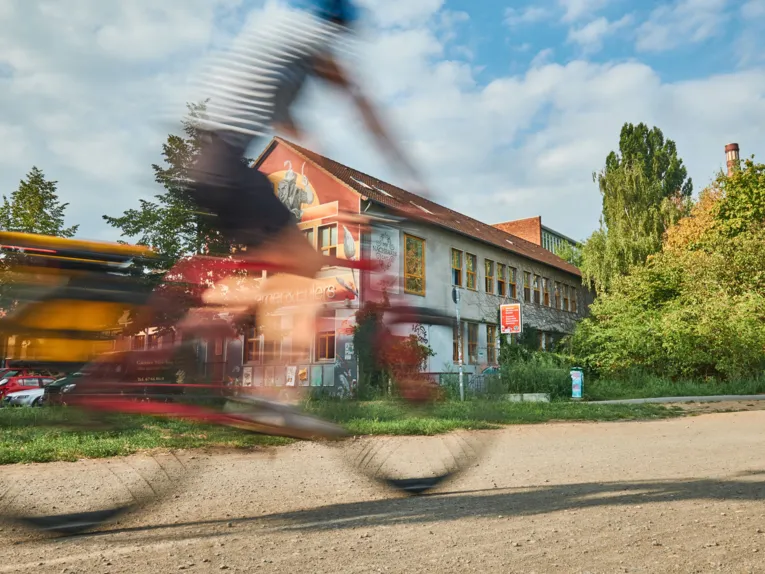
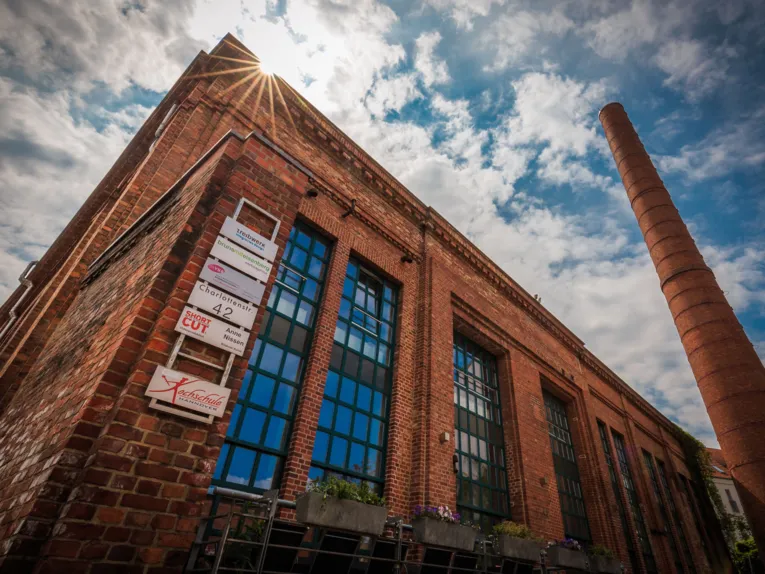
Founded in 1890, the Ahrberg meatpacking plant produced sausages and cold cuts at its new factory at the Deisterkreisel starting in 1911, employing as many as 800 workers at times, until 1992. When the buildings were slated to make way for a new development, a group of architects purchased the site in 1997. They carefully preserved the old factory buildings and transformed the AhrbergViertel into a vibrant neighborhood with a mix of apartments, offices, workshops, a children’s store, a dance studio, and a Spanish restaurant. The AhrbergViertel serves as a prime example of the shift in how disused factories are handled. The vision of combining the old with the new and giving people a home has become a reality here.
Address:Deisterplatz, 30449 Hanover
Lichtenbergplatz
775 Years - Discover Your Hannover
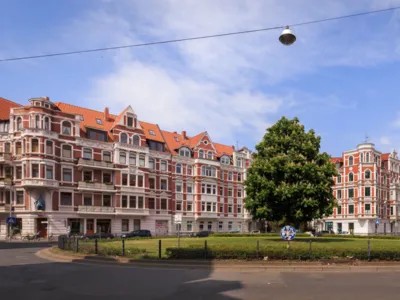
The residential neighborhood surrounding Lichtenbergplatz was laid out according to a 1889 zoning plan on the site of the former Royal Kitchen Garden; after the City of Linden purchased the land in 1899, it was rapidly developed with four-story apartment buildings for middle-class families. The planning intention was to promote social integration in the working-class neighborhoods by building apartments for higher-income families—as was done at Pfarrlandplatz, near Bethlehem Church, and on Beethovenstraße. The neighborhood at Lichtenbergplatz is laid out in a star-shaped geometric pattern around a roundabout. The facades are designed in the typical “Linden Renaissance” style, featuring a variety of bay windows and balconies.
Address:Lichtenbergplatz, 30449 Hanover