
 Deutsch
 English
 中文
中文
 Danish
 Eesti
Eesti
 Español
 Suomi
Suomi
 Français
 Italiano
 日本語
日本語
 한국
한국
 Nederlands
 Norge
Norge
 Polski
 Portugues
 Русский
 Svenska
 Türkçe
 العربية
 Română
 български
Südstadt-Bult
The 7th District, Südstadt-Bult, covers a total area of 7.17 km².
The 7th District, Südstadt-Bult, covers a total area of 7.17 km² and is home to nearly 44,000 residents (as of 2020). With Lake Maschsee in Südstadt and the “Alte Bult” landscape conservation area—part of which has been designated as such—in the Bult neighborhood, the district is considered green. In the 1920s, Südstadt-Bult was developed with housing primarily for employees and civil servants.
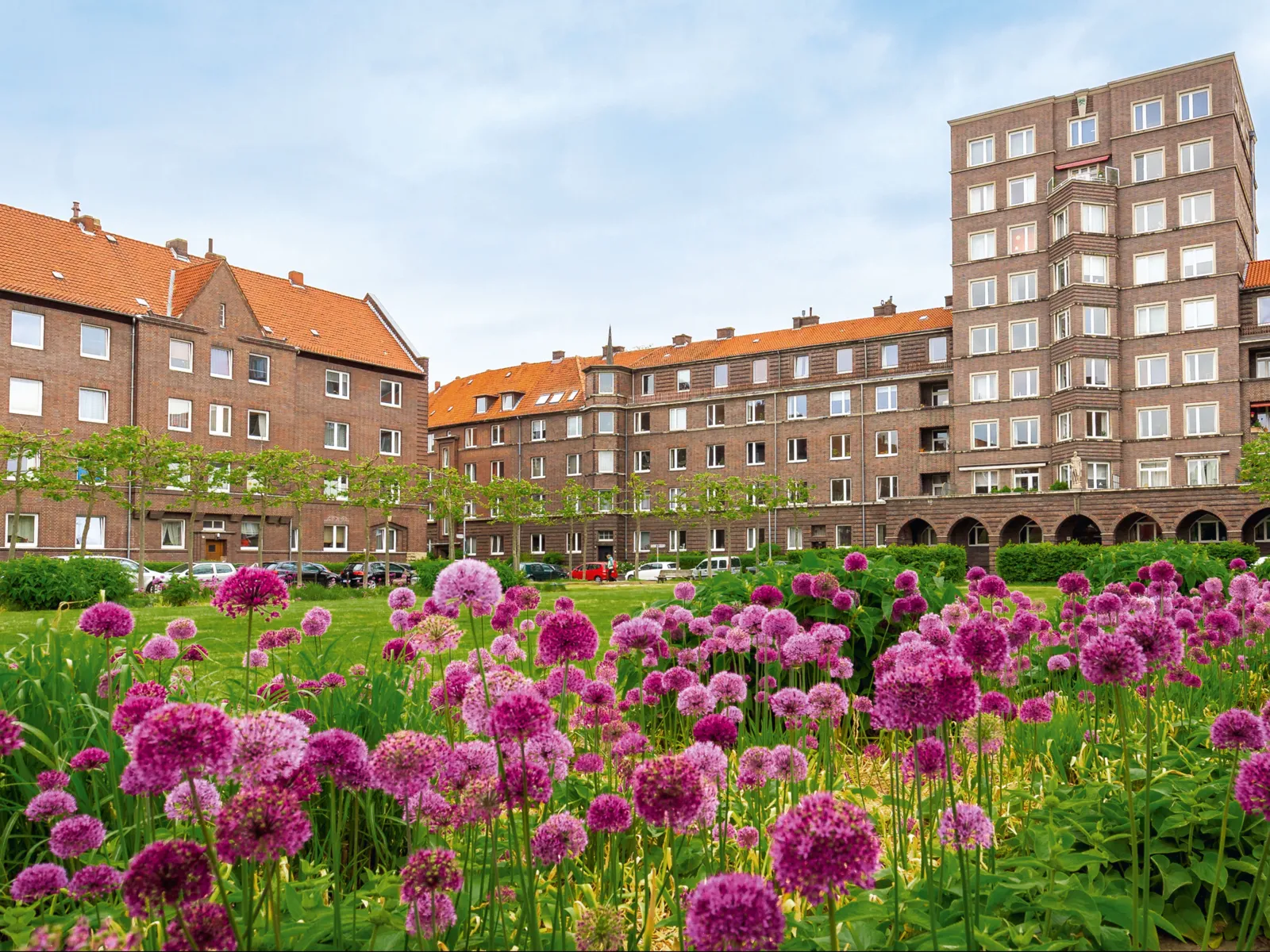
Glückauf" high-rise residential building
Clinker brick façades of the "Red Modernism" style have dominated the streetscape here ever since city planning officer Karl Elkart linked the use of bricks fired to the point of sintering to the granting of loans. The wide, avenue-like transverse axis, Geibelstrasse, ended in the east with the nine-storey "Glückauf" high-rise building on Geibelplatz.
The nine-story residential high-rise “Glückauf” marks the end of Geibelstraße, located in the heart of the Südstadt district. The building was constructed in 1930 according to plans by architect Wilhelm Ziegeler for coal merchant Carl Lichtenberg and the Glückauf Miners’ Association. An arcade with seven arched openings forms the base; above it rises a pointed bay window spanning six stories, in front of which stands a life-size sculpture of a miner with a pickaxe, helmet, and miner’s lamp. Crossed hammers are visible on the keystone at the eaves. The decorative plaza was laid out in 1932 and has been redesigned several times.
775 Years - Discover Your Hannover
775 Years - Discover Your Hannover
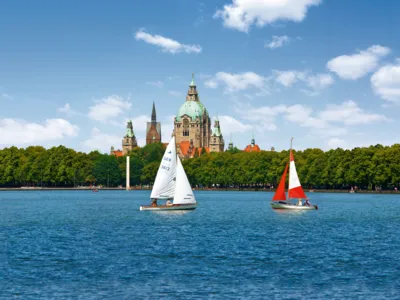
Maschsee
Today, it is impossible to imagine the cityscape without the Maschsee as a recreational facility and leisure area, and yet it is only 80 years old. The annual Maschsee Festival also attracts millions of visitors. Initiated in 1904 by rower Karl Thiele, technically planned in 1926 by hydraulic engineer Otto Franzius, and designed in detail by Karl Schwien, the National Socialists took over its construction from 1934 to 1936 as their first major project to reduce unemployment. The overall design by the city planning office under Karl Elkart followed modern design principles, and even the torchbearers and fish riders can be classified as examples of moderate modernism.
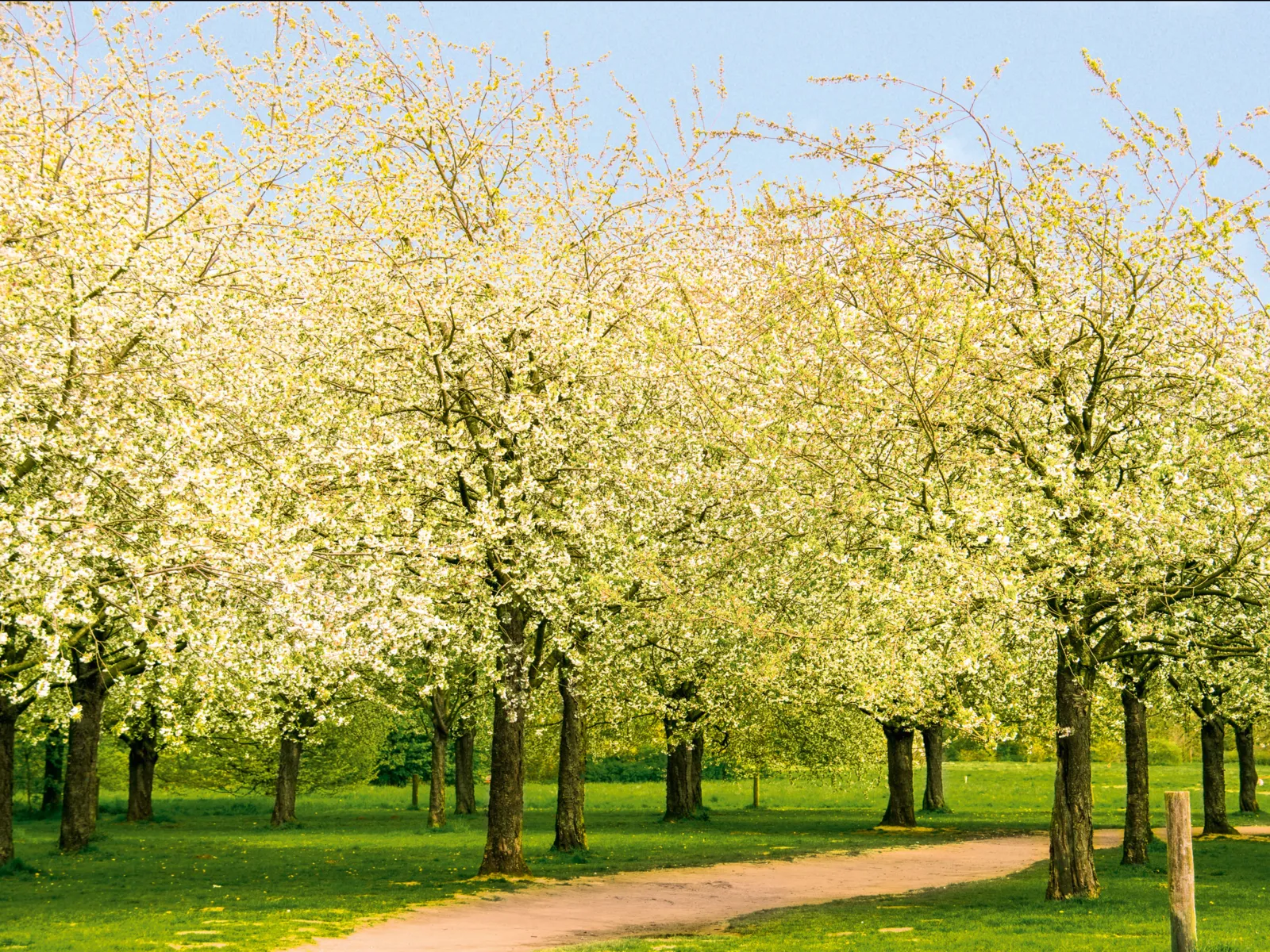
Hiroshima Grove
From 1909 to 1973, the "Alte Bult" racecourse was a special venue for equestrian sport. Today, the site is a valuable habitat and of great importance for local recreation. In 1988, 110 cherry trees - the Hiroshima memorial grove - were planted on the site. The trees are intended to commemorate the 110,000 direct victims of the atomic bomb dropped on Hanover's twin city Hiroshima.
775 Years - Discover Your Hannover