 Deutsch
 English
 中文
中文
 Danish
 Eesti
Eesti
 Español
 Suomi
Suomi
 Français
 Italiano
 日本語
日本語
 한국
한국
 Nederlands
 Norge
Norge
 Polski
 Portugues
 Русский
 Svenska
 Türkçe
 العربية
 Română
 български
Hanover, 1939 & 1945
City Models of Hanover
Inside the New City Hall, city models illustrate Hannover's development. These two models show Hannover in 1939 and the extent of the destruction following World War II in 1945.
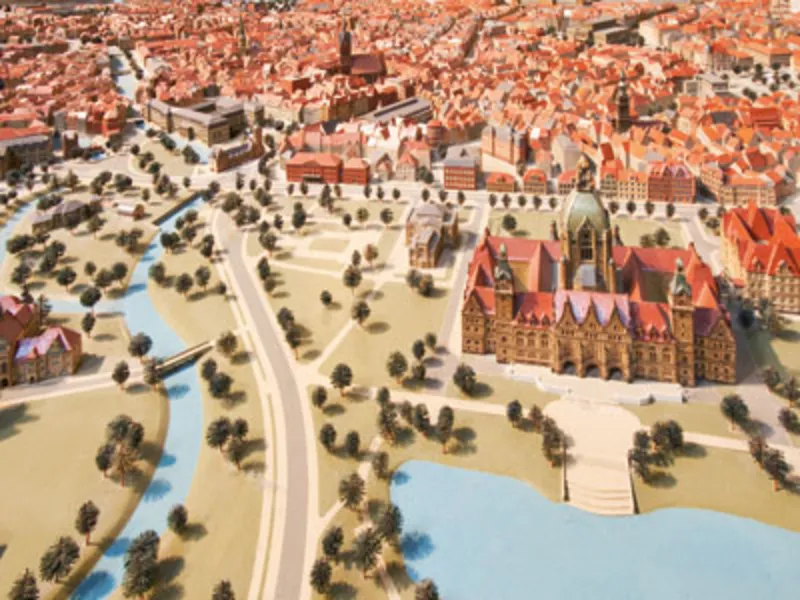
City model 1939
Hitler’s appointment as Reich Chancellor (January 30, 1933) marked the end of the Weimar Republic. In May 1940, the first air raids took place in Hanover; subsequent bombings destroyed manufacturing facilities, residential buildings, and historic landmarks (e.g., Conti, Leinschloss, Marktkirche, the Opera House, and Herrenhausen Palace). After 88 air raids, more than 50% of Hanover was destroyed; in the city center, over 90% of the buildings were damaged. Hanover became part of the British occupation zone. The Aegidienkirche, which had been bombed to ruins, stands as a memorial to World War II.
The scale models of Hanover vividly illustrate how the city has changed over the centuries. They bring historical developments to life and help us better understand Hanover's history.
City models are often used to reconstruct past cityscapes or to illustrate planned changes. In Hanover, they play an important role in helping people understand the city’s development from the Middle Ages to the present day.
Visitors can use these models to see how streets, squares and buildings have changed over the course of time.
Hanover from a New Perspective
Anyone interested in architecture, urban history, or urban development will find that Hanover’s city models offer an exciting way to view the city from a new perspective.
They not only show buildings and streets, but also tell the story of a city that has changed again and again over the centuries.
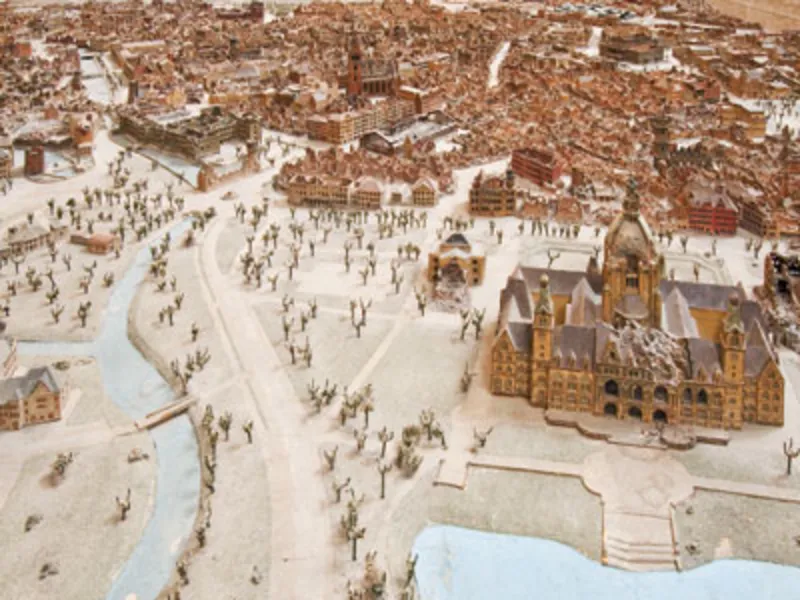
City model 1945