 Deutsch
 English
 中文
中文
 Danish
 Eesti
Eesti
 Español
 Suomi
Suomi
 Français
 Italiano
 日本語
日本語
 한국
한국
 Nederlands
 Norge
Norge
 Polski
 Portugues
 Русский
 Svenska
 Türkçe
 العربية
 Română
 български
Bathing lake
Steinhude bathing island
Swimming Warning
There is currently an increased presence of cyanobacteria (“blue-green algae”); please follow the on-site safety guidelines regarding this. Under current conditions, depending on wind and wave conditions, these organisms may accumulate in areas such as beaches. These areas should be avoided, and children in particular should be supervised.
For more information, see the Questions and Answers on Blue-Green Algae
(September 30, 2026)
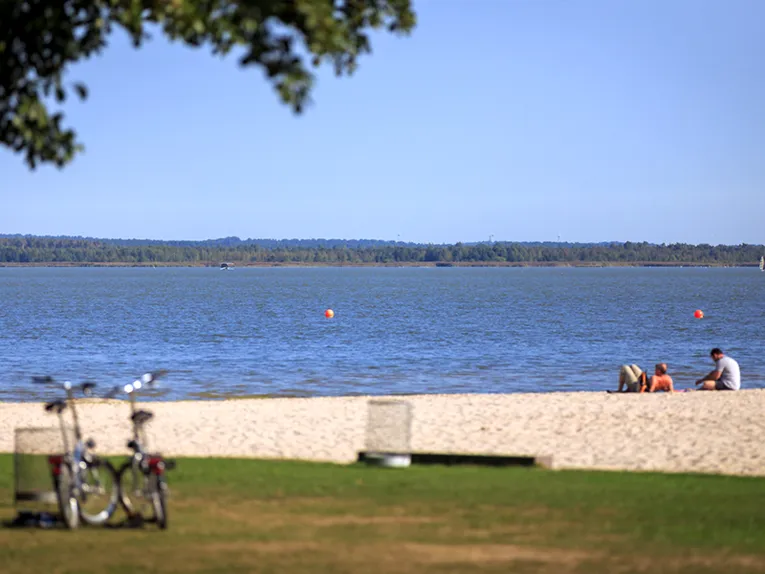
This is a beach vacation at its best: With 300 meters of the finest sandy beach, shallow waters, and plenty of fun activities, this island offers the perfect setting for a truly wonderful day at the beach—and not just for families with children. Here, it’s time to break out the water wings, inflate the air mattresses, and head out into the Seinhuder Meer. And when the beachgoers leave the beach, things don’t always quiet down right away. During the season, this idyllic island also hosts a variety of music events, so there’s plenty to enjoy here in the evening as well.
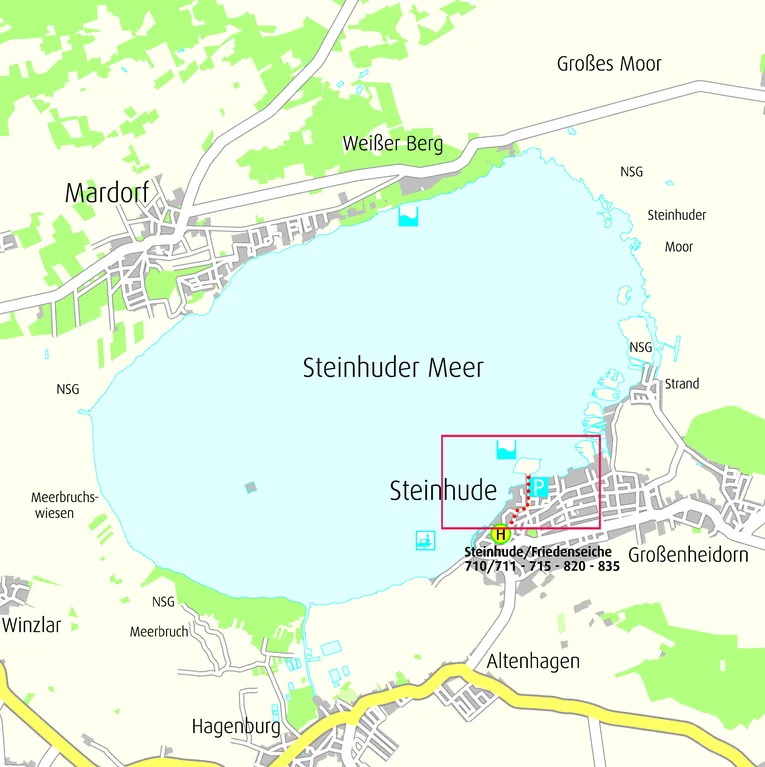
The swimming island is located on the southeastern shore of the Steinhuder Meer, Germany's largest shallow lake.
The EU has rated the quality of this bathing water as "good." During the swimming season, from May 15 to September 15, the Hanover region monitors the water quality. You can view the results by clicking the link below.
Read the results of the bathing water analysis
The quality of bathing water:

Good bathing water quality
What does Steinhude Swimming Island have to offer?
Overview:
Water surface area: 2,910 ha
; maximum depth: 2.9 m
; length of the swimming area: 100 m
; Food and beverage options: kiosk, café, bistro beer garden
; Restroom facilities: restrooms, beach showers
Water area:
31 square kilometers of water, large shallow water zone, rubber boats and inflatable mattresses permitted
Amenities:
restroom, shower, changing room, sunbathing area, sandy beach, trees
Activities:
Ball games, a great playground with interesting play equipment, an observation tower, and the permanent exhibition "Nature and the Environment at Steinhuder Meer"
Dining:
Kiosk, café, bistro beer garden
The Steinhude Swimming Island Info Profile—Other Things Worth Knowing
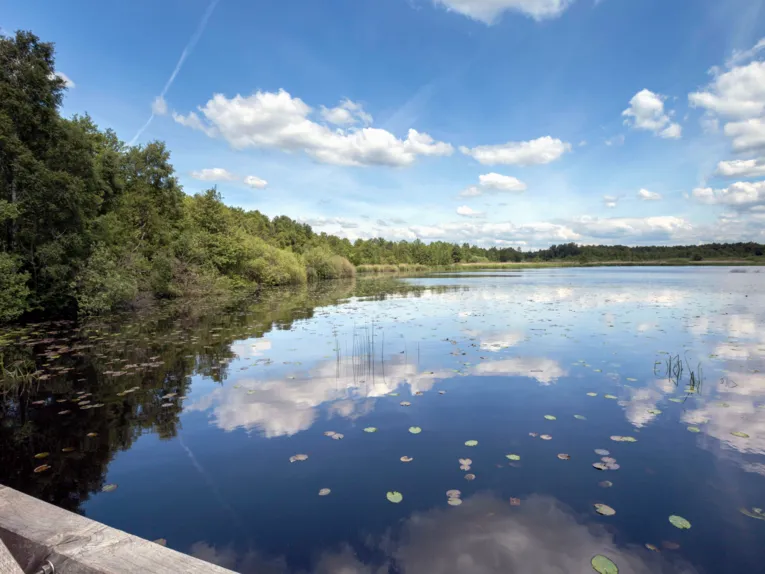
The Steinhuder Meer is designated as a landscape conservation area and is surrounded by several nature reserves. The lake is largely fed by groundwater. Additional water flows into the lake via four tributaries. Additional water flows into the lake via four tributaries. The towns of Steinhude and Mardorf, located on the lake, discharge rainwater into the Steinhuder Meer via a separate sewer system. Rainwater also carries debris into the lake, which may contain bacteria. During heavy rainfall, these bacteria can reach the swimming area and affect the quality of the bathing water.
Due to the aforementioned discharges, the pollution potential is assessed as slightly elevated.
Because of the high nutrient content in the lake, mass blooms of blue-green algae occur frequently. The potential for a mass bloom is considered to be elevated to high.
No mass proliferation of macroalgae or phytoplankton has been observed in the lake in recent years. The potential for mass proliferation is classified as low
.
The Department of Health, as the responsible authority, conducts regular tests of the bathing water at the swimming area.
The first bathing water sample is taken before the start of the season.
During the swimming season, from May 15 to September 15, samples are taken once a month. The water is tested for the indicator bacteria Escherichia coli and intestinal enterococci. These results are published, among other places, on the website www.hannover.de/baden and on the bathing water portal of the Lower Saxony State Health Office.
If the authorities become aware of a blue-green algae bloom, they will test the water for blue-green algae and issue an official warning regarding the acute occurrence
of blue-green algae. If large quantities of toxin-producing blue-green algae are detected, a swimming ban will be imposed and announced both on-site and online.
How do you get to the Steinhude swimming island?
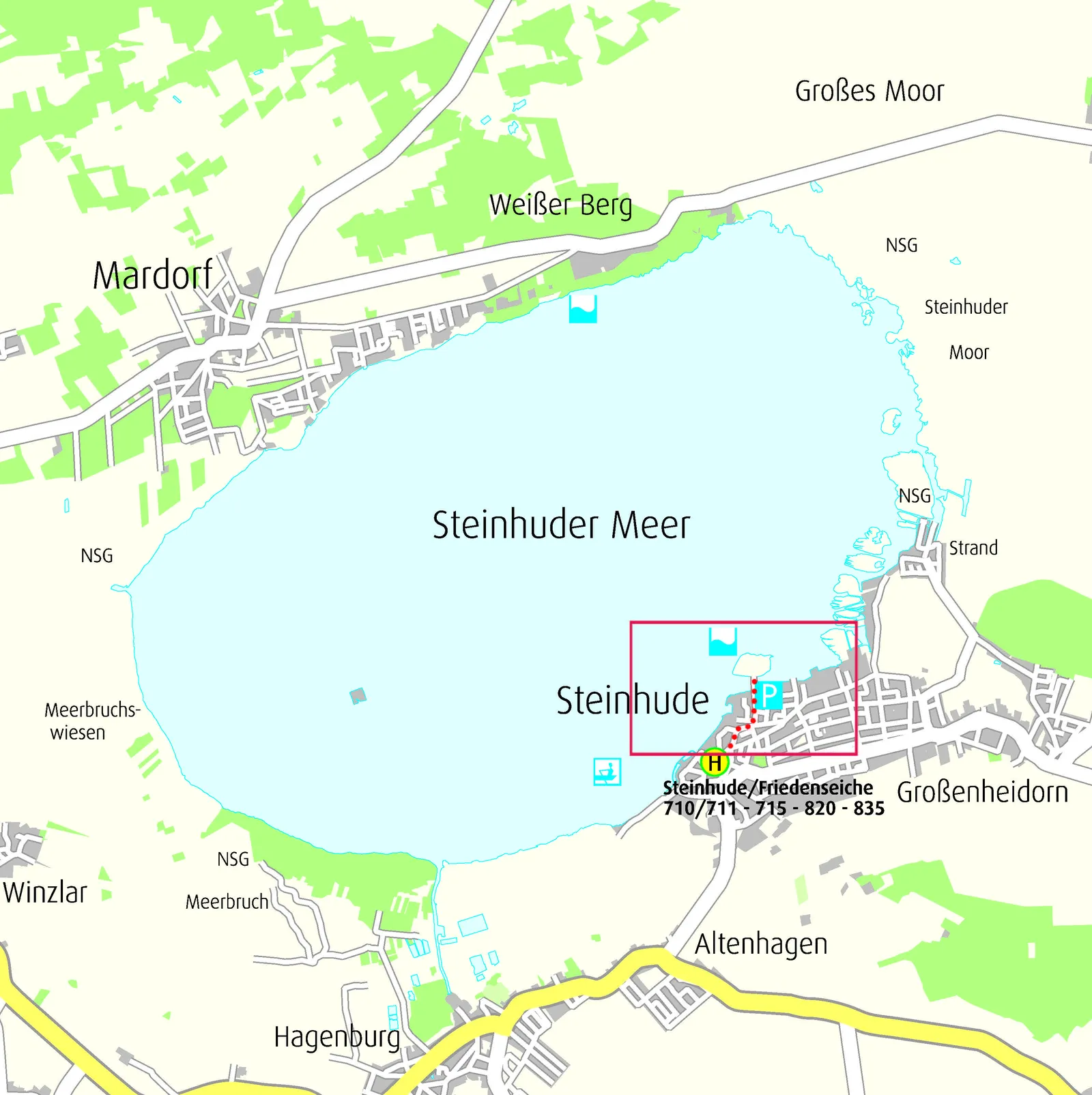
Directions to Steinhude Beach Island
More information

Steinhude bathing island
Steinhude Swimming Island: Water Quality Report (Excerpt)
The water quality of the bathing waters is checked regularly. You can find the results of the tests here.
read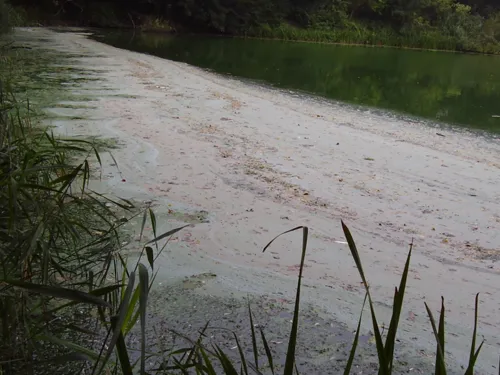
FAQ
Questions and answers about blue-green algae
What are blue-green algae or cyanobacteria? Where do cyanobacteria in lakes come from? How dangerous are cyanotoxins? What should bathers look out for?
read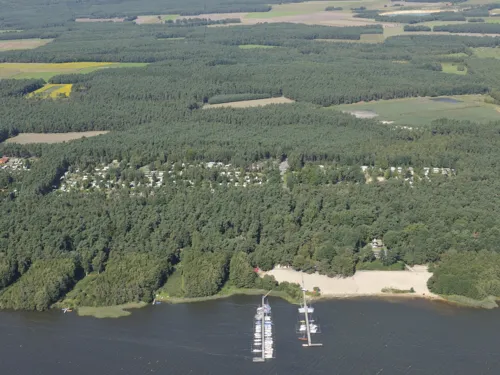
Phosphorus at Steinhuder Meer
Beware of fake amber
It looks like amber, but is highly toxic and can cause severe burns: White phosphorus is a dangerous remnant of the Second World War.
read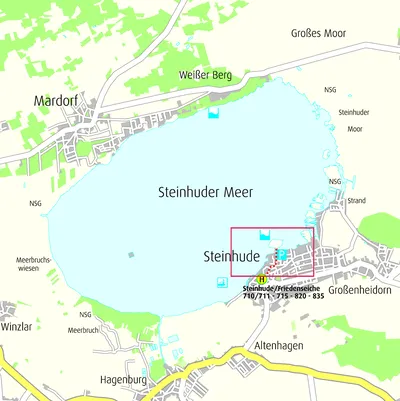
Steinhude Swimming Island - Swimming Water Profile
Steinhude Swimming Island - Swimming Water Profile
Information from the Health Department of the Hanover Region in accordance with the Lower Saxony Bathing Water Ordinance. (As of March 2026)
File type: pdf Size: 945.95 kB