Flame and fire for extra-long bread enjoyment
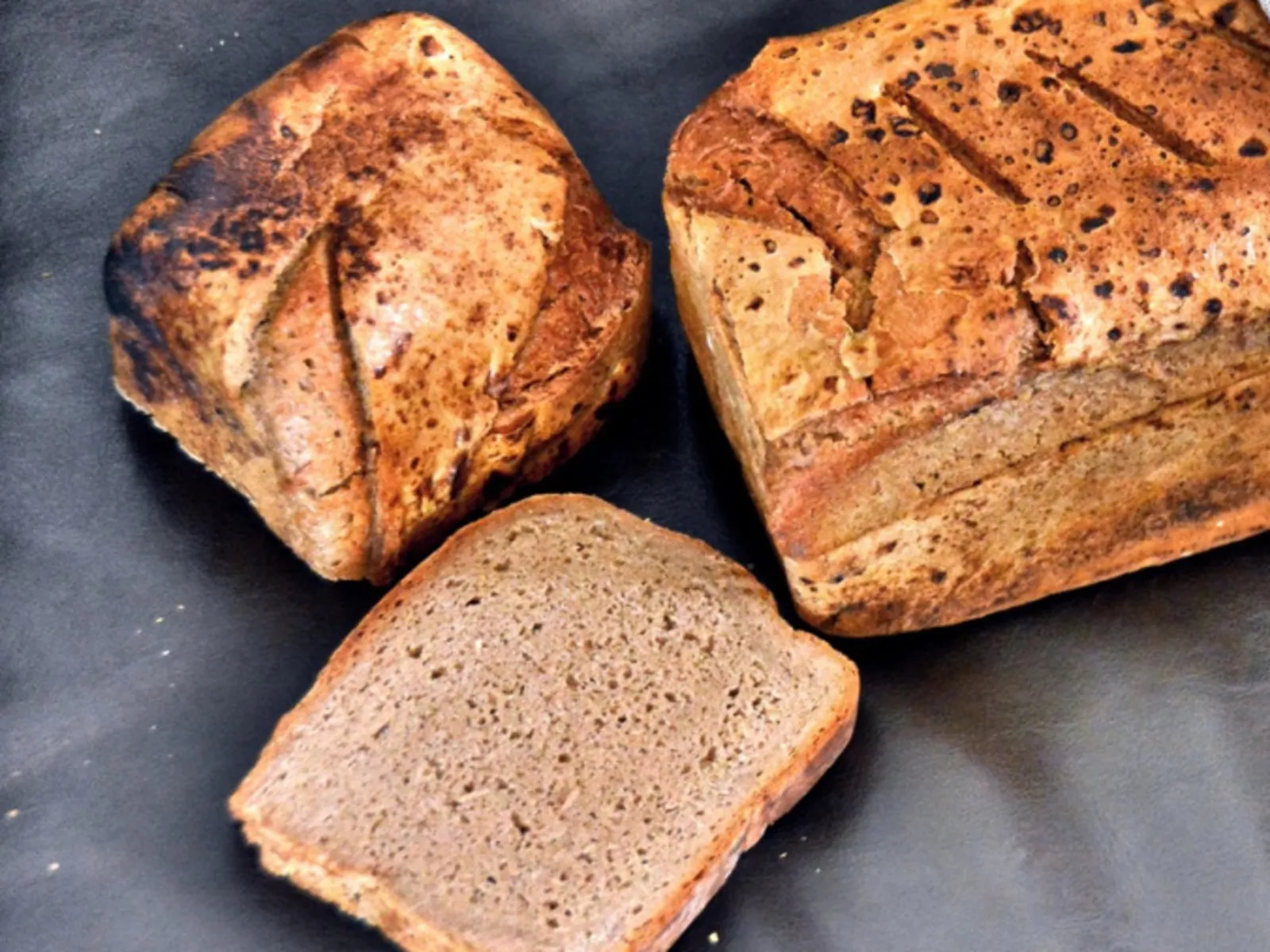
Gersterbrot is a mixed rye bread that is traditionally made from a sourdough made with wholemeal rye and wheat flour. Despite its supposedly misleading name, the bread is baked without a single grain of barley - and yet this grain used to play an important role in the special preparation of this typical Hanoverian bread specialty. Today, "gerstern" or "gersteln" refers to the scorching of the still moist loaf of bread so that a strong crust can form later during baking. The German dictionary by Jacob Grimm and Wilhelm Grimm from 1854 describes the meaning and origin of "gerstern" as follows: "[...] wetting the bread repeatedly pulled out of the oven with water (sometimes mixed with egg white) using a wiper made of barley straw to give the crust a shiny, appetizing appearance [...]".
Gersterbrot gets into great shape when pushed
In the past, the strong crust was produced directly in the oven when the bread, moistened with a wiper made of barley straw, came into direct contact with the open flames. The "grating" hardens the skin of the fresh dough piece and prevents the aromatic substances from evaporating during baking. The bread tastes better, is nice and moist and keeps for longer. Today, the same effect is achieved by scorching the loaves with an open gas flame (with a blowtorch, for example, or a grilling device) before baking. After "grating", the hardened skin with its characteristic dark speckles is cut several times to prevent the precious crust from cracking. Typical cuts are diagonal cuts on the surface of the bread and longitudinal cuts on the side and base. Then it is "pushed", i.e. the toasted loaves are placed close together in the oven. This gives the bread its angular block shape. This traditional Hanoverian baking method still gives the barley bread its intense aromatic taste and makes it particularly long-lasting.

 Deutsch
 English
 中文
中文
 Danish
 Eesti
Eesti
 Español
 Suomi
Suomi
 Français
 Italiano
 日本語
日本語
 한국
한국
 Nederlands
 Norge
Norge
 Polski
 Portugues
 Русский
 Svenska
 Türkçe
 العربية
 Română
 български