 Deutsch
 English
 中文
中文
 Danish
 Eesti
Eesti
 Español
 Suomi
Suomi
 Français
 Italiano
 日本語
日本語
 한국
한국
 Nederlands
 Norge
Norge
 Polski
 Portugues
 Русский
 Svenska
 Türkçe
 العربية
 Romanesc
 български
Questions and answers
Hannover Holiday Region - FAQ
Answers to frequently asked questions about the Hannover Holiday Region, the Deister, Lake Steinhuder Meer, and Marienburg.
The Hannover Holiday Region
What is the Hannover Holiday Region?
From B for Barsinghausen to W for Wunstorf—the Region Hannover, including the state capital of Hannover, consists of 21 cities and municipalities. With approximately 529,000 residents, the state capital of Hannover is the largest, followed by Garbsen and Langenhagen, both located in the northern part of the region. Neustadt am Rübenberge, with an area of 357 square kilometers, is one of the cities with the largest land area in Germany. The smallest municipality is Wennigsen, with approximately 14,400 residents.
Every city and municipality offers a wide variety of sights, local recreational areas, and exciting events.
For more information, visit: www.visit-hannover.com/holiday-region and www.visit-hannover.com/kommunen
What are the best places to visit in the Region Hannover?
If you enjoy spending time outdoors or simply want to unwind, the Deister, Lake Steinhuder Meer, and the many other local recreational areas are the perfect places for you! Lower Saxony’s largest lake, Lake Steinhuder Meer, is a popular destination for sailors, surfers, kite surfers, and swimmers.
Horse lovers will find their paradise in the Burgdorf region and in Wedemark—whether on their own horse, a rental horse, or enjoying a ride in a horse-drawn carriage.
For more information, visit www.visit-hannover.com/pferderegion
Hikers are drawn to the 405-meter-high Deister, with its lush greenery and many historical treasures. Just outside the state capital, local recreational areas such as the Koldinger Lakes, Wietzepark in Isernhagen and Langenhagen, and Altwarmbüchener Lake delight the senses. Like a distant fairytale castle, Marienburg towers atop a hill near the town of Pattensen. A selection of attractive destinations can be found here.
The Deister
What is the Deister?
About 30 kilometers southwest of the state capital, Hannover, lies a green paradise: the Deister. The chirping of birds, the rustling of leaves, enchanted trails—at an elevation of up to 405 meters, a variety of experiences blending nature and culture await you. The Deister mountain range, with its beech and fir forests, stretches for approximately 23 km and can be reached quickly by S-Bahn from Hannover Central Station. www.visit-hannover.com/deister
How was the Deister formed?
The geological diversity of this striking mountain range was formed by sedimentary processes during the Jurassic and Cretaceous periods. During the Saxon orogeny, these layers were uplifted and tilted. The landscape’s current topography took shape during the Elster and Saale glacial periods. To this day, the nutrient-rich soils of the Deister foothills are primarily used for agriculture. In addition to agriculture and forestry, the numerous sandstone quarries and coal mining operations throughout the Deister region have been cornerstones of settlement development.
Sandstone and coal were mined in the mines between Bantorf and Bredenbeck. Forestry also played an important role. Other sources of income included the glass industry, lime works, and the manufacture of pottery.
What are some places to visit in the Deister?
The visitor mine in Barsinghausen, the bison enclosure in Springe, or the waterwheels in Wennigsen—the Deister offers a wide variety of destinations and attractions. Discover the highlights in the Deister municipalities of Barsinghausen, Springe, Wennigsen, Rodenberg, Bad Münder, and Bad Nenndorf.
What are the waterwheels in the Deister?
The Wennigser Waterwheels are a popular destination for the whole family. The waterwheels are among the main attractions in the Deister region and turn in the splashing waters of the Feldberg spring. Since 1957, they have been a landmark known far beyond the borders of Wennigsen. Along a path stretching about 100 meters, there are around 20 water-powered miniature mills. From Sesame Street to knight’s castles, there’s plenty of new and familiar things to discover.
What recreational activities are available in the Deister?
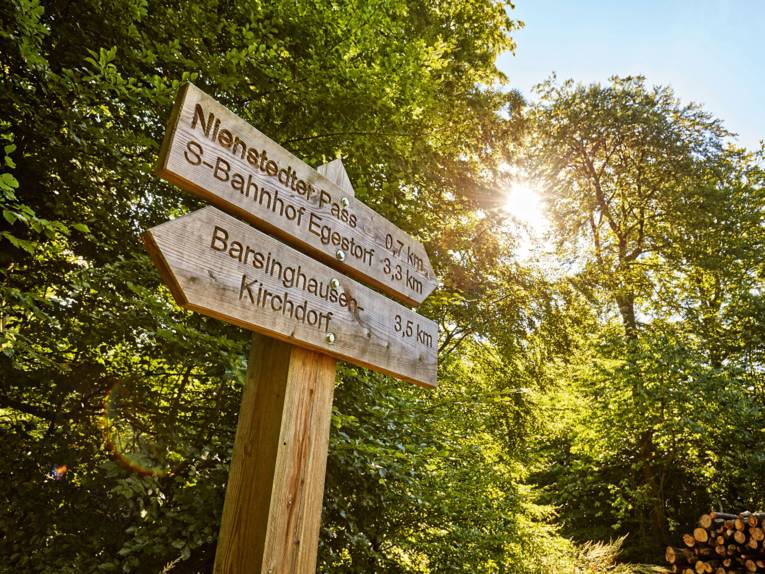
The diverse landscapes and cultural regions are ideal for hikers of all ages and fitness levels, whether on foot or by bike.
What is the Deister Hiking Pass?
With the Deister Hiking Pass, your planned hiking trip is sure to be fun, varied, and playful from start to finish. Whether you’re planning a challenging day hike or a leisurely stroll through the woods, the goal is to collect as many stamps as you can and earn the Deister hiking pin as a reward.
Lake Steinhuder Meer
Where is Lake Steinhuder Meer located?
Just outside Hannover, Lake Steinhuder Meer—Lower Saxony’s largest inland lake—offers a glimpse of vibrant nature. With an area of 29.1 km², Lake Steinhuder Meer in Lower Saxony is the largest lake in northwestern Germany. Today, located about 30 km northwest of Hannover, the lake serves as the centerpiece of the Steinhuder Meer Nature Park and is a popular destination for visitors from across the region thanks to its protected natural areas and diverse recreational opportunities. It lies within the Weser river system.
The lake is located within the municipality of Wunstorf, but its western and northern shores also border Neustadt am Rübenberge in the western part of the Region Hannover. Other nearby towns include Hannover, Rehburg-Loccum, and Stadthagen. The villages of Mardorf, Großenheidorn, Steinhude, Hagenburg, and Winzlar are situated right on the lake’s shores.
How was Lake Steinhuder Meer formed?
Lake Steinhuder Meer, which is up to 2.9 meters deep and averages 1.35 meters in depth, formed in a basin toward the end of the last ice age, about 14,000 years ago, in a depression created by ground ice, between the northernmost foothills of the low mountain range—the Rehburg Mountains—and the glacial moraines near Mardorf.
Is the water in Lake Steinhuder Meer salty?
No. The lake’s current water supply comes almost entirely from groundwater. It originates in the Nienburg Geest and the Rehburg Hills and depends on the amount of rainfall in those areas. Of the total surface runoff, only a quarter reaches the Meerbach, which flows into the Weser near Nienburg.
What is there to do at Lake Steinhuder Meer?
Boat tours, boat trips on the "Auswanderer" to Wilhelmsstein Island, museum visits, attending events, hiking, biking, windsurfing and kitesurfing, swimming, golf, mini-golf, SUP, sailing, ice sailing, ice skating, pedal boating/electric boating, rowing, kayaking, visiting a climbing park, adventure golf, and much more.
www.visit-hannover.com/steinhudermeer
Is there a bike path around Lake Steinhuder Meer?
Yes, one of the most popular activities is a bike ride around Lake Steinhuder Meer. Enjoy the varied landscapes and interesting places, or let your gaze wander across Lake Steinhuder Meer to the opposite shore or Wilhelmstein Island.
What's happening at Lake Steinhuder Meer today?
Experience spectacular festivals and major exhibitions at Neustadt’s Landestrost Castle, the Steinhude Barn District, and Romantik Bad Rehburg, or stroll through the arts and crafts market in Mardorf. Click here for an overview of current events.
Can you swim in Lake Steinhuder Meer?
Yes, Lake Steinhuder Meer is a magnet for swimmers. The Steinhude’s Sculpture Promenade bathing island covers 35,000 square meters; with its beautiful sandy beach, it is popular with young and old alike, and features clean water, shallow shorelines, ample sunbathing areas, and plenty of playground equipment for children. You’ll also get that beach vibe at the Mardorf swimming beach. Surrounded by pine and alder trees, there’s a playground here as well. Ample parking is available right near the beach.
Marienburg Castle
Where is Marienburg Castle?
Marienburg Palace is a palace complex that King George V of Hannover had built between 1858 and 1869 as a summer residence, hunting lodge, and later as a widow’s residence on the Marienberg hill near Hannover. Marienburg Palace is located approximately 20 km south of Hannover, within the municipal area of Pattensen (Region Hannover).
Who lives at Marienburg Castle?
Marienburg Castle remains the residence of the House of Welf and is one of Lower Saxony’s most significant landmarks. The castle was built between 1857 and 1866 in the Neo-Gothic style for George V, King of Hannover. It was a gift to his wife, Queen Marie, on her 39th birthday on April 14, 1857. Queen Marie and her daughter Mary lived in the castle from 1866 to 1869. After their departure into exile, the castle was inhabited for nearly 80 years only by the caretaker and, from 1945 onward, temporarily by refugees and the family of Ernst August (III). Since 2004, it has been privately owned by Ernst August, Prince of Hanover Jr.
Are there guided tours at Marienburg Castle?
From classic castle tours to children’s holiday tours or special theatrical tours—anything is possible here.
What events are held at Marienburg Castle?
Popular outdoor events, numerous activities and happenings—get an overview of the diverse program here.
Bicycle Tours in the Hannover Holiday Region
Where can I find the best bike tours in the Region Hannover?
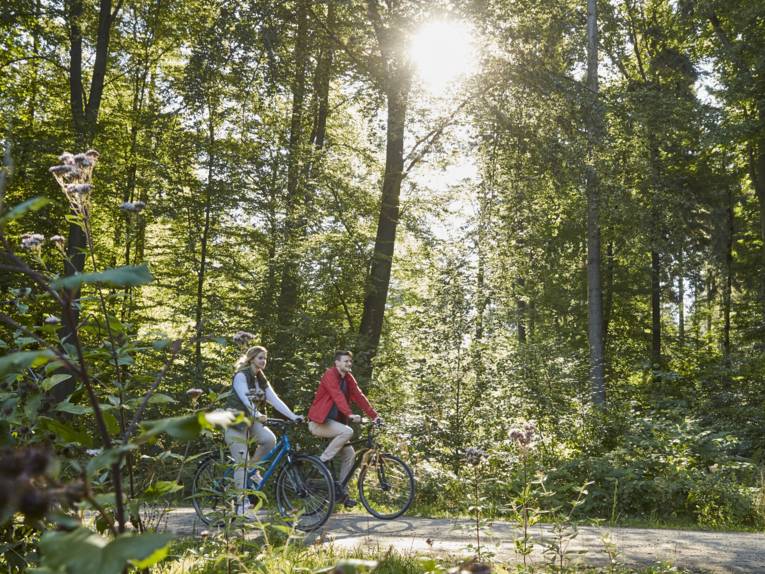
Working closely with its 21 municipalities, the Region Hannover has developed a network of bike paths stretching approximately 1,000 kilometers: the “Bike Region.” A total of 15 signposted routes start at Lake Maschsee in the center of Hannover, radiating out across the region and continuing into neighboring counties
.
The 160-kilometer “Green Ring” offers a varied cycling loop. And the 100-kilometer Deisterkreisel route sometimes takes you up some steep hills. For all tour recommendations, visit: www.visit-hannover.com/radfahren
The Cycling App
What is the cycling app?
The Region Hannover has launched an app featuring navigation and other useful functions. It is free and available for use year-round. The app includes approximately 1,000 km of recreational cycling routes in the Region Hannover that users can follow. The "Smart Tracking" feature, which can be activated, detects when the user is cycling and automatically records the ride if desired.
Hiking Tours in the Hannover Holiday Region
Where can I find the best hiking trails in the Region Hannover?
Discover this green city and the surrounding region on numerous idyllic hiking trails. Hannover is one of Germany’s greenest cities, offering plenty of opportunities for a leisurely stroll or an evening jog. From the Deister to Lake Steinhuder Meer, through the Leinemasch or over the Lindener Berg: here are some of the most beautiful hiking trails in the Region Hannover.
Sunday Shopping in the Region Hannover
When can I go shopping on Sundays in the Region Hannover?
Stroll through the pedestrian zones with your family on a Sunday when stores are open, and then relax at a café: Here’s an overview of when and where the next Sunday shopping event will take place in the city and Region Hannover. Many cities and towns also organize attractive supporting events around these Sunday shopping days.
Events in the Region Hannover
What events are taking place in the Region Hannover?
The Hannover Holiday Region offers a wide range of exciting activities, from small gatherings to large-scale events, for people of all ages. Theater, art, music, and literature—some of it in surprisingly unique venues—await leisure enthusiasts and weekend explorers. Why not click through and see what’s on offer? www.visit-hannover.com/veranstaltungen