
 Deutsch
 English
 中文
中文
 Danish
 Eesti
Eesti
 Español
 Suomi
Suomi
 Français
 Italiano
 日本語
日本語
 한국
한국
 Nederlands
 Norge
Norge
 Polski
 Portugues
 Русский
 Svenska
 Türkçe
 العربية
 Română
 български
Herrenhausen-Stöcken
The 12th district consists of a total of seven districts full of tradition.
The neighborhoods of Burg, Herrenhausen, Ledeburg/Nordhafen, Leinhausen, Marienwerder, and Stöcken together make up the 12th city district, which covers an area of 21.13 km². Characterized by the Herrenhausen Gardens, the green space in Herrenhausen-Stöcken is particularly extensive. The Mittelland Canal also flows through Stöcken, where visitors can now go canoeing or cycling. Other tourist attractions include Sea Life and the Herrenhausen private brewery, which also offers brewery tours. Where the Guelphs once resided, approximately 37,500 people now live (as of 2020).
The Herrenhäuser Gardens
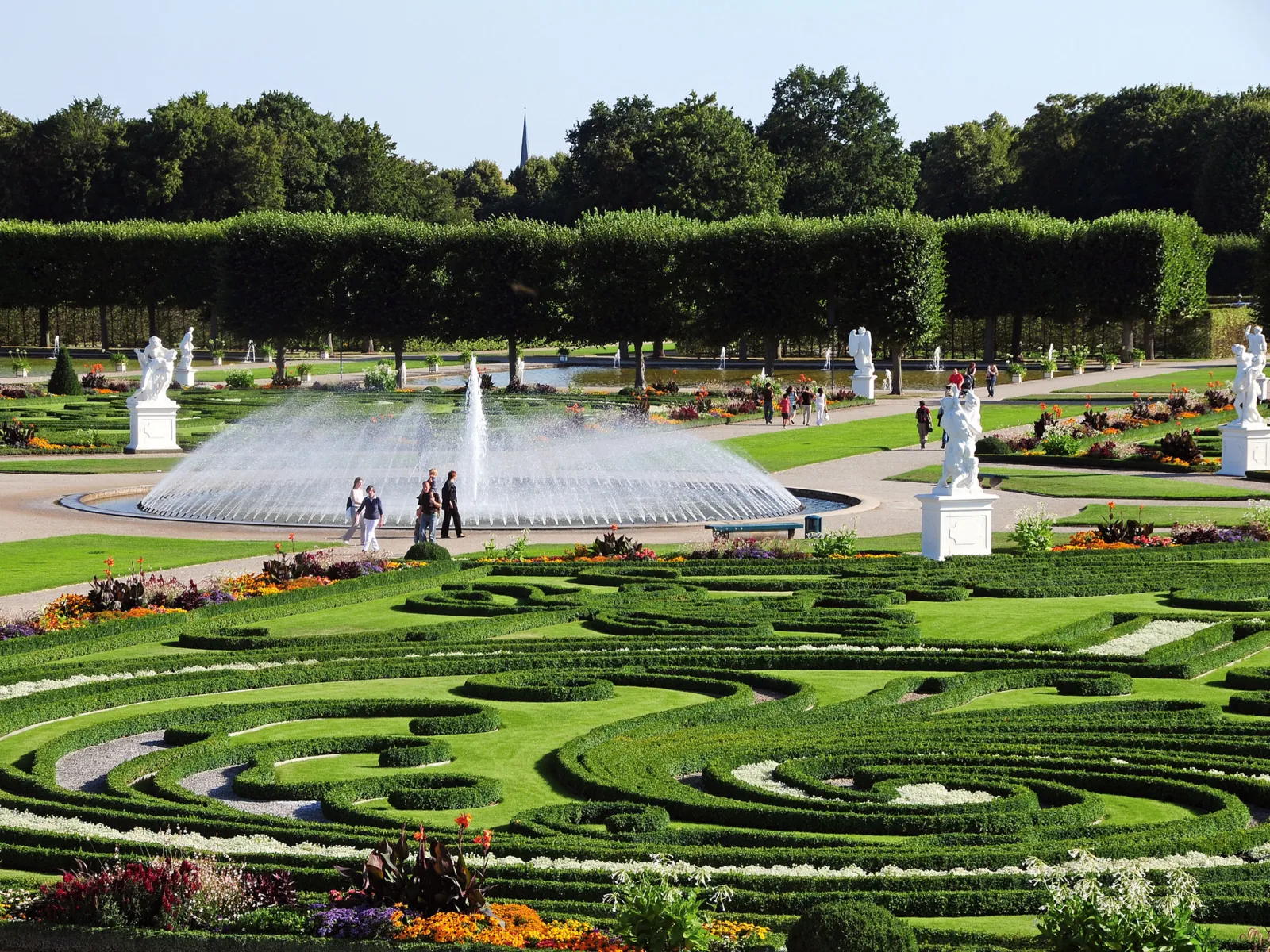
The Great Garden, which was expanded into a summer residence beginning in 1675, is today one of the most significant and largest Baroque gardens in Germany. While the nobility was drawn to the Georgengarten and the Great Garden, municipal and industrial facilities were built north of the railroad tracks (beginning in 1847): a sewage treatment plant, a three-phase power plant, a railroad repair shop, and later Continental and Volkswagen.
The large garden
The centerpiece of the Herrenhausen Gardens is the Great Garden. In front of the palace—which was reconstructed in 2013—and the gallery building, the Grand Parterre and the Nouveau Jardin stretch across 905 x 555 meters, bordered on three sides by avenues of linden trees and the Graft (1700). Sculptures, boxwood-lined flowerbeds, hornbeam hedges, and water features enliven the geometric layout. “We can boast only of the Herrenhausen Gardens, which are truly beautiful and well-maintained,” as Electress Sophie once noted—and there is nothing more to add to that.
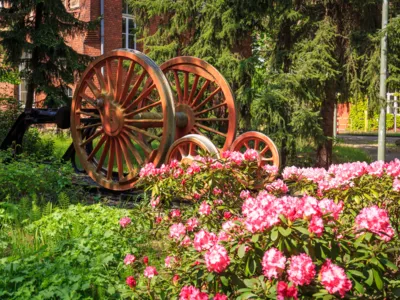
Leinhausen railroad repair works
775 Years - Discover Your Hannover
The establishment of the railroad repair shop in Leinhausen in 1874 marked the beginning of the industrial era for Stöcken. Today, the buildings form the largest industrial complex in Hanover. After World War I, 5,800 people were employed here; operations ceased in 1992. A brick wall dating from 1882 marks the boundary of the site.
Stöcken Municipal Cemetery
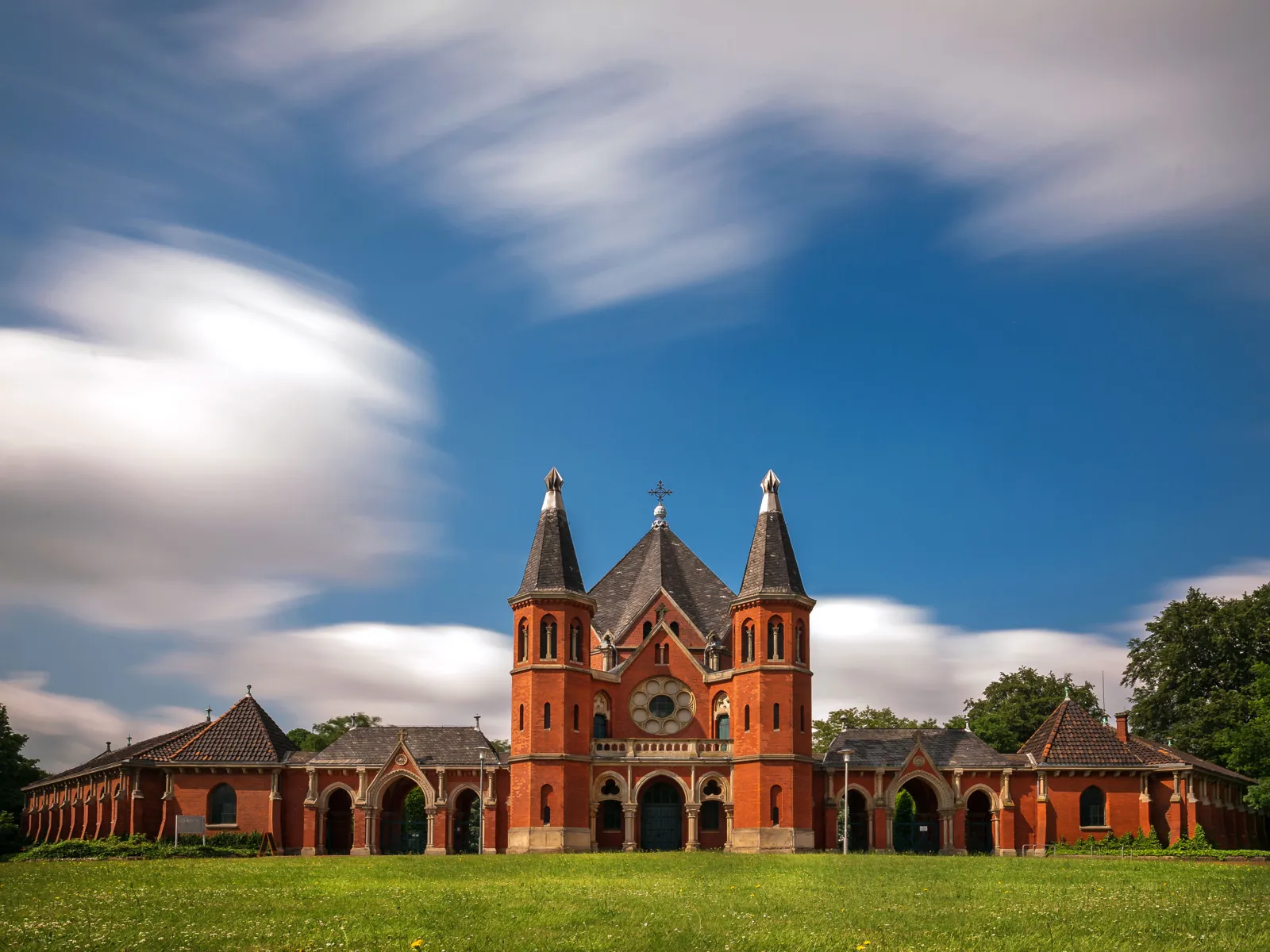
The large municipal cemetery in Stöcken (1891) illustrates the evolution of cemetery design. The strict grid pattern of paths and the social hierarchy of the graves—interrupted only by a diagonal main avenue—was expanded in 1902 under Garden Director Julius Trip to include a landscaped park cemetery. The central building of the cemetery chapel (1892), designed in simple Neo-Gothic style, accentuates the entrance. The cemetery is the final resting place of prominent Hanoverians such as Hinrich Wilhelm Kopf and Julius Trip, as well as the site of a memorial stone for the victims of the mass murderer Haarmann.
775 Years - Discover Your Hannover