 Deutsch
 English
 中文
中文
 Danish
 Eesti
Eesti
 Español
 Suomi
Suomi
 Français
 Italiano
 日本語
日本語
 한국
한국
 Nederlands
 Norge
Norge
 Polski
 Portugues
 Русский
 Svenska
 Türkçe
 العربية
 Română
 български
North
The 13th city district consists of Nordstadt, Hainholz, and Vinnhorst/Brink-Hafen.
Nordstadt, Hainholz, and Vinnhorst/Brink-Hafen make up the 13th city district, Nord. A total of nearly 32,200 residents (as of 2020) live together in this district, which covers a total area of 10.92 km². The most populous part of the district is the vibrant Nordstadt, which is primarily shaped by the University of Hannover—longtime residents, young families, and students live here in a tolerant and relaxed atmosphere.
As the first working-class neighborhood in the royal capital, Nordstadt—with the Welfenschloss and industrial complexes (König & Ebhardt, Appel, Sprengel, the freight yard, and the hospital)—presents a diverse, compact urban landscape. In Hainholz, industrial development continued along Schulenburger Landstraße, but the residential areas formed a spatially open structure.
Guelph Castle
The university’s main building today has, in fact, never been used as a castle. The Guelph Castle, designed by court architect Christian Tramm for the last Guelph king, George V, beginning in 1856 using light-colored Deister sandstone, was completed only on the exterior by 1866. Beginning in 1875, Hermann Hunaeus converted the castle into the Technical University. The four-story, cubic central building is extended to 150 meters by lower side wings and connecting structures. Five towers lend the compact structure a picturesque appearance. The facades are designed in the so-called “Tramm style,” a round-arch style refined with surface tracery. This magnificent Guelph edifice marks the end of the Classicist architectural style, which was largely defined by Laves.
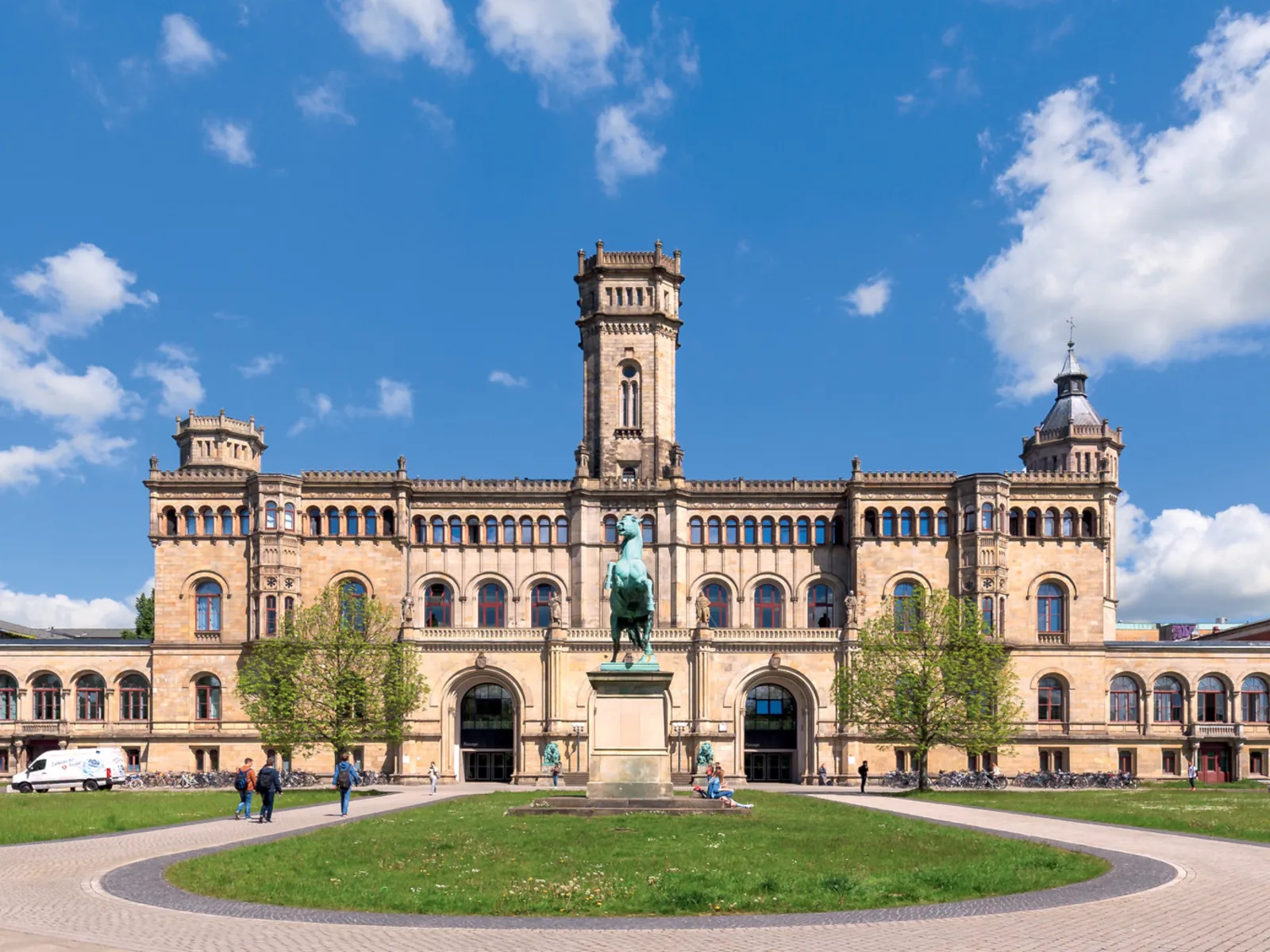
Leibniz University
Old Jewish cemetery
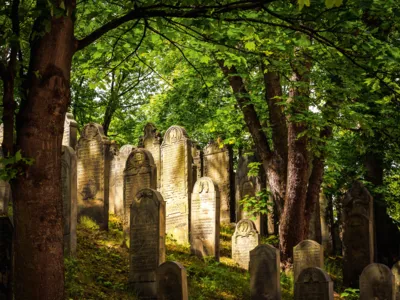
775 Years - Discover Your Hannover
In 1550, Hanover’s Jewish community was able to establish a burial ground—the Old Jewish Cemetery—on a sandy hill just outside the city gates. A hedge was intended to protect the formerly treeless hill, but carters repeatedly took sand from there, so in 1671 the district administrator had a protective stone erected to prevent damage and disturbance. In 1740, the cemetery was expanded and enclosed by a wall. The graves are permanently preserved to ensure the prescribed “eternal” rest of the dead, but they were stacked one on top of the other due to a lack of space. The approximately 700 headstones face east.
Brüggemannhof
On the former site of the oilcloth factory (now Benecke-Kaliko), the Sparund Bauverein Hannover built the Brüggemannhof housing complex, comprising a total of 158 apartments. Architect Franz Hoffmann was the first to design a building block centered around a communal courtyard, which was landscaped with mature trees and featured a children’s playground. The apartments were state-of-the-art in terms of hygiene, featuring bathtubs, toilets, and balconies. The complex, nicknamed the “Red Castle” in part because of its socially democratic residents, was the first uniformly designed large-scale housing development consisting of small apartments. On the upper gallery level, figures depicting scenes from the active life of artisans reflect the character of the residents.
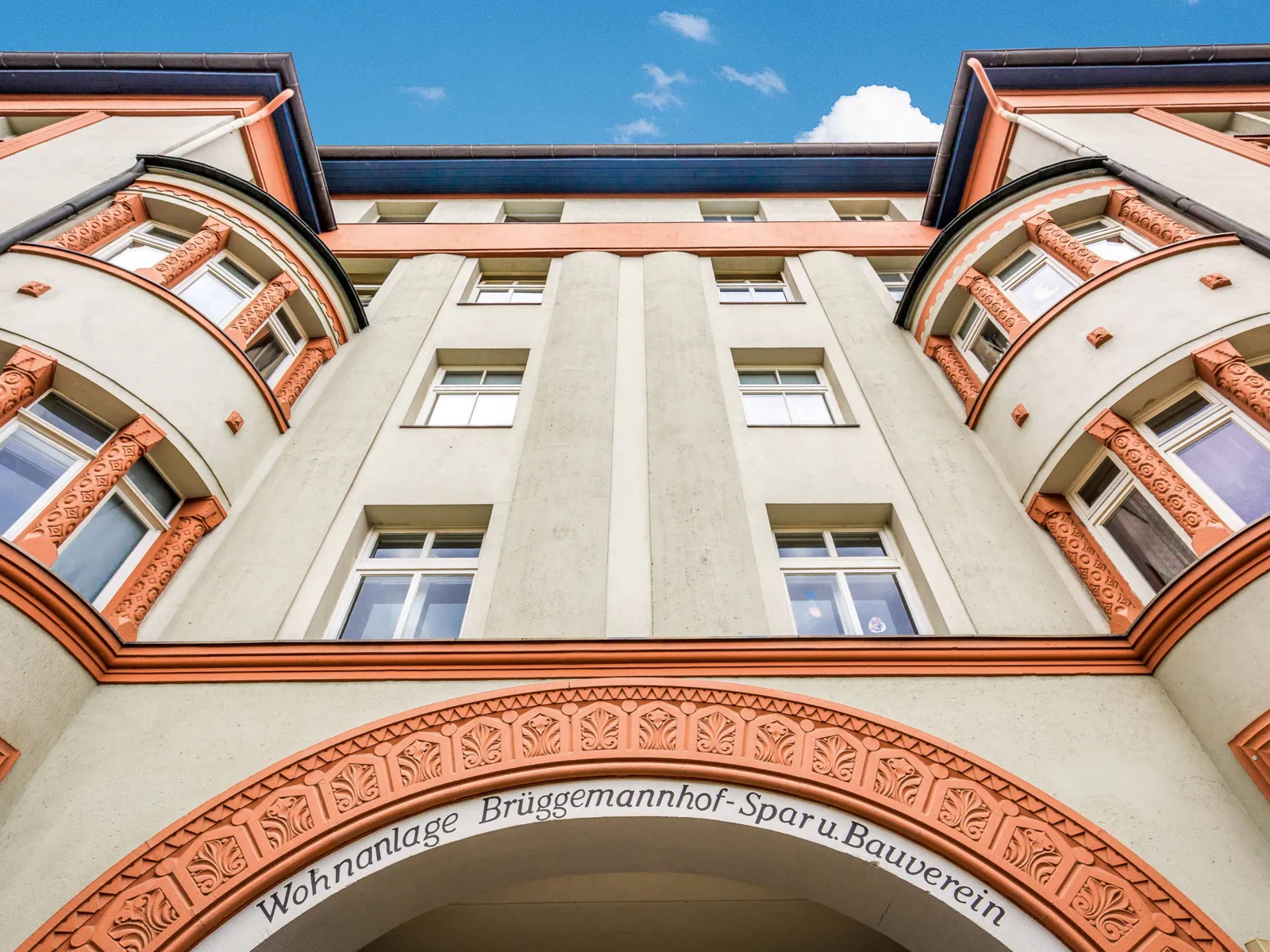
775 Years - Discover Your Hannover