Herrenhäuser Gärten—The History of a Courtly Garden Complex
The history of the Herrenhausen Gardens dates back to the 17th century. What began as a Guelph summer residence in Herrenhausen evolved into a complex of various gardens. Its historic centerpiece is the Grand Garden, which ranks among the most significant Baroque gardens in Europe.
The Beginnings of the Great Garden in the 17th Century
Herrenhausen’s development into a royal summer residence began in the 17th century. As early as 1655, Johann Friedrich von Calenberg had a palace built in Herrenhausen, along with the first pleasure garden. Beginning in 1675, the rural estate was expanded into a summer residence with a larger pleasure garden.
The Great Garden underwent its most significant development under Duke Ernst August and his wife, Sophie of the Palatinate. Sophie had the garden designed in the French style at the end of the 17th century and made it her life's work.
Under the direction of gardener Martin Charbonnier, the Great Garden was created in its present form and size by 1714.
Baroque Garden Art in Herrenhausen
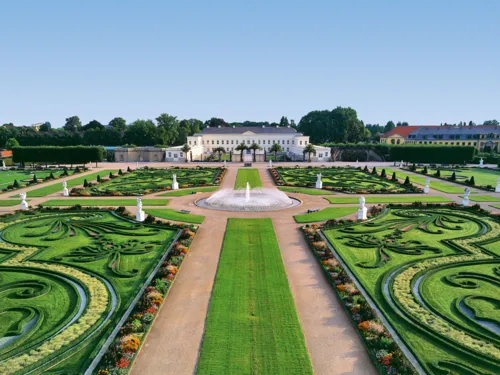
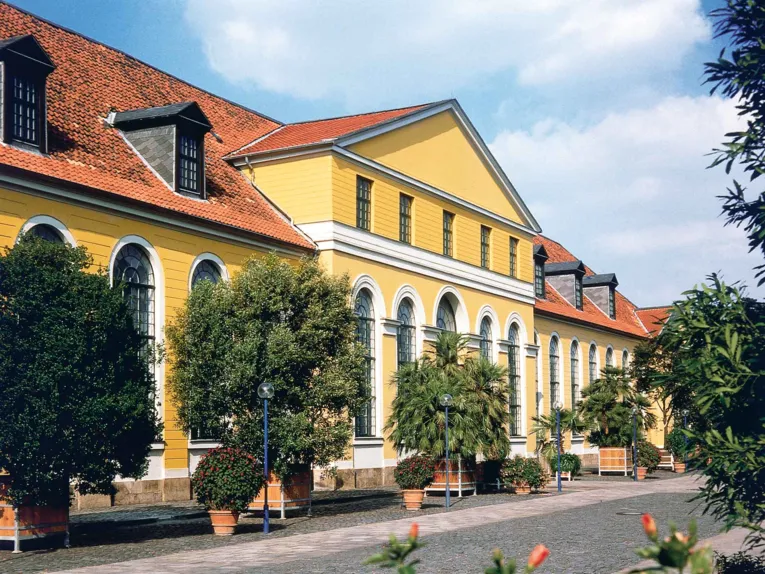
The Great Garden combines geometrically laid-out garden areas with water features, fountains, sculptures, and historic buildings. Its historic elements include, among others, the Grand Parterre, the Garden Theater, the Grand Fountain, the Cascade, the Grotto, the Gallery Building, and the Orangery.
The Garden Theater was built between 1689 and 1692. Around 1690, Elector Ernst August had gilded figures installed as part of its decor.
The Great Garden has largely retained its Baroque layout and is now considered the historic centerpiece of the Herrenhausen Gardens.
The History of the Grotto
The grotto in the Great Garden was built in 1676, making it one of the earliest surviving features of the complex.
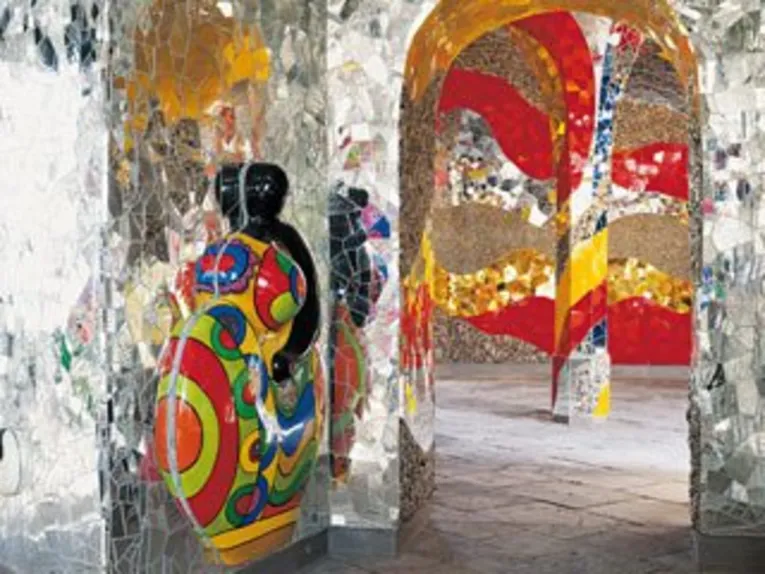
Centuries later, it was given a new artistic design: Niki de Saint Phalle redesigned the historic rooms with colored glass, mirrors, pebbles, and sculptural figures. In 2003, the redesigned grotto was reopened.
As a result, the grotto today bridges the history of the Baroque garden with contemporary art.
Herrenhausen Palace - Summer Residence of the House of Welf
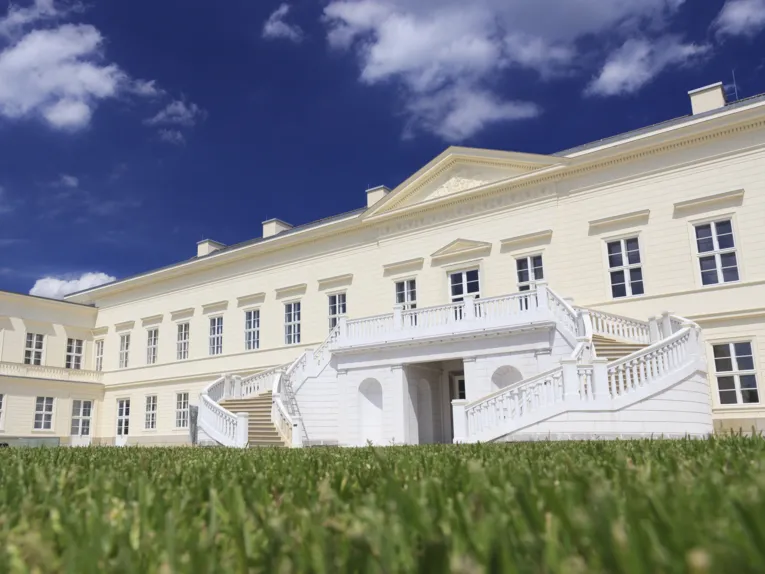
Herrenhausen Palace served as the summer residence of the Guelph family for centuries. Originally built in the Baroque style in several phases, the palace was redesigned in the Neoclassical style between 1819 and 1821 by court architect Georg Ludwig Friedrich Laves.
In 1943, the castle was destroyed in a bombing raid. The grotto, the Grand Cascade, and the grand staircase survived.
Reconstruction of the Castle
From 2010 to 2013, the Volkswagen Foundation oversaw the reconstruction of Herrenhausen Palace. It was built on the site of the destroyed original building, and Laves’s Neoclassical façade was reconstructed.
Today, the palace houses a modern conference center and the Herrenhausen Palace Museum. The museum opened in May 2013.
From a Kitchen Garden to a Botanical Mountain Garden
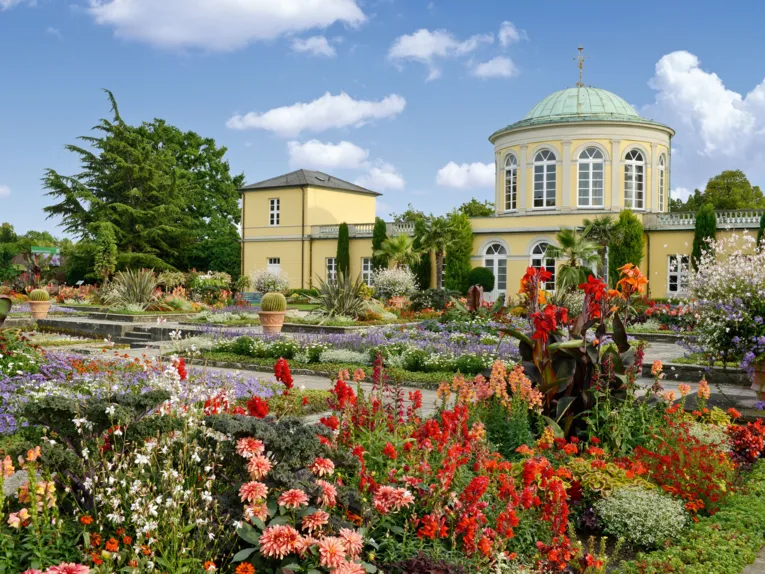
The history of the mountain garden also dates back to the 17th century. It began as a vegetable garden—or kitchen garden—for the Guelphs’ summer residence. Initially, the focus was on fruits and vegetables.
Over time, its purpose changed. New and exotic plants were added, and the kitchen garden evolved into a botanical garden.
Today, more than 12,000 plant species grow in the Berggarten. Its collections include one of the largest orchid collections in the world.
The Mausoleum in the Berggarten
The mausoleum is a significant historic structure in the Berggarten. It was built between 1842 and 1847 according to plans by Georg Ludwig Friedrich Laves, the court architect of Hanover, for Queen Friederike and King Ernst August.
Later, other members of the House of Welf were reinterred here. Among them were Electress Sophie and George I, King of Great Britain.
The Georgengarten is being built based on the English model
The Georgengarten differs significantly from the geometric Baroque garden. Its history can be traced back to various country estates belonging to the court nobility, which were built beginning in 1700 in the former floodplain of the Leine River.
Beginning in 1768, Count Johann Ludwig von Wallmoden-Gimborn combined several of these gardens to form the Wallmodengarten. Between 1835 and 1841, Christian Schaumburg redesigned the grounds as a landscape park modeled after the English style.
The garden was named Georgengarten in honor of George IV. The Wallmodenschloss was also renamed and has been known as the Georgenpalais ever since.
Herrenhäuser Allee
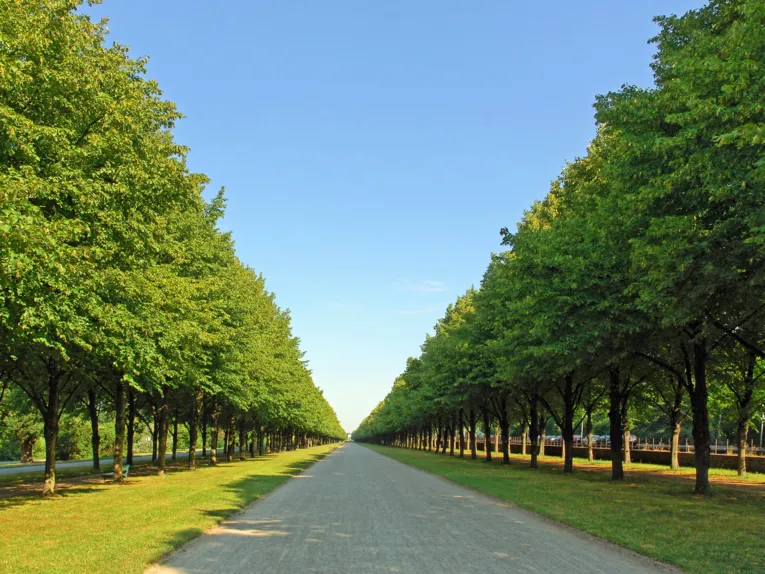
Herrenhäuser Allee, which is nearly two kilometers long, runs through the Georgengarten. It was laid out in 1726 and serves as a historic link to Herrenhausen.
After sustaining severe damage during World War II, the avenue was completely restored in the early 1970s with the planting of approximately 1,300 imperial linden trees.

 Deutsch
 English
 中文
中文
 Danish
 Eesti
Eesti
 Español
 Suomi
Suomi
 Français
 Italiano
 日本語
日本語
 한국
한국
 Nederlands
 Norge
Norge
 Polski
 Portugues
 Русский
 Svenska
 Türkçe
 العربية
 Română
 български

_Teaser.jpg.webp)